I wrote a monthly newsletter for 6 years and my dilemma was always how long should the story be and how much information. The same question arose when I was convinced to start this blog. All of that being said, I will post both longer articles and shorter ones and welcome comments. The focus will be on all things wine but occasionally, I will include semi related topics. I want this to be a broad discussion forum on wine, written in English, albeit an Australian version, and not ‘winese’ and with a sense of humor. In others words, let’s not take ourselves too seriously. I look forward to this journey!
I also have a few friends in the wine business who have an urge to write thoughts down on occasion so I may feature them from time to time.
There is something magical about swirling a glass of wine, allowing the aroma’s to give you an impression of what your about to taste or better yet issue an invitation to indulge in a wonderful experience that you will never forget … and to that end I might suggest we are collectors of experiences, and memories, rather than just bottles of wine.
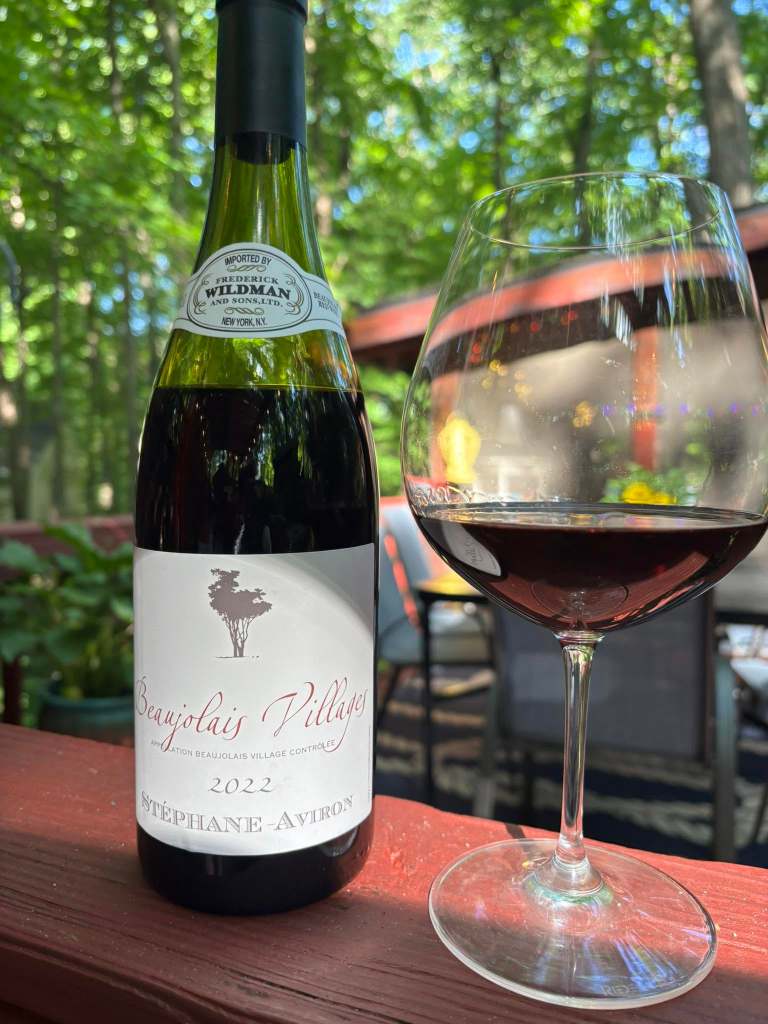
Stéphane has taken a radical step back to the old traditions of making wine. Beaujolais has long been considered a ‘poor man’s Burgundy.’ But thanks to a handful of winemakers, the quality has been getting better by the vintage. Will they be as good as Burgundy someday? Only time will tell. In the meantime, this wine is all about elegance, balance, and drinkability.
It is 100% Gamay from 40-plus-year-old vines and is organically and biodynamically farmed, and sourced from Quincié: granite-dominant soils and Lantignié: clay and limestone soils. There is a real, authenticity about this wine. One sip and you’ll agree.
The nose displays enticing aromas of strawberries, cherries, and violets.
The palate is inviting and has an easy-to-drink feel. Delicate layers of strawberries, cherries, dark raspberries, red currents, and pomegranate with hints of fresh-cut herbs and white pepper.
I can see this cellaring out to 2030 without a problem.
Food pairings should include Roast chicken with mushroom jus, Turkey with cranberry‑herb glaze, Duck breast with cherry or blackberry gastrique, Herb‑roasted pork tenderloin, and Pork loin with mustard and tarragon. Vegetarian options include Wild mushroom ragù over polenta, Mushroom and thyme pizza, Margherita pizza with fresh basil, and Goat cheese and caramelized onion flatbread.
The Hugel Family has been around since 1639, representing 12 consecutive generations of winemakers. One must believe they have it all together by now, evidenced by some of the finest, elegant dry Rieslings and other varietals in and around Riquewihr, in Alsace.
This section of Alsace is the driest and coolest AVA in France, with clay and limestone dominating the soils. All this adds up to ideal growing conditions for exceptional dry Rieslings.
This Classic Riesling showcases characteristics born in Alsace- clean, focused precision, with exceptional acidity and minerality giving this wine its own unique character.
Intense aromas of citrus, elderflower, with a hint of flint, and fields of wild flowers.
The palate is smooth and crisp, with mouthwatering acidity, excellent balance, and a depth and complexity that reveals itself as it opens up. Layers of lemons, limes, and ripe grapefruit dominate the flavor profile, with just a hint of pear, flint, and wet stone.
I can see this aging out another 8 – 10 years, with confidence.
This screams for seafood, all types: white fish, scallops, and shellfish. Vegetarian options include Spanakopita, with a squeeze of lime, Alsatian onion tart, and Roasted fennel and a citrus salad.
The Contini Winery is the oldest in Sardinia, established in 1898, and is located in the Upper Campidano, with vineyards at an altitude of about 200 meters, planted on alluvial, sandy, and clay soils.
There is something special about Grenache from Sardinia, or Cannonau as it is known there. It possesses a medium-bodied freshness and serious drinkability, with an easy-drinking attitude that doesn’t sacrifice
depth, complexity, or quality.
The Isle of Sardinia is one of the five Blue Zones in the world, which makes fantastic wine that can contribute to longevity, combined with a healthy lifestyle.
This is predominantly Cannonau – 90 %, with 10% other local red grapes- not specified, and sees no oak, only stainless steel with some minimal bottle aging.
Aromas of dark cherries, red currants, blackberries, herbs, and light floral notes
The palate is smooth and welcoming, with tannins and acidity present but taking a back seat. Interwoven layers of dark cherries, blackberries, red currants, raspberries, and plums make a convincing case for adding this to the cellar.
This will cellar out 3 – 5 years with confidence.
Food pairings should include local dishes like Pane frattau (tomato, pecorino, poached egg), Fregola with vegetables, Roasted artichokes with mint and olive oil, Malloreddus alla campidanese (vegetarian version) with tomato and saffron and Pecorino Sardo, with carasau bread and olives.
This is light enough for seafood dishes, including Grilled sardines with lemon, Tuna steak with herbs, and Salmon with tomato‑olive relish. Vegetarian suggestions: Mushroom ragù (pappardelle or fregola), Roasted root vegetables (carrot, parsnip, beet) with thyme, and Herb‑roasted potatoes with rosemary and garlic.
Allow me to introduce you to the best-kept secret in Napa. There is no cellar door, but decades of history, no advertising campaign, just whispers of quality, depth, and complexity spoken by those in the know, late in the evening after an impressive meal and wonderful wine. Next to no reviews and ratings, and no crazy Napa Cabernet price tag.
The 2016 vintage was an exceptional, no-drama, textbook vintage, delivering elegant, seamless, high-quality wines with impressive aging potential. This is a classic example. Now, add in all Rutherford fruit, with just a hint of classic ‘Rutherford Dust’ to define its terroir, and 10 years of aging, and you have something to look forward to. This is my Monday! They continue to fly under the radar, producing impressive wines while staying the course and not giving in to what style is popular this year.
Alluring aromas of black currants, plums, dark cherries, with just a hint of roasted coffee and an old leather belt.
The palate is silky-smooth, with classic Rutherford dust evident; excellent balance, dusty tannins, pleasing acidity, and terroir-driven minerality on full display. Medium-bodied and nice boldness without weighing you down. This cradles seamless layers of black currants, red plums, and black raspberries, with secondary notes of roasted coffee, dried herbs, oak, and just a hint of black licorice. Wonderful integration.
Despite 10 years of aging, it most definitely challenges your palate and still has another 6 – 8 years to evolve into what the winemaker envisioned.
When I see ratings of 90 to 93 pts, I wonder if we are tasting the same wine, or am I biased? I’ve tasted several vintages, and they have never disappointed. I was fortunate enough to spend an afternoon with the winemaker 6 or 7 years ago. Amazing experience.
If you’ve tasted this wine or come across it, let me know what you think.
Food pairings should include red meat cooked your favorite way, but this wine also cries out for vegetarian options, including Mushroom Ragù with Polenta, Roasted Root Vegetables with Red Wine sauce, and Truffle Risotto.
Q: What do four brothers do when they inherit 50 acres of vineyards in the eastern section of Valpolicella from their father?
A: Buy 75 more acres and start a winery, of course.
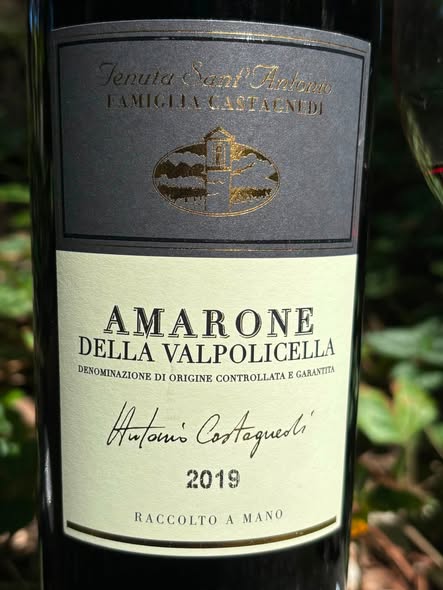
They released their first wine in 1995 under the Tenuta Sant’Antonio label before launching a new project in 2006 under the Scaia label. If you are wondering about the name, it refers to the type of soil in the vineyards- a chalky, granular soil that falls apart easily. Scaia is a Veronese dialect word for “crumbs” and imparts higher acidity and bolder fruit character to the wine.
If you are looking for an Italian Red to drink in Spring and Summer, this could be the wine you’re looking for. I reviewed the 2021 vintage last year, and this vintage is brighter and fresher.
This is 100% Corvina, and like the 2021 vintage, it is still medium-bodied and easy to drink, but displays more dark fruits and slightly less herbal notes than 2021.
Enticing aromas of bright cherries, raspberries, and pomegranate.
The mouthfeel has a friendly, approachable, easy-drinking attitude with interwoven layers of ripe cherries, strawberries, and raspberries, with secondary notes of red plums, blackberries, and pomegranate, with some nice length on the finish.
Just enough acidity to make it interesting and the 13% Alc. makes it way too easy to drink.
This is an ideal wine for midweek pizza or a bowl of pasta with some crusty Italian loaf.
Pairings should include Italian- pasta and pizza with red meat and chicken. I can also see this being enjoyed at Thanksgiving with Turkey, Ham, and Pork.
This is meant to be drunk in its youth, but I would be interested to see where it will be in a few years. It has already aged for 4 years.
The winery is located in Saint-Satur, a village in the heart of Sancerre, and is known for its Abbey and its Siles (flint) soil, which contributes wonderful minerality and tension in the wines. The grapes are sourced from the Oisly vineyards, located at the foot of the ‘Clos du Roc’, and named after the abbey. The Abbey of Saint-Satur has played an influential role in the region’s winemaking, dating back to 1034.
Appealing aromas of pears, white peach, and a hint of herbs dominate the nose.
The palate is fresh, clean, and mouthwatering with lively acidity and all the minerality you come to expect from Loire Valley Sav Blanc. Pleasing layers of white peach, guava, and nectarine dominate with secondary notes of lime zest, pears, apricot, and a vegetal note that lingers on the lengthy finish.
Impressive balance and integration for a three-year-old wine, with some Loire Valley restraint and elegance thrown in for good measure.
Wonderful tension and minerality are on full display, no doubt from the Silex flint, clay, and limestone soils in the vineyard these grapes are sourced from.
This just might be your new favorite white wine this summer.
Food pairings should include Risotto with Asparagus, Salads with spinach, lighter seafoods with herbs, and Lemon Chicken with capers. You might want to consider basil pesto pasta, lemongrass chicken, Vietnamese spring rolls, or Peruvian cilantro chicken soup. Vegetarians should consider fried zucchini blossoms, and Spring vegetable risotto.
Herbs are the central catalyst, and of course, asparagus.
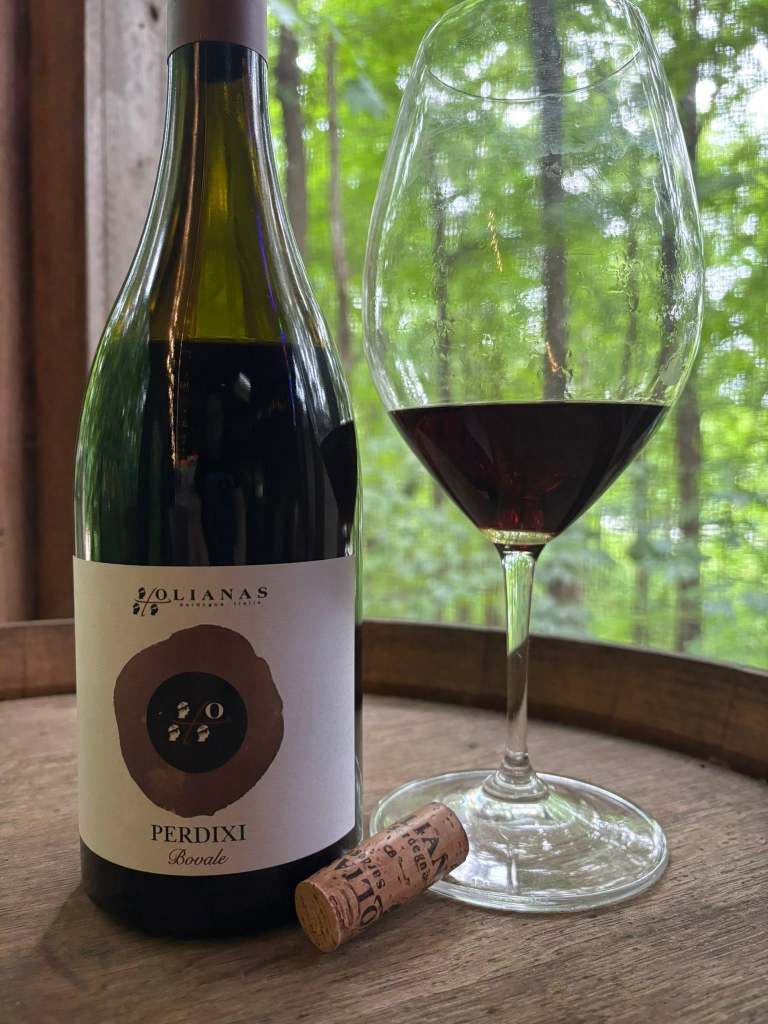
This is a blend of 90% Cannonau (Grenache), 5% Bovale Sardo, and 5% Carignano.
The Cannonau contributes ripe red fruits and smoothness, the Bovale Sardo adds structure, and Carignano builds on color and savory tension.
Argiolas is considered the island’s leading winery producing quality driven wines, dating back to 1938. Their ‘Costera’ vineyard covers 88 acres and sits on calcareous clay‑loam soils, at an elevation of 725 ft.
Enticing aromas of strawberries and dark cherries dominate the nose.
The palate is broader with layers of dark cherry liqueur, ripe strawberries, and vanilla/oak with secondary notes of blackberries, herbs, and spices, framed by rounded, polished tannins, firm energetic acidity, and impressive balance. There is an engaging sweetness at its core that adds to the overall balance and appeal.
This has another 5 – 7 years of aging before revealing its true self.
Food pairings should include Grilled ribeye or New York strip, Herb‑marinated pork shoulder or chops, Bolognese pasta, Sausage and mushroom risotto, and Pizza with spicy salami or roasted vegetables.
This is sourced from their Hallberg Vineyard, a vineyard stretching 100 acres in size, nestled in the Green Valley sub-appellation, and named after the previous owners.
For those technically minded, it is made up of clones 777 and 667, sourced from three different blocks located on the east and west sides of the Hallberg Ranch
A silky smooth mouthfeel welcomes you to layers of dark cherries, raspberries, cranberries, and plums with secondary notes of spicy orange tea, oak, cola, and cloves. Persistent acidity makes its presence known- a few more years in the cellar should tame this. Fine-grained tannins, great structure, and impressive balance sit comfortably in the background, supporting the interwoven layers of fruit and enhancing your drinking pleasure.
This has a nice future ahead of it. Your patience will be rewarded if you let this sit, undisturbed, for the next 6 – 8 years. This will be enough time to tame the acidity.
Food pairings should include Duck breast with cherry or pomegranate glaze, Herb‑roasted pork tenderloin with fennel, Cedar‑plank salmon, and Roast chicken with thyme and lemon. Vegetarian options include Wild mushroom risotto, Mushroom and gruyère tart, Truffle pasta (lightly sauced), and Lentils with roasted root vegetables.
This Tuscany gem is a blend of Sangiovese (50%), Cabernet Sauvignon (25%), and Merlot (25%). The drinking window for this is 10–15 years. Again, let’s open it and see if it’s still holding together. This is 18 years old.
This was Ruffino’s ‘Super Tuscan’ offering with a reputation for being refined, polished tannins, elegant, with loads of depth and complexity, with impressive integration.
The nose shows some age but is not past its prime. Delightful aromas of blackberries, plums, and dark cherries dominate with a promise of more to come.
The palate is velvety soft with well-integrated, gentle layers of blackberries, dark cherries, plums, leather, tobacco, and gamey, an almost meaty note, with traces of dark chocolate, spices, and olives to round things out.
This may not be drinking at its absolute peak, but it’s exceptionally close. This has been stored well since I purchased it, a necessary condition to buying a 2008 if you happen to see it.
Food pairings should include Osso buco, Bistecca alla Fiorentina, Braised short ribs, Mushroom risotto, Chicken Cacciatore, and aged Pecorino, or any other aged Italian hard cheese.
The short answer is yes, research tells us that 1 – 2 glasses a day is the right amount to outlive your non-drinking friends.
The 5 Blue Zones include: Nicoya in Costa Rica, Sardinia, Ikaria in Greece, Okinawa in Japan, and Loma Linda in California. There are many commonalities but the two that, I believe, stand out is (except for Loma Linda- Adventist) they all drink wine- 1 – 2 glasses a day, and they all consume a nourishing soup, which pretty much resembles Italian Minestrone Soup- loads of vegetables and beans. This healthy, hearty soup is so easy to make at home, and you have to buy the wine.
Blue Zones have the highest number of people over 100 years old, who also happen to be lively and active. So if you like Minestrone soup and want to live to 100, read on.
Classic Minestrone Soup Recipe
Ingredients (serves 4–6)
• 2 tbsp olive oil
• 1 medium onion, diced
• 2 carrots, diced
• 2 celery stalks, diced
• 3 cloves garlic, minced
• 1 medium zucchini, diced
• 1 cup green beans, chopped
• 1 can (14 oz) diced tomatoes
• 1 can (15 oz) cannellini or kidney beans, drained and rinsed
• 6 cups vegetable or chicken broth
• 1 cup small pasta (ditalini, elbow, or small shells)
• 1 cup chopped kale or spinach
• 1 tsp dried oregano
• 1 tsp dried basil
• Salt and black pepper to taste
• Optional: Parmesan rind (adds incredible depth)
• To serve: grated Parmesan, olive oil, fresh basil
Instructions
1. Build the flavor base: Heat the olive oil in a large pot over medium heat. Add onion, carrots, and celery. Cook 6–8 minutes until softened and fragrant.
2. Add garlic and vegetables- stir in and cook another 3–4 minutes.
3. Add tomatoes, beans, and broth: Pour in the diced tomatoes, beans, and broth. Add oregano, basil, salt, and pepper.
If you have a Parmesan rind, drop it in now.
Bring to a gentle boil.
4. Simmer: Reduce the heat and simmer for 20 minutes, until the vegetables are tender.
5. Add pasta: Stir in the pasta and cook until al dente, usually 8–10 minutes.
6. Finish with greens: Add kale or spinach and cook 2–3 minutes until wilted.
Remove Parmesan rind if used.
7. Serve: in bowls and top off with
• A drizzle of olive oil
• Freshly grated Parmesan
• A few basil leaves
Here are a couple of suggestions to make it your own.
• For a richer broth: add a spoonful of tomato paste with the garlic.
• For a heartier version: add diced potatoes or pancetta at the beginning.
• For a lighter spring version: swap zucchini for peas and add fresh herbs at the end.
• Gluten-free: use GF pasta or add cooked rice instead.
A researcher has discovered that residents of Earth’s remarkable ‘Blue Zones’ may often follow a simple rule for extended lifespans – and it’s great news for those who like a tipple. Costa Rica, Greece, and Japan house three of the six unique regions where locals are supposedly 10 times more likely to live to 100 years old than Americans.
While strategies like calorie restriction, plant-based eating, and emphasizing family bonds are common in these regions, the mention of wine might catch you off guard. Surprisingly, it’s noted that ‘consistent’ alcohol consumption is particularly prevalent in Blue Zones, with some residents drinking one or two glasses daily.
“People in all Blue Zones (except Adventists) drink alcohol moderately and regularly,” Blue Zones explorer Dan Buettner previously wrote, according to a past Mirror report. “Moderate drinkers outlive non-drinkers. The trick is to drink 1-2 glasses per day (preferably Sardinian Cannonau wine), with friends and/or with food. And no, you can’t save up all week and have 14 drinks on Saturday.”
Now, for the wine, I would suggest adding Olianas Cannonau di Sardegna 2023 (organic), which you can pick up for under $20.
This delightful Sardinian wine is known as Grenache everywhere else in the world.
The winery was established in the early 2000’s and is considered the benchmark for Sardinian Wineries. It is located in Sarcidano, in the heart of southern Sardinia and adjacent to the UNESCO‑listed Su Nuraxi archaeological site- wine has a deeply rooted connection to the island’s ancient culture and the landscape.
Olianas is known for its BioIntegrale method—a holistic approach that goes beyond organic and biodynamic farming- described as “a philosophy of life”, utilizing horse-drawn ploughs, no chemicals, and strict protection of the biodiversity.
They say that if you listen closely, you can hear tales from the distant past. Tales of a pristine paradise that cradles the European outpost of biodynamics and organic farming, and tales of families sharing laughter, food, music, and wine in the late afternoon, as the sun sets on the vineyards and fields.
Olianas Cannonau 2022
Once opened, and poured into a glass, delightful aromas of dark raspberries, dark cherries and dark chocolate, with just a hint of earth and spices.
The mouthfeel is well-balanced and smooth with immediate appeal. Soft, rounded tanninsand approachable acidity frame layers of black raspberries, black cherries, black currants, dark chocolate, tobacco, red plums, and a potpourri of spices and earthy notes.
I can see this cellaring out to 2032 with confidence.
Food pairings should include Herb‑Roasted Pork Tenderloin with rosemary, thyme, and garlic, and Sardinian‑Style Roast Lamb with myrtle, juniper, or rosemary. Vegetarian options should include Mushroom Pasta with Herbs, and Eggplant Parmigiana with plenty of tomato, basil, melted cheese, and roasted eggplant.