The vineyard is named after the historical property established in 1892 after the family acquired the property in 1996, with the first vintage released in 1999. It is worth noting that these flagship wines are only released on outstanding vintages.
The St Andrews Vineyard Releases are nearly impossible to get in the US. Make no mistake these are excellent wines displaying all the restraint and elegance that is so characteristic of Clare Valley. These wines display exceptional mouthfeel, texture, and balance- the 14.5% alcohol is well and truly kept in check.
Clare Valley Cabernet 2017
Immediately impressive aromas of ripe blackberries, dark chocolate, mint, and spices.
What is promised on the nose is delivered on the palate with just a hint of tobacco and oak. There is a lot going on with this wine- depth and complexity on full display stamped -with an unassuming authority.
This is a delight to drink now, with a few hours of decanting, but you will be rewarded if you are patient enough to cellar this out a further 8 – 10 years.
Pairings should include your favorite red meat dishes: barbecued red meat, casseroles, or hearty tomato-based pasta, and Pepperoni Pizza. I am always partial to Baba Ganoush, with Falafels and freshly baked Pita bread with big reds.
This Shiraz stands strong as an example of the vintage.
Enticing aromas, and a smooth mouthfeel with dark fruits, plums, and chocolate that leaves a lasting impression. Big, bold, and unashamedly self-confident, this is a delight to drink, from the first sip to the end of the bottle.
This is all Clare Valley Shiraz, with a twist: violets, mocha, and vanilla add to the nose
with bold, rich layers of dark fruits, mocha, and vanilla with secondary notes of black currant, plum, black cherries, and an earthy leather note on a long finish. The finish seems sweeter than it is with excellent length on the finish.
Excellent drinking now, with a few hours of decanting, but will show noticeable improvement over the next 8 – 10 years.
Pairing should include Roast Lamb, just about any red meat from the grill, Pepperoni Pizza, and Meat Lasagna.
with Two Mollydooker Wines. For those of you that don’t know Mollydooker is Aussie slang for left-handed people.
One Red and One White from Mollydooker Winery.
I have had the pleasure of not only drinking these wines from the first vintage almost 20 years ago, but also meeting, talking about wine, and of course drinking these great with Luke, the ‘Blue Eyed Boy’ several times. Luke has mentioned what he calls the Marquis Fruit Weight which is their measure of quality. What is that you ask, it is the
“Percentage of your palate (from the tip to the very back of your tongue) that’s covered by the velvety sensation of fruit that occurs when a wine’s tannins, alcohol, and acidity are all perfectly balanced”
This name was inspired by Sarah’s birth year- for those of you old enough to remember a simpler time of peace, love, and music, and the year of the original Woodstock Music Festival. Bright crisp aromas of citrus, both lemon and tangerine peel, with subtle floral notes leave you with an impression of summer. One sip will confirm your initial impression to be correct. This early picked Verdelho is crisp, and mouthwatering, with a beautiful balance of acidity and fruit with instant appeal.
Impressive layers of lemon, tangerine peel, and peach deliver a rich, almost creamy midpalate, despite the acidity and minerality evident. If the dictionary had a definition for quality summer patio pounder, this would be it. A delight to drink.
I would cellar this short term- say 2025, although it would be nice to taste this in 5 years or so.
Pairings should include, oysters, scallops, lobster, crab, seafood, chicken, pork, and let us not forget roasted Pesto vegetables or a Pesto pasta.
Boxer Shiraz 2020. Fruit Weight- 68%
WHO IS THE BOXER? ‘Mollydooker’ is old Aussie slang for a left-handed boxer and our Boxer always punches well above his Fruit Weight™. Did you notice he has two left-handed gloves? Source: Winery Website.
The Boxer Shiraz has always been a big, bold, rich, opulent Shiraz and this is no exception. The 2020 vintage was challenging with hot, dry conditions
until January when rains finally arrived along with cooler temperatures creating stellar conditions for the big three varietals (with Cab and Grenache) with Shiraz leading the way. Something good always comes from adversity.
The aromas of dark fruits, coffee, dark chocolate, and plum deliver an invitation to taste.
The palate is big and bold setting the scene immediately for what is to come. Muscular layers of blackberries and blueberries fight it out for dominance with plum, dark cherries, dark chocolate, vanilla, pepper, and licorice playing a supportive role. Big mouthfeel and a smooth, velvety texture with a long finish. Well balanced with alcohol showing no signs of overshadowing, despite the 16% alcohol. There is a subtle hint of Earl Gray Tea towards the back end, as much in the mouthfeel as the flavor profile.
Cellaring will extend out to 2035 without a problem. I recently drank a 2007 vintage that was spectacular.
Pairings should include big meat dishes centered around beef or steak; however, you prefer to prepare it. Just make sure it has the size and weight to match this wine.
Some Technical Info: The grapes were grown in vineyards in McLaren Vale and Langhorne Creek. The Boxer has been Barrel fermented and matured in 100% American oak, using 45% new, 25% one-year-old, and 30% two-year-old barrels.
Gérard Bertrand An 560 Cotes Du Roussillon Villages GSC 2020
So much has been written about Gérard Bertrand, me included, so I will not go over the previous ground. From humble beginnings as a 5-year-old helping to pick grapes rising to be one of France’s best Rugby Football players to cutting his career short to take over running of the family winery after the death of his father.
Out of adversity comes opportunity in areas you were not expecting- the result is some excellent wines, organic and biodynamic farming practices, a convention center, an annual jazz festival, and several vineyard sites hand-selected to pair with specific grape varietals to produce exceptional wines, not to mention an exceptional vision for the future.
This is just one of their wines that is not only a delight to drink but exceptional value as well.
An 560 Cótes Du Roussillon Villages 2020
This is a red blend consisting of 75% Grenache, 15% Syrah, and 10% Carignan and is dominated by red and dark fruits with subtle notes of herbs buried. Sourced from Vineyards close to the ocean and close enough to the Spanish border to be, almost, mistaken for a Spanish wine.
An enticing nose pulls you in to take your first sip. The palate is all dark cherries, black raspberries, and blackberries with secondary layers of herbs, black pepper, and notes of roasted meat. Make no mistake, this is a delight to drink.
Pairings should include Roasted Herb Chicken, or from the grill, Pork Shanks, Turkey, rustic French Stew, and Game.
Château Mont-Redon has been in the Abeille and Fabre families for four generations and is the largest land owner in Châteauneuf-du-Pape with 100 hectares situated in, what is considered the best sites in the appellation, with other hand-selected sites as far as Southern Rhone, and Lirac, where this wine is from. Vineyards are situated on the right bank of the Rhône River west of Châteauneuf-du-Pape between the towns of Orange and Avignon planted in sandy and stony soils with warm breezes keeping it dry.
The blend varies from year to year but it is predominately Grenache- 70%, Syrah- 20%, and Mourvedre- 10%
An appealing nose of floral, red fruits, and subtly spices invite you to take a sip.
The palate has immediate appeal with impressive layers of ripe red cherries, and raspberries, with secondary notes of red currents, blackberries, plums, and spices. Impressive balance and restraint, as well as a long finish only add to its appeal. Tannins are evident but will need a few hours of decanting to get the best out of it- July 2023.
Pairings should include Roasted Herb Chicken- roasted or from the grill, Pork shanks, Turkey, rustic French Stew, and game.
Picollo ‘Rovereto’ Gavi 2020 – nicknamed the ‘Chablis of Italy’.
The Winery was established in 1945 and is now run by third-generation Gianlorenzo Ernesto and is situated in the picturesque hills surrounding the town of Gavi. This is considered the most prestigious site in the appellation and is 260 meters above sea level taking full advantage of the sea breezes and Mediterranean climate keeping the vineyard cool. The grapes are sourced from a 16-acre site with vines aged about 60 years planted only with one of Italy’s most coveted white varietals.
This is 100% Cortese and is made with a minimal intervention approach, hand-picked, with no artificial pesticides or herbicides used. Add stainless steel to the mix and you have an excellent varietal showcased in its purest form.
Characterized by racy acidity, and mouth-watering appeal. The nose is enticing with lime, green apple, and subtly herbs. The mouthfeel is crisp clean and inviting. The palate showcases layers of green apple, pear, and lime, with cooking herbs, a slightly nutty, and a flinty mineral note to round things out.
Throw some seafood on the grill, sushi, seafood Risotto, Spinach salad with goat’s cheese, or with some crusty bread and some Italian cheese such as Brunet, Taleggio, Stracchino, Robiola di Roccaverano, and Capra Sarda.
This is meant to be drunk young so do not think about cellaring it for any length of time, there will be plenty next vintage.
Hyland Estates- Unsung hero of the Northwest.
The vineyards were established in 1971 by four families and is Oregon’s oldest and largest vineyard with 185 acres currently under vine. It is situated in the McMinnville AVA, south facing at an altitude of 600 – 800 ft on a mixture of volcanic, Marine sedimentary, and Marine bedrock. This site is ideal for Riesling and Gewürztraminer taking advantage of the cool ocean breezes being channeled through the Van Duzer Corridor.
Hyland Estates was established 10 years ago and with thirty-five 90+ point ratings suggesting unlimited potential in the future. Time will tell.
At the largely unknown 1985 Burgundy Challenge in Paris, panelists were unable to distinguish between Oregon and Burgundian Pinot Noirs. Three Oregon Pinots scored higher than their Burgundian counterparts, all made with Hyland fruit.
Hyland Estates Old Vine Riesling 2022
Beautifully balanced with an inviting mouthfeel and acidity, this could be the best Riesling I have tasted out of the Northwest.
The nose will give you a hint as to what is to come with layers of elderflower, lemon peel, beeswax, and ginger. The first sip will impress with a level of richness, depth, and complexity that can only come from aged vines- in this case, 50-plus years old.
There is a crisp freshness wrapped up in layers of lemon, orange peel, and honeydew melon, with secondary layers of pineapple, green apple, and white peach. This is an impressive wine and an absolute delight to drink.
Winemaker recommends pairing this with fried chicken and waffles, I would also think Pad Thai Chicken, your choice of White fish- Bass or Swordfish from the grill, and let us not forget Shellfish, prawns, and Scallops.
This will cellar out to 2030 without a problem.
Hyland Estates Old Vine Gewürztraminer 2022
Not as floral as an Alsace but enticing, nevertheless. Floral notes of elderflower are wrapped around ginger, melon, and white peach. The palate is inviting with balance, depth, and complexity evident showcasing layers of candied ginger, honeysuckle, and spices, with a hint of white stone fruits. Nice long finish with a slightly aggressive, racy attitude to round things out. Another Oregon Gem.
Parings should include pretty much anything from the sea. Thai and Indian food, spicy Sichuan dishes- chicken, and Duck. I would also Street Tacos- chicken from the grill.
This is made by Charles Smith, who, over the past 20-plus years has built a reputation of making allocated, single vineyard wines of quality and appeal from some of the best vineyards in Washington. With his long flowing hair, he looks like he is more comfortable walking onto a stage with 10,000 screaming fans rather than making wine.
Let’s talk about the wine. This is 100% Syrah sourced from Oldfield-Boushey Vineyard, Yakima Valley in Washington State.
The enticing nose is dominated by blackberries, smoked grilled meats, chocolate, cooking herbs, and spices.
The palate is rich with an inviting mouthfeel whilst showcasing restraint and finesse. A bold first impression. More old-world in style so do not expect an Australian Shiraz. Fine dusty tannins are evident, with impressive structure and balance. Assertive layers of blackberries, dark cherries, smoky, earthy notes with a chef’s kitchen full of cooking spices, and cedar, with just a hint of chocolate, dark plum, and pepper on the finish.
There is a lot going on with this wine. Needs a few hours of decanting now but anticipate improvements over the next 10-plus years of cellaring- 2033 and beyond.
This arrived in store this week, a late arrival for the ‘Rosé Season’ whatever that means. Rosés can be drunk all year round, and, like Champagne, it should not be limited to one season or a particular celebration.
This is a great argument for the adage ‘saving the best till last’.
In a word, this is an impressive Rosé with all the finesse, depth, and complexity you would expect from an excellent offering from Provence.
The nose is enticing with wildflowers, light red fruits, and spices dominating. The palate is all cherries/strawberries/watermelon with secondary notes of lime and grapefruit. Displays wonderful balance and acidity delivered with an elegant mouthfeel and a long desirable finish. This is a great wine to share on the patio over lunch, a cookout or dinner.
Pairings should include salads, grilled fish- sea bass would be my choice, lighter chicken dishes, and of course Salmon.
Not all wines should be chilled to the same temperature because of their chemical composition. The backbone of white wine is acidity. The structure of a red comes from its tannins. Dessert wines have different amounts of residual sugar. Sparkling holds carbon dioxide (CO2). All have varying degrees of alcohol. Thus, temperature can mute or accentuate a wine, based on its components. Let’s start with optimal temperature ranges.
Red and Fortified Wine: While times they are a-changin’ common wisdom was once to serve reds at room temperature. But what does that mean? A humid studio at noon in August? No, thank you. Unless you live in a European castle where your boudoir remains chilly year-round, the room temp axiom is outdated.
Red wine should be in the range of 55°F–65°F. Lighter-bodied wines with higher acidity, like Loire Valley Cabernet Franc, prefer lower temps. Place it in the refrigerator for 30 minutes. Fuller-bodied, tannic wines like Bordeaux and Napa Cabernet Sauvignon taste better warmer, and should be right at about 20 minutes in the fridge. Red wine that’s too cold tastes dull, but when too warm, it’s flabby and alcoholic. Like Goldilocks, somewhere in between is just right.
Fortified wines like Port and Madeira should be 60°F–65°F.
White, Rosé, and Sparkling Wine: Whites need a chill to lift delicate aromas and acidity. However, when they’re too cold, flavors become muted. Like reds, fuller-bodied wines like Chardonnay from Burgundy and California shine between 50°F and 60°F. Dessert wines like Sauternes fall into the same range.
Lighter, fruitier wines work best colder, between 45°F and 50°F, or two hours in the fridge. Most Italian whites like Pinot Grigio and Sauvignon Blanc also fall in that range. Wine should rarely be colder than 45°F unless they’re porch pounders on a hot day.
Sparklers, however, need to be between 40°F and 50°F, as CO2 stays trapped better in colder liquids. Vintage and prestige cuvée Champagnes can be served at the top end, due to complexity and weight. Prosecco or similarly light-bodied fruity sparklers work better at the bottom end.
This reflects conventional wisdom and I agree but quoted temperatures are guidelines. Experience will guide you to finding your ideal personal drinking temperature.
When reviewing and drinking wine I drink straight from the cellar- the temperature is about 60F (A little higher than the 58F recommended) and this is perfect for assessing the flavor profile of white wines. I place the bottle in the fridge once I’ve poured my first glass- it’s at an ideal drinking temperature by the time I have my second glass, usually 10 – 15 minutes.
This is an ideal temperature for reds as well.
Whilst discussing this at a dinner a few weeks ago, the discussion briefly, turned to Wine Culture and our personal involvement in the wine industry. I expressed the opinion that my job was two-fold (it is actually much more) one was to put good wine in good people’s hands and, second, was to educate people and move them from Group B- let’s get drunk to Group A- let’s find a wine that will pair and enhance perfectly with what we’re cooking this evening and bringing out the best in both to elevate the dining experience.
Wine Culture:
A culture of Moderation. … As an enduring cultural symbol of fine life, the role of wine has evolved over time, changing from an important source of nutrition to a culture complementing food and conviviality compatible with a healthy lifestyle. The art of viticulture and winemaking has also evolved.
Portugal’s early wine history is dominated by outside influences, either by invading the country or by Trade Agreements, as the case with the British: The Phoenicians in the 10th century BC, the Greeks in the 7th century BC, the Romans in the 3rd Century BC and the Tartessians around 2000 BC. All these ‘guests’ brought rootstock from the East and knowledge of winemaking further advancing the industry in its early stages.
In 1386, the Portuguese signed the Treaty of Windsor with the British promoting strong diplomatic ties and making it much easier to access the lucrative British market to sell their Ports and Wines. The British also used this agreement as a bargaining chip against the French on several occasions whenever war arose between the two countries.
Just to give you an idea of just how big the British market was, in 1728 over 3 million gallons were sold to Britain before the counterfeit Port scandal hit prompting the creation of the Douro Wine Company to regulate the Port wine trade.
By 1799, the rebound had occurred with 11.6 million US gallons being imported by the English, firmly establishing Port as the “Englishman’s drink”.
Throw in Waning British demand, Phylloxera, Napoleonic Wars, a French Invasion, Brazil’s Deceleration of Independence, and Political Instability and the Wine industry suffered further over the next 150 years.
The future again looks bright with Democracy, admission into the EU, and a new and improved DOC-style Appellation System, a rise in popularity was ushered in.
It has been a roller coaster ride but the future never looked brighter.
The Unsung Hero of the Portuguese Wine Business.
Allow me to introduce you to Antónia Adelaide Ferreira, arguably, the most influential person, but still unknown. Born into a family of wine producers and Port traders in 1811, and forced into an arranged marriage with her cousin at the age of 23. As fate would have it, her husband passed away 10 years later, leaving Antónia to take over and run the family business.
Her vision and entrepreneurship enabled her to become the largest landowner in the Douro Valley and one of the wealthiest people of that time. In 1853, Antónia inherited further wealth, which brought her clearly into the sights of the local aristocracy and made her then, 11-year-old daughter, the most eligible bride in all of Portugal.
The Duke of Saldanha, the President of Portugal, converted a union between their two families through marriage to his son Assunção. Antónia’s refusal motivated a kidnap attempt which ultimately influenced her decision to move to London.
After returning to her homeland some years later, the oidium plague ravaged the Douro Valley, affording an opportunity to sell her Wines and Ports at a higher price, due to the shortage and buy up land and vineyards from the more unfortunate.
She also survived a ship sinking, that took the life of Baron Forrester, one of Douro’s strongest supporters. It is said that her skirt formed a balloon allowing her to float until help arrived.
The arrival of Phylloxera afforded her yet another opportunity for growth, eventually importing, selling, and distributing Phylloxera-resistant rootstock from America.
Their land holding expanded further when, in 1877, when her husband, Silva Torres purchased 300 hectares for her in the remote region of Mt Meão, undertaking a massive project, lasting 8 years, of reshaping the Mountain, diverting waterways, building a railway as well as a home, wine cellars, and several other buildings. Unfortunately, Antónia died in March 1896, 10 years after the completion of this project. Time has proven this to be an excellent decision, the region is now known as Douro Superior.
Wine Classifications
Classification started back in 1756 when the Marquis of Pombal delimited the Douro Valley region as the only true producer of Port. Putting that aside, there are some 55 wine regions, with 39 holding the classification as Denominação de Origen Contolada (DOC/ DOP). Add in about 200 different grape varietals with most wines being a blend of any or all of the varietals being used and labeled by region following regional regulations. ‘Single varietal’ wines must be at least 85% of the varietal indicated, this is a little higher than the 75% requirement in the US and other parts of the world.
Wine Regions.
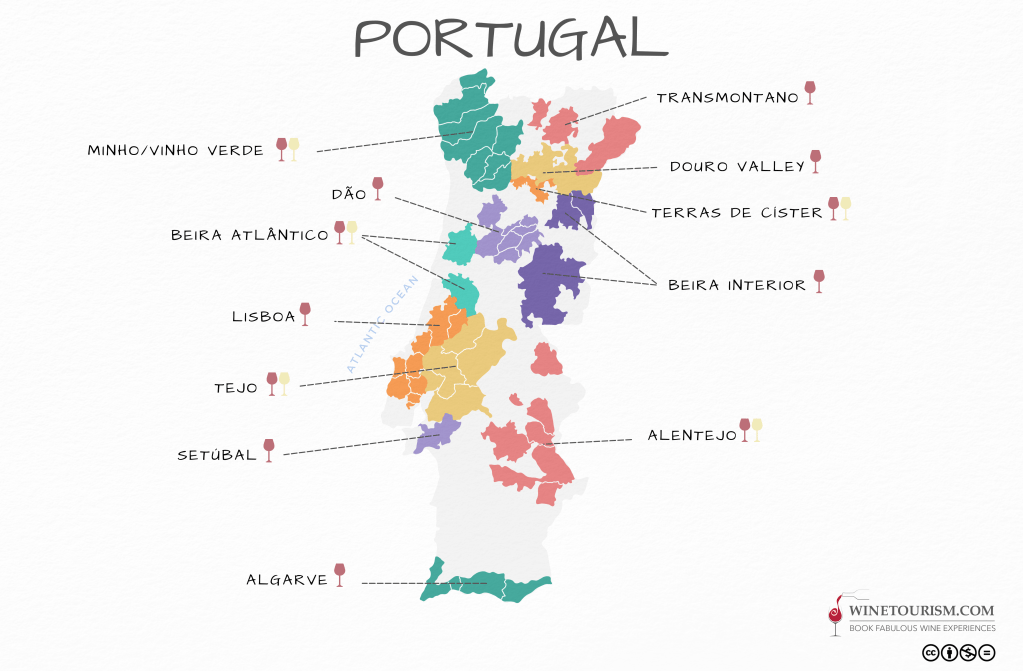
There are 55 wine regions but the 8 major wine regions in Portugal are, from north to south:
1. Minho: situated in the northwest corner of Portugal and is home to Portugal’s most famous white wine: Vinho Verde (literally “green wine”) which can be a blend of as many as 25 different varietals. This slightly effervescent crisp white should be drunk young and is made for summer drinking.
2. Douro: This is Portugal’s oldest wine region and the home of port, a sweet wine fortified with ‘neutral spirits’ … usually clear brandy. Excellent red wines are also produced in this region, usually from the same grapes including Tinta Roriz (Tempranillo), Touriga Nacional, Tinta Barroca, Tinto Cão, and Touriga Franca
3. Bairrada: The name comes from the Portuguese word for “clay” reflecting the dominant soil type. The most popular grape in the region is Baga, which must constitute at least 50% of any red wine from this region. The majority of the country’s sparkling wine comes from this region made from Bical and the Malvasia Fina varietals.
4. Dão: Located just south of the Douro, producing predominately red blends from Touriga Nacional, Tinta Roriz, Alfrocheiro Preto, Jaén, and Bastardo. Encruzado, a white varietal with aging potential is also grown.
5. Setúbal: The city of Setúbal is located on the northern bank of the Sado River about 30 miles from the capital Lisbon, and is known for nature preserves, beautiful beaches, fishing, and of course aromatic fortified dessert wines made primarily from Moscatel de Setúbal and Moscatel Roxo. Similar to Orange wines, there incorporate the practice of extended skin contact leaving the wines with rich concentrated flavors with a raisin character, intense floral aromas, and a burnt orange color.
6. Alentejo: This is the largest region covering about a third of the country situated in the southeast sharing a border with Spain. It is known for its numerous castles and mountain villages, olives, and of course, both white and red wines.
White wines include Verdelho, Diagalves, Manteúdo, Perrum, Rabo de Ovelha, and Fernão Pires with white blends being based around the Antão Vaz variety.
Red wines are made predominately from local varietals such as Aragonez (Tempranillo), Alicante Bouschet, Touriga Nacional, Alfrocheiro, Castelão, Trincadeira, Moreto, Tinta Grossa, and Tinta Caiada. A little Cabernet and Syrah are also grown, predominately for blending.
7. Algarve: Located along the Atlantic coast, and includes the four sub-regions of Lagos, Portimão, Lagoa, and Tavira. It is known for its rugged coastline, and beautiful beaches and is a very popular wine tourism region. The local vineyards produce high-quality white, red, and rosé wines as well as fortified wine all carrying the I.G.P label. Just a side note, the I.G.P classification was developed for those producers wanting to make wine from grapes not sanctioned under the stricter D.O.C classification. A similar situation in the Province with the ‘breakaway appellation’ of Méditérranée.
8. (Island of) Madeira: You guessed it, the home to the fortified white wine, Madeira. The island is located off the coast of North Africa about 600 miles southwest of Portugal and is also known for its Verdelho.
Here are some wine suggestions you might want to chase up …
It may surprise you to know that Portugal produces not just Port, but some great wines as well, and some budget-friendly wines. Here are a few examples to entice you into exploring further.
Please allow me to introduce you to your new summer wine, or patio pounder as they have come to be known …
The nose is a delightful mix of pears, green apples, and lemons/limes with just a touch of honey blossom. All of this is crafted by nature to entice you to take a sip. The palate has a slight effervescence, typical of Vinho Verde introducing you to a combination of green apple, citrus- lemon and lime, pear, and orange peel, with hints of passionfruit, banana, and honey.
Great balance and acidity, crisp and refreshing. Nice long finish.
This is definitely going to be a crowd-pleaser this summer!
I would pair this with seafood, salads, and chicken from the grill, especially with citrus marinade, lemon pepper, fresh herbs, and asparagus. I could also see this pairing well with Falafel with a squeeze of lemon, Baba Ghanoush, and Pita Bread- if you live in Indianapolis, try Al Basha restaurant at 11321 Village Square Lane, Fishers, off Allisonville Rd.
Azevedo Winery
When discussing Vinho Verde, an interesting note is the Azevedo Winery. Known for its white wines of excellent quality. Situated in a 15th-century Manor and Tower in the region of Minho in the North West corner of Portugal. It is also known for developing a yeast strain QA23 which is now the most used white wine & cider yeast on the planet.
Silk and Spice 2020.
It would be fair to say this is the most popular red wine to come out of Portugal and has consistently gained 90+ ratings over the last 10-plus vintage. A testament to its consistency and broad appeal. The label (an old map) pays homage to the Portuguese sailors and their spirit of adventure, that traveled the globe, and in the process, opened the Silk and Spice trade routes between Asia and Europe. This is a wine to be discovered.
The 2020 vintage is a Blend of 40% Touriga Nacional, 20% Baga, 20% Alicante Bouchet, and 20% Syrah.
Enticing aromas of ripe plums, dark fruits, and orange zest draw you in to take a sip. The palate is full, fleshy ripe fruits, and appealing. Layers of plums, cassis, blackberries, and black tea, with secondary notes of more black fruits, oak, and spices. There is just a hint of sweetness and a long finish that seals the deal.
This is made to drink in its youth, and given its consistency, there is no need to cellar.
Pairings should include red meat straight from the grill, meat pasta dishes or traditional dishes like the Vale do Bomfim wine recommendations below.
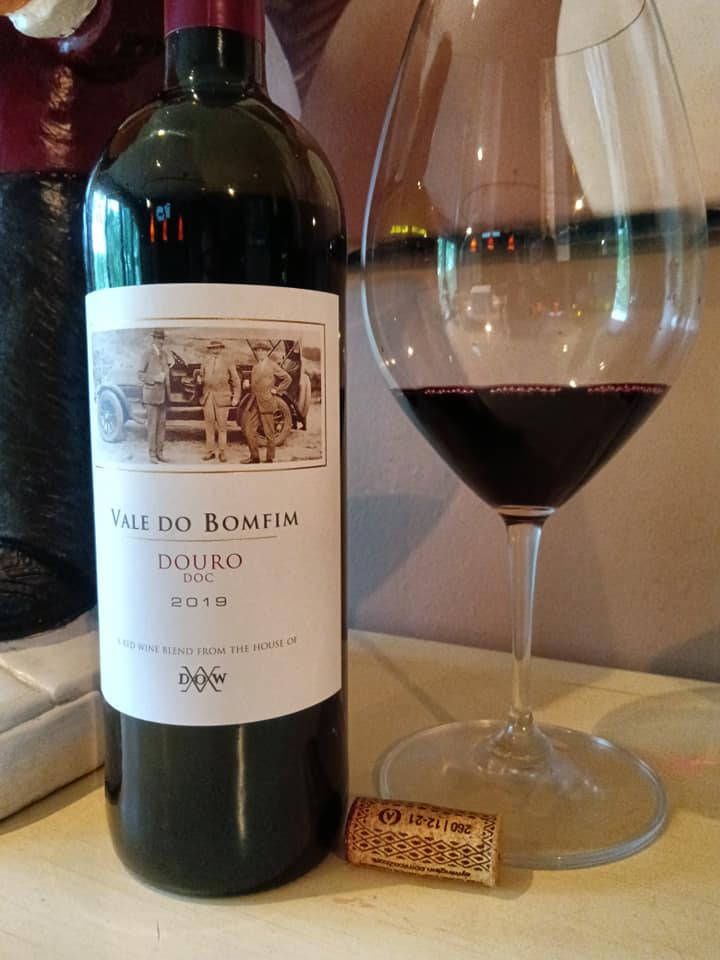
Vale Do Bomfim 2019.
This wine comes from the House of Dow Port and comprises 50% Field Blend and 30% Tourigas Franca and 20% Tourigas Nacional sourced from vineyards around Bomfim in the Cima Corgo and Senhora da Ribeira (upriver).
The nose is dominated by red fruits, with some dark fruits, floral, and pine. The palate is layers of red cherries, red currants, and pomegranates with a hint of blueberries and spices. Soft mouthfeel, with nice balance and structure, and a satisfying finish.
Will cellar out another 5 years, to 2028.
Pairings should include Francesinha- a meat dish made with ham, steak, or sausage with cheese and crusty bread, but light enough to pair with chicken piri-piri and Bolinhos de bacalhau- a deep-fried patty made from potatoes and salt-dried cod. If you look further afield, meat from the grill, meat Lasagna and Pepperoni Pizza.
Cabeco do Mocho 2014. From Algarve region- 7
This is a blend of 60% Touriga-Nacional, 20% Jaen, 10% Alfrocheiro, and 10% Tinta Roriz sourced from the region of Algarve in the south of Portugal.
The nose hints at the red cherries, vanilla, and dark fruits that are to come with pleasant old-world charm. The palate is fine layers of red fruits with cherries dominating, with secondary notes of vanilla, oak, and black currants. Nice approachable mouthfeel, structure, and finish.
Drinking beautifully now but I suspect this has a few more years yet. A testament to the balance and longevity of this wine.
This is made from 100% Touriga-Nacional with 10-plus years of cellar aging on it.
The nose is enticing and all dark plum and blackberries with a hint of violets, and raisins, revealing some age on the bottle.
The palate is smooth, rich, and inviting that coats your mouth from top to bottom and front to back with dark ripe plums, blackberry jam, and raisins. Great structure and balance with a long finish. Ridiculous value makes this a must.
Cellar time: drink now to 2025
Pair with grilled ribs, Francesinha- a meat dish made with ham, steak, or sausage with cheese and crusty bread, chicken piri-piri, and grilled octopus.
Almotriga Douro 2015. From Douro region- 2
This is a blend of Touriga Nacional, Tinta Roriz, Tinta Barroca, and Touriga Franca sourced from Douro, which is the oldest wine-making region in Portugal.
The nose is all red fruits with a hint of vanilla and spices. The palate is inviting with a smooth mouthfeel that delivers layers of red cherries, red currants, dark wild berries, vanilla, and spices. Nice long finish with great balance and depth.
I’m always a great believer in pairing ‘local foods’ with ‘local wines.’ Here is a website that has some amazing food suggestions and a few that are definitely not for the faint-hearted. That’s why we have free choice, right? Check this site out for more food pairing ideas: http://www.portugalist.com/portuguese-food/
Allow me to introduce you to Vinaceous Wines, Margaret River and Frankland River:
Vinaceous Wines was established in 2007 and is owned and operated by marketer Nick Stacy & winemaker Mike Kerrigan; part of the new movement of non-traditional wine producers – choosing to source grapes from the best vineyards in the premium maritime climate wine regions of Margaret River, Frankland River- part of the Great Southern AVA, Adelaide Hills, and McLaren Vale to make their unique range of wines.
Vinaceous champions emerging new varietals such as Pinot Grigio, Vermentino, and Tempranillo, as well as the usual French varietals.
The Labels have a distinct Old World Circus Poster feel, which jumps out at you on the shelves.
Voodoo Moon Malbec 2021 – Frankland River.
Grapes are sourced from a single vineyard in the subregion of Great Southern West Australia.
Impressive aromas of floral notes underpinned by dark fruits, plums, and just a hint of spices. The palate is rich as it is lean with great balance and soft approachable tannins. Layers of plum, dark cherry, and blackberries dominate leaving little room for secondary notes of earth, spices, and black raspberries.
Malbec flourishes in the Margaret River area and produces great examples, and without spending an arm and a leg, this is definitely worth drinking, and adding a few bottles to the cellar.
This will cellar out until 2030 without a problem and I suspect you will see improvements for a few years after that.
Pairings should include red meats- roasted, on the grill and big meat and veggie stews.
Red Right Hand 2020 – Shiraz, Grenache & Tempranillo – Margaret River.
This is a blend of 67% Shiraz, 24% Grenache, and 9% Tempranillo and is sourced from vineyards in both Margaret River and Perth Hills.
This coming together of three varietals complement each other with great results adding their own individual character. The nose is enticing with layers of blackberries, plums, red fruits, delicate floral notes, and a spicy note to round things out. The palate has a lot going on with a soft approachable
mouthfeel cradling layers of blackberries, ripe cherries, red currents, plums, pomegranate, and a nice earthy spicey note on the finish. Great balance with tannins evident and a pleasing sweetness (from the Grenache, no doubt). This is a wine to be enjoyed and shared amongst friends. A great wine to pair red meats, pork, and chicken from the grill.
Cellar out to 2030 without a problem.
Raconteur Cabernet Sauvignon 2020 – Margaret River.
Sourced from several vineyards across Margaret Rive and WA, this is reflective of Old-World influence with impressive elegance and restraint. Margaret River region contributes 54% of the grapes with 46% coming from Great Southern.
The nose is enticing with violets and blackberries dominating and the palate delivers on the promise. The palate is welcoming with a velvety mouthfeel and makes you want to take another sip.
Slow down, savory the first sip, and discover layers of blackberries, mocha, cassis, and black currant, with vanilla and savory tannins dominating on the finish.
There is impressive balance, elegance, and restraint on show here, and a delight to drink.
Again, cellaring could go to 2030 without a problem and beyond.
I would pair this with your favorite red meat dish, Italian red meat Pasta and Pizza, Lamb, Pork Ribs, and Chicken from the grill.
Snake Charmer Shiraz 2021 – Frankland River.
And last, but not least, Australia’s most popular grape varietal- Shiraz. This needs some decanter time so be patient, it is worth it.
Margaret River Shiraz is characterized but elegance and restraint, and this is no exception. The nose is inviting but it really gets interesting on the palate. The palate showcases ripe dark and red fruits with blackberries, plums, and red cherries dominating with chocolate, savory spices, and black pepper making an appearance.
Cellar out to 2030 with confidence.
Pairing should include your favorite red meat dish, any red meat, pork, or chicken from the grill.
Pazo das Bruxas Albariǹo 2022 – Wonderful drinking!
The first thing you notice is the straw yellow color and the enticing aromas of floral notes, nectarine, and pineapple notes. There is an inviting, crisp clean mouthfeel that gives way to delicate layers of white peach, passionfruit, lime, and nectarine with great balance and refreshing acidity. There is a deceptive richness about this wine that adds to the pleasure of drinking it.
Pairings: I would normally recommend Seafood, Shellfish, Chicken and of course, Tapas but I would be remiss if I did not include the Indian dish Chicken Tikka Masala in the mix.
This will cellar out for 3-4 years but is really meant to be drunk young.
A SECRET REVEALED
Pazo Das Bruxas pays homage to the folklore and landscape of Galicia. It tells the tale of the Galician witches said to have gathered in the woods, which surrounded some pazos or manor houses, to conjure up spirits with their dances and spells. Nourished by their energy, the sap or lifeblood then coursed through the vines, in the same way the Albariño grapes give life to this wine today.
The fact this wine came in at #31 in Wine Enthusiast Top 100 in 2022 earning a 93 Pt rating from James Suckling is NO Secret, or at the very least, not unexpected.
This is a blend of Garnacha, Cariñena, Cabernet Sauvignon, Merlot, and Syrah sourced from several different vineyards within the DOQ of Priorat located in the province of Tarragona at the foot of the Sierra del Montsant. A region long respected as one of the primary growing regions in Spain.
Enticing aromas of blackberries dominate with black raspberries and vanilla playing a supportive role. The palate is impressive from the first sip with a soft approachable mouthfeel and a delicate richness showcasing excellent balance. Almost seamless layers of blackberries, pomegranate, red currant, and black raspberries with secondary notes of vanilla, orange peel, and powdered chocolate all come together with impressive results. One glass and you will want to pour yourself another.
Pairings should include grilled steak, Chorizo Pasta with Spinach, and Manchego, Spicy Veggie Tapas, rich tomato-based Chicken dishes, Pork, and Turkey- think Thanksgiving.
LITTLE SECRETS OF PRIORAT
Secret del Priorat reflects the typicity and diversity of this incredible region, a land of small miracles that happen every day, like the flowers on a lone almond tree in the middle of the vineyard. The magical landscape of Priorat brings us this pleasant, delicate wine in a tribute to the local landscape, with its steep slopes and llicorella slate soils, and its valiant winegrowing, where nature prevails above all else.






 Vine to Table