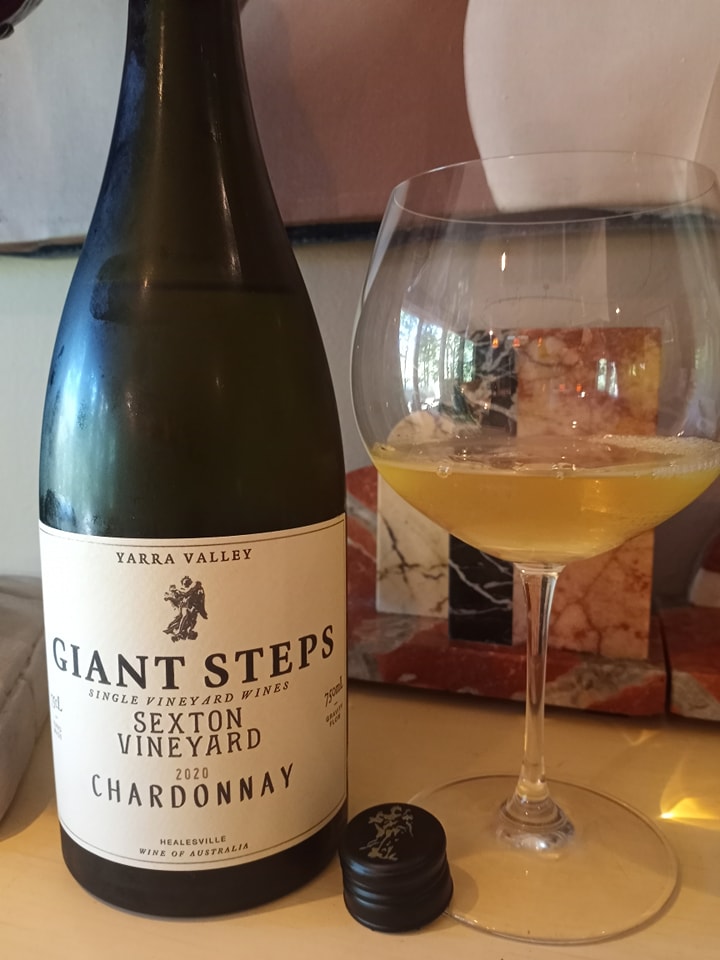
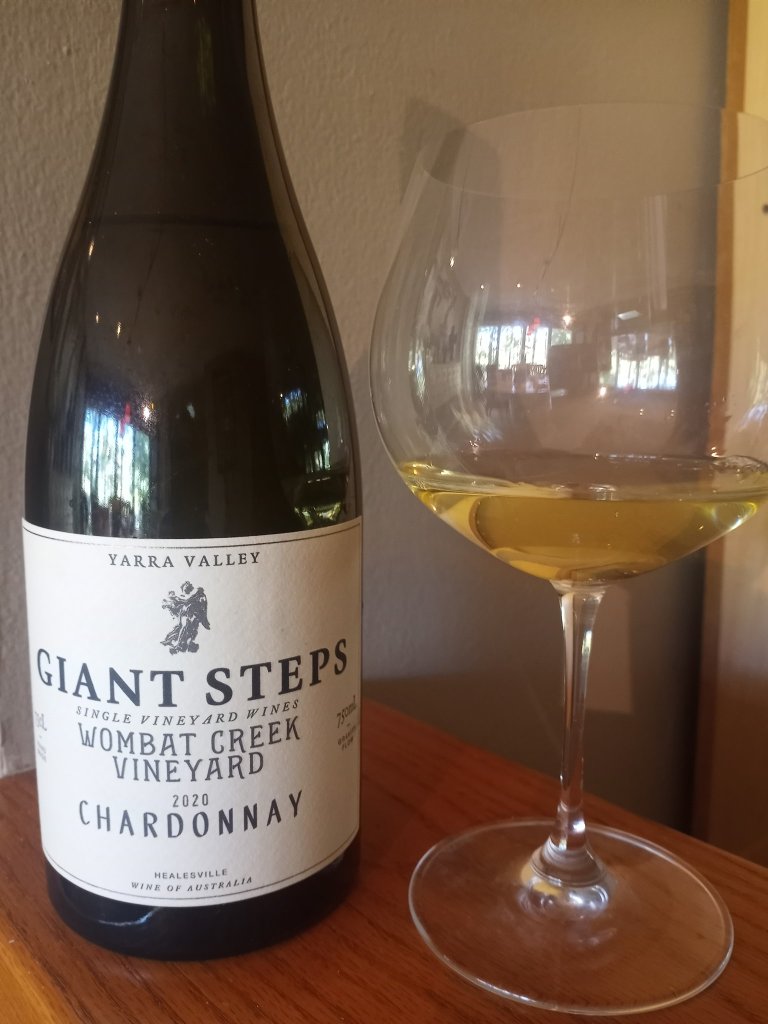
On reflection, its more a New Australian leaning- these wines reflect the direction that higher end Chardonnays in Australia are headed.
Those of you that know me, know that I love the Giant Steps wines. Everything they have released in the last few years have been spectacular reflecting the place, the quality of the vines and the tender loving care shown to them by Ryan Collins, their Viticulturalist and Chief Winemaker, Steve Flamsteed. One taste of any of the Single Vineyard releases and I’m sure you’ll agree, there all different but all winners.
I believe all the wines are produced from the Gingin clone, its origins are unknown but its home is Margaret River (cool climate region) with extensive plantings there, especially at Vasse Felix which produces exceptional Chardonnay’s.
“One of the main features of [GinGin] is it has millerandage, or ‘hen and chick’, ” says Virginia Willcock, winemaker at Vasse Felix, of its irregularly sized fruit. While some winemakers think there’s a virus infection in GinGin that causes millerandage, Willcock doesn’t care. She believes it results in high-quality wines. Source: https://www.winemag.com/2020/05/04/chardonnay-clones-matter/
Sexton Vineyards Chardonnay 2020
The nose is dominated by aromas of Almonds, ginger and citrus with hints of white stone fruit and a promise of things to come.
The palate is lean with beautiful balance, restraint and elegance. Impressive layers of lemon, ginger, saline and orange peel work together well with secondary notes of almond and subtle spices. Different from Margaret River Chard’s but definitely an old world leaning with lively acidity. On reflection, its more a New Australian leaning- this is the direction the higher end Chardonnays are headed in Australia. Impressive length on the finish. Will cellar out 10 years without a problem, if your patient. Pair with Shellfish, white seafood- Brim, Bass or Barramundi or any lighter chicken dish. I would steer clear of tomato-based sauces.
Applejack Vineyard Chardonnay 2020
The vineyard was named after the Applejack eucalypts that surround the vineyard and which was planted in 1997.
Nose is more citrus and floral notes with apples, white peach and spices buried beneath.
Palate is more-lively with layers of citrus, green apple, orange peel, white stone fruits and subtle spices. Same elegance, balance and depth and complexity with a silky mouthfeel balanced by acidity. Again, impressive length on the finish. Pair with Shellfish, white seafood- Brim, Bass, Sole or Barramundi or any lighter chicken dish. Again, steer clear of tomato-based sauces.
Wombat Creek Vineyard Chardonnay 2020
This is the oldest vineyard planted in 1988 with the highest elevation in Yarra Valley and the coolest and most southerly location of all the single vineyard releases which all contribute to making this an impressive Chardonnay showing depth, complexity and finesse from the first sip.
The nose is intoxicating with aromas of apples, peach and just a hint of musk, almond and spices. Musk isn’t common in the US but has sweet floral almost rose like scent and is used in high end Perfumes and Australian candy- delicious.
The palate has a silky smooth, almost creamy mouthfeel balanced with acidity and impressive structure and power through to the end. Oak is evident but not obtrusive framing wonderful layers of crisp red apples, white stone peach, vanilla with subtle spices on a long finish.
All of these Chardonnay’s will cellar out 10 years. If I had to choose a favorite, the Wombat Creek wins by a nose but all are an absolute pleasure to drink.
Pair with Shellfish, white seafood listed above or any of your favorite chicken dishes. Again, steer clear of tomato-based sauces. Enjoy these awesome wines.
There are few things I look forward to more than a release of the new vintage of St Henri- one of my all-time favorite wines and most definitely my favorite Penfolds wine. I’ve been fortunate to have tasted 20 plus vintages and its like sitting down with an old friend you haven’t seen for a while- it’s always a pleasure.
Like most Penfolds wines, this is a multi-regional blend, of 100% Shiraz, sourced from Barossa, McLaren Vale, Port Lincoln, Robe, Padthaway, Clare Valley and Adelaide Hills grapes drawing characteristics from every vineyard and region. The boldness of Barossa, the elegance of McLaren Vale and Clare Valley and a hint of individual quirkiness from each of the other regions.
Released for the first time by Penfolds in the early 1950s (first commercial vintage 1957), it gained a new lease of life in the 1990s as its quality and distinctive style became better understood. Source: www.penfolds.com
A wine so totally individual and unaffected by trends, it is unashamedly confident in its character. This is a big bold wine with a ton of character whilst being elegant and restrained with incredible balance. I initially decanted this for 5 hours and was amazing, revealing its further potential as it unwound. I then left it for a further 24 hours with just the cork in, no air removed at all for further aeration with spectacular results.
Nose is most definitely seductive, complex, with ripe blackberries, pencil shavings and plum with a smattering of red and blue fruits with earthy notes in a supporting role.
Palate has a creamy smooth mouthfeel, graceful, with immediate appeal with layers of rich ripe blackberries, raspberries, plum and dark cherries dominating with dark chocolate, sweet spices, tobacco, with subtle black pepper and leather rounding things out. Very long finish as you would expect.
Pair with something special, a red meat dish with roasted vegetables and Italian herbs.
This is drinking well now, with some serious decant time but cellaring out will bring immense rewards- 35 years and beyond.
….. about Italian wines is they only focus on the classic Italian varietals. Nothing wrong with that if you don’t mind missing out on some great wines. I’m here too tell you that Italy makes great Cabernet and this is a wonderful example.
With an understated label it’s easy to pass over this wine on the shelves of your favorite wine store. This vintage comes in an impressive wooden 6 pack box which should give you some insight into its quality and potential. Grapes are grown in the heart of the Zingarelli family property in the “Poggio alle Pecchie” on a limestone hillside and then aged for a minimum of three years before shipping. The vineyard is located in La Macie in the Chianti Classico region of Tuscany.
Rocca delle Macie Roccato Cabernet 2015
Initially launched in 1988 and traditionally blended with a small amount of Sangiovese, this vintage is 100% Cabernet and could be described as complex but approachable with aromas of dark cherries, dark fruits, chocolate and cooking spices and is enticing to say the least.
The palate is all Cabernet and all Tuscany at the same time- a duality that works well. Cherries, plum and mocha dominate with secondary notes of cloves and cooking spices on a plush mouthfeel with grippy tannins which loosen with 2 – 4 hours decanting. Beautiful balance with depth and elegance with a long finish.
Will cellar out to 2030 without an issue and I’m thinking beyond that depending how ‘aged’ you like your wines. Only 550 cases made and only 50 came into the US.
I would pair with your favorite hearty Italian red meat dish- stews or anything with tomato-based sauces, including Pepperoni Pizza.
Made from the Nebbiolo grape grown around the village of Nieve, in Piedmont and is part of “I Borghi più belli d’Italia” which translates to “the most beautiful villages of Italy”. It’s a group of small Italian villages of historical interest and well worth a visit if your every in the region.
Unlike its more masculine ‘brother’ Barolo, it is lighter in character and requires less cellaring to bring out the its best. Like all Italian wines it is made with the intent of drinking it with food. On that topic, Truffles, game such as Goose, Elk, Duck, Rabbit and Veal are recommended and of course Beef and Steak. Cheeses include Fontina, Gorgonzola, Parmesan, Robiola and Romano work best. The high acidity and tannins make it perfect for fatty meats with earthy sauces. Where Barolo is hailed as the King of red wines Barbaresco is most definitely the Queen.
Enough about food, the aroma’s range from floral to bright red fruits with a lively attitude. The palate is approachable and smooth with layers of cherries and strawberries dominating with secondary notes of spices and red plums. This is a totally enjoyable wine to drink, especially with the above food pairings. Further cellaring for 5 – 10 years will be rewarded.
Technically it is called Altesse but it is most commonly referred to as Roussette with the origin of the name means Highness or Your Highness- reflecting its stately quality, texture, depth and finesse. This Roussette hails from the regions of Savoie and Bugey and is considered the noble native varietal- Cyprus also claims to have some origin ownership in the mix but it’s more likely French.
Situated just north of Provence boarding Italy, it is divided into four main growing districts and 16 different cru vineyard areas. Backdropped by Postcard style Alp’s framing rolling green hills and cool mountain streams it is considered a must visit region, that just happens to produce some exceptional wines, especially whites and this 2021 Roussette is a classic example.
On first smell of the bouquet and I thought, just for a second this was a Chardonnay displaying crisp acidity, honey suckle and notes of white flowers but one taste and you’ll discover something completely different. Layers of honey suckle, orange peel and stone fruits dominate with wonderful texture and mouthfeel, crisp acidity and balance with a long lingering finish that begs you to take another sip. I would pair this with Seafoods, Brim or Sea Bass, Salads, Fried Calamari or chicken dishes with some spiciness. One last comment, there is a richness on the palate that will catch you off guard. Should drink young- in the next 2 – 4 years.
During my stay in Greece we spent a week on the Island of Mykonos and was told about how the good the wines from both Mykonos and Santorini were, especially the whites.
Not wanting to waste much time we booked a wine tour for day two, which included being picked up from our Villa and driven to the Winery, an absolutely delicious lunch paired with three of their wines finishing off with a guided tour of the winery.
Given I have no Greek lettering on my laptop I’ve included a photo of the name and address of the winery. I also might add that it is the only official winery on Mykonos and is on the site of the ‘oldest vineyards on Mykonos’ some 200 years old. The current vineyards are only 35 years old and are organically and bio dynamically farmed- we meet the goats and donkeys that fertilized the vineyards and feed them grapes. Another interesting fact is that most of the Islands are owned, and leased from the Monasteries and Nuns. There is also what’s known as a Tama or small building dedicated to God on every property, and can range from Church size Monasteries to small domes or out buildings.
Getting back to the Winery, the vines are not trellised or watered. Mykonos receives only 6 – 8 inches of rain a year and is windy year-round. They rely on the ocean for ‘water and additional flavors and minerality’ whilst cane is grown around the vines to protect them from the winds which also remove any diseases.
The White Wine we tasted was a blend of Asyrtiko and Athiri and was delicious showcasing texture, balance and complexity with flavors of apple, white stone fruits and citrus notes with impressive crispness and acidity.
The Red Wine was a blend of Mandilaria and Agiannitis and resembled an Italian Sangiovese with an enticing nose and a palate showcasing ripe red fruits with impressive balance, depth and complexity.
We finished the meal with a Dessert Wine which they only make 300 or so bottles and was a delightful surprise prompting us to bring back two bottles to the US. A seductive nose of intense ripe fruits and a palate loaded with peaches, pineapple, apricots and a subtle fruit cake note to round things out. Reminiscent of a Sauterne without the price tag. It was only 14 Euros a bottle- about $14 with current exchange rates.
We also spent some time with the Owners daughter who is actively involved running the winery full time and was both informative and a delight to interact with.
Lunch at a local Restaurant.
We also dinned at a local restaurant close to our villa and totally enjoyed a meal of traditional Greek dishes with fresh Brim as main course paired with a delicious white wine I later found out was a ‘dry Semillon’ with such an intense palate texture and depth of flavors- it caught me off guard just how good it was.
The food in Greece is amazing healthy and the wines are impressive. It’s a shame none of the wines I tasted are available in the US.
Just as a finishing comment, Greece, and Mykonos are most definitely worth a visit. Especially the winery we visited, the local restaurants and numerous bakeries. There is so much to see and do, August is high season so expect crowds and no bartering in local stores.
I visited Adelaide in 1985, just a quick 5-day visit and stayed 10 years- one of the easiest cities in the world to live in and a must visit if your every in Australia. I visited Chateau Tanunda in that first week and then several times a year over the course of my stay. It wasn’t as grand as it is today but an amazing building never the less (it was fully restored in 1996) Check out www.chateautanduna.com for further photos.
The history of Chateau Tanunda started with a grand vision a hundred and thirty years earlier with the construction of a majestic bluestone Chateau to rival anything in the world with the aim of making world class wine to sell both locally and to ship to Europe. At that time Europe was wine starved (hard to believe, right) from the effects of Phylloxera that totally decimated vineyards in the early 1870’s. European vineyards were restocked from vine cuttings from both the US and Australia- both being far enough away not to be affected.
Cabernet Sauvignon 2018
Aromas of Black fruits pour from the glass with hints of vanilla and eucalyptus delivering an invitation to further explore this wine. Palate is soft and silky smooth, even at the tender young age of 4. Blackberries, black currents and plums immediately coat your mouth leaving you with a warm fuzzy inviting feeling. Excellent balance with evident, but soft tannins and with impressive restraint and finesse. Wonderful length on the finish. This is really is an impressive wine and drinks well beyond the price point. Despite Barossa experiencing some hot spells in January and February, the last two weeks on the vine was perfect ripening conditions resulting in some exceptional wines from the 2018 vintage- this being a great example.
Drinking well now, especially with an hour or so decanting but will continue to improve over the next 10 years- 2032. Pair with any of your favorite red dishes.
Shiraz 2019
The Shiraz has all the hall markings of a classic Barossa Shiraz, loads of dark fruits, plums and black pepper on the nose, much of which reveals itself on the palate. Add some black currents, vanilla and a delightful nutty note to the nose profile and you have a really interesting Shiraz that over delivers and will definitely put a smile on your face. Again, drinking very well now, with a few hours decanting but will age gracefully over the next 8 years- 2030. Pair with your favorite dishes off the grill.
Is actually Taylors Winery originally established in 1969 by Bill Taylor who was a Pub owner and Wine Merchant in Sydney who sold what could have been the first ‘private label’ in Australia- Chateau Clare. Their association with the Clare Valley Co-operative to produce the Chateau Clare wine dates back to the 1950’s exhibiting great insight to the potential of the region before it was ‘known’ despite having a history dating back to the 1860’s. Today the winery and wine making responsibilities lay squarely with third generation Mitchell Taylor (along with his three brothers) who continues his father and grandfather’s vision and respect for the land, the soil and the grapes.
A Note About the Region.
Both the region and the winery have a reputation for making elegant restrained wines that will cellar out decades helped along with a perfect Mediterranean climate and ideal soil and rainfall. Riesling and later Shiraz and Cabernet were the early stars but plantings of Malbec, Pinot Grigio Chardonnay, Semillon, Sauvignon Blanc, Pinot Noir, Tempranillo and Grenache have been making their presence known over the past 20 years or so. The region sits between 1,300 and 1,600 feet in altitude with warm days and cool nights. Looking over the region with vineyards spread across the landscape, it’s hard to believe it was ocean bed in the distant past. When I first visited South Australia in 1986 my host asked me first morning there what would you like to do and I responded immediately ‘Clare Valley to taste some wine’.
Re vintages, Clare Valley has had 5 consecutive vintages of great to excellent quality starting with 2015 through 2019 covering three of the wines today.
Promised Land Releases- Value Driven that over delivers.
Quick note about the Promised Land releases. These wines are their ‘entry level’ wines but drink anything but. With the care and attention to detail that was handed down from their founder Bill Taylor and carried on three generations late. Try them and you’ll see what I mean. It’s worth mentioning the seahorse on the label was inspired by the 1,000’s of seahorses discovered when the family dug their first dam on the property to ensure a water supply during times of drought. I should also mention these wines define the very concept of value driven.
Promised Land Cabernet 2018
The nose is restrained but loaded with red fruits, chocolate and spices and entices you to take a sip. The mouthfeel is surprisingly smooth and velvety with blackberries, red cherries, red currents with hints of chocolate and spices in a nice finish. Excellent value and a great drink. Cellar to 2025 without a concern.
Promise Land Shiraz 2019
Again, Clair Valley restraint with dark fruits, plums, eucalyptus and spices dominating the nose- all Shiraz. The palate is all blueberries and raspberries with secondary notes of plum, pepper and just a hint of licorice. This is the perfect cook out wine when you invite a group of friends over.
Clare Valley Riesling 2020 – Impressive follow up to 2019 release.
The nose on this wine is enticing with layers of citrus, white stone fruits, field flowers and just a hint of petrol, makes you want to jump right in and take a sip. Mouthfeel is crisp and clean with a mouthwatering freshness. Layers of lemon and lime, orange rind, honeyed pear and ginger all go together beautifully to impress, with great acidity and balance. Very similar in style to the 2019 vintage which was their 50th Anniversary release. Pair this with shellfish, seafood and Asian chicken dishes and elevate the experience. Absolute delight to drink. Will cellar this out till 2030 without a problem.
Clare Valley Cabernet 2017 – 50th Anniversary Release.
This has all the hall marks of a Barossa Cabernet with a wonderful Clare Valley twist with some altitude, elegance and finesse thrown in. This is great drinking at Tuesday night prices- definitely over delivers. The nose is all dark fruits with a hint of spices but the palate reveals far more. Thick rich layers of blackberries, blueberries and plums with secondary notes of spices, cedar, vanilla and sweet tobacco (reminiscent of northern Barossa, about 10 miles to the west) Very approachable and far too easy to drink. Pair this with any red meat from the grill and hamburgers all day long!! Cellar to 2028 with confidence.
Clare Valley Shiraz 2018 – Great Aussie Shiraz.
All Barossa Shiraz on the nose and again, with that typical restraint and elegance that comes with some altitude and a cooler climate. From the outset, this is an impressive Shiraz that quite blatantly over delivers. Enticing nose and a palate that welcomes you like an old friend. Wonderful soft mouthfeel, with layers of dark fruits, ripe plums, with just a smattering of red fruits, white pepper, dark chocolate, mint and just a hint of sweetness. Cellar to 2028 with confidence.
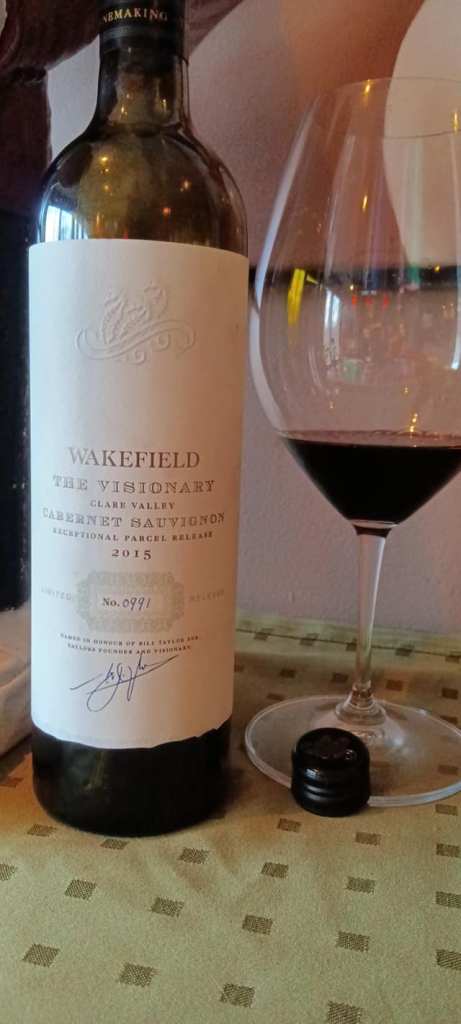
Wakefield ‘The Visionary’ Cabernet 2014
Tasted this on initial opening and was impressive but one sip told me to let this sit and decanter for a few hours- you won’t regret it. The wine was dedicated to Bill Taylor who was most definitely a visionary. In 1969 he purchased 178 acres and planted Riesling and more importantly Cabernet when the predominate ‘Wine’ coming out of the area was Port. He has a vision that Clare Valley would one day be recognized as a great red wine producing region, and not just for Riesling.
The nose is seductive with beautiful floral notes underpinned with dark fruits, plums, chocolate and coffee with just hint of eucalyptus and leaves you, in no uncertain terms, you’re going to taste an impressive wine.
This is text book classic Clare Valley Cabernet, just elevated to the next level.
The palate is silky smooth that envelopes loads of ripe blackberries, dark raspberries, plums with chocolate, coffee, spices, sweet tobacco and a dusty earthy note playing a supportive role. Great body and structure, fine grain tannins and enough elegance and finesse to stretch two bottles. Loads of character and appeal and an absolute delight to drink. This has had three years barrel aging and five years in the bottle and still needs decanting. This will cellar out to 2030 without a problem and I suspect well beyond.
Pair with any red meat dishes, just be careful choosing, this really is an exquisite wine and should be treated with the respect it deserves.
2017 was a difficult vintage and, as we all know the year finished with devastating fires. Putting all that aside, those that got it right, got some spectacular results. In retrospect, the biggest problem the 2017 vintage faced was being flanked by 2015, 2016 and 2018 vintages that produced some exceptional wines. 2017 got lost a little but there is absolutely no reason to take it off the radar. Those vineyards that survived the heat spikes and picked at just the right time, ended up with some impressive wines and this Cabernet is most definitely a textbook example of just that.
History- a little background.
Philip Togni’s first brush with the wine business dates back to 1954, but a chance meeting with Professor Dr. Maynard Amarine- Davis University encouraged him to pursue a career in winemaking. Philip enrolled in the newly formed national winemaking program at the University of Bordeaux and under the guidance of famed pioneer winemaker Emile Peynaud, graduated in 1957 with a Diplôme National d’Oenologie. He was one of only five students to graduate that first year.
He moved to Napa in 1959 and spent the next 15 years making wine for several well -known Wineries before purchasing his first vineyard in Spring Mt in 1975 with the first vintage release in 1983. The winery is very much self-contained keeping control on every stage, with a focus on consistency and attention to detail. After 4 plus decades of making-wine they know what works and what doesn’t.
The Wine.
The Cabernet has a splash of Merlot, Cabernet Franc and Petit Verdot and is made to age- 10, 15 or 20 years. Today, Philip’s daughter Lisa is at the helm making the wine cutting her ‘wine-teeth’ in both Bordeaux, Australia and of course with her father.
It’s also interesting to note that in a blind tasting in Brussels Togni wines took honors over all the other California and Bordeaux producers represented and was thought to be a French Producer.
OK, let’s talk about the wine. The nose is both striking with enticing, high elevation dark fruits with subtle herbs with a mint note to complete the introduction. The palate is restrained and elegant and screams old world structure with attitude. Blackberries, cherries, red plums and currents dominate the palate with secondary notes of herbs, menthol and mint on a very long finish. Wonderful grippy tannins and excellent balance.
Those that are familiar with these wines know they are made to cellar and drink well into the future. If you have a desire to drink this sooner, I would definitely give this 6 – 8 hours decanting. Open it in the morning for dinner that evening. Your patience will be rewarded.
I would pair this with any big red meat dish, French Provincial, Beef Burgundy or Lamb and Venison at a pinch.
Heritance has been described as the cornerstone Napa Valley brand of the Taub Family Vineyards but its history goes back further than when the Taub Family bought them. The name Heritance was derived from combining the words ‘heritage’ and ‘inheritance’- two important concepts signifying a new tradition and the continuation of an enduring legacy championed by Bernard Portet and Don Chase. Bernard’s history in the wine business started at his father’s side who was a technical director at Chateau Lafite Rothschild. In 1970 he was assigned the task of sourcing premium vineyard sites in Napa to grow Cabernet.
His first project in 1972 was the placement of the Clos du Val vineyard and founding winemaker with his first vintage Cabernet was one of six selected for the now famous Paris Tasting of 1976. After his ‘retirement’ he started sourcing grapes from some of the best wineries in Napa for Polaris wines producing two wines Heritance focusing on the best Napa had to offer and Nandu focusing on the best Malbec Argentina had to offer.
In steps the Taub Family with Napa history dating back to late Prohibition days and transforms this project into Heritance wines focusing on two varietals and just four wines: three Cabernet’s and a Sauvignon Blanc. Now there are three new single vineyard Cabernets that have been added with stunning results.
Thomas Hinde was appointed the winemaker who cut his teeth with Yao Ming Wines, Cardinale and Lokoya wineries and a stint with Flowers Winery in Sonoma- all impressive stuff and an excellent pedigree for producing some of the finest wines out of Napa and upholding the tradition of restraint and elegance regardless of price point.
The winery utilizes some of the best grapes from the best sites in St. Helena, Yountville, Oakville and Rutherford, and more specifically from the ultra-impressive Beckstoffer Georges III Vineyard. Darren came onboard as assistant winemaker in 2017.
All this is great information and gives you some insight into the wines but tasting them is the best and only real test!
Heritance Napa Cabernet 2016
This is a really impressive Cabernet and given it retails around forty dollars mark makes it even more impressive. This ‘entry level’ Cabernet has everything you would expect from a totally enjoyable Napa Cabernet- enticing nose of violets and dark fruits with a delightful soft mouthfeel. Loads of blackberries, plum and chocolate combine to impress and a great introduction to Heritance wines without breaking the bank.
This needs a little cellar time or decanter time for those who want to drink one immediately to gauge potential and believe me, this has some aging potential of somewhere around 8 – 10 years. As with all their wines, your patience will be rewarded!
Heritance Rutherford Cabernet 2016
First thing I noticed is a ‘rebranding’ of sorts with the Taub Family Vineyards name replacing Heritance on the label. Good news is the wine hasn’t changed and is still impressive Rutherford with excellent depth and complexity. Give this wine a little time and the nose will unfold and reveal violet and cassis and chocolate. The palate is really where this wine begins to impress in earnest. Almost seamless layers of dark fruits, cherries, chocolate and of course the ‘Rutherford dust’. If this is any indication of their 2016 wine’s I can’t wait for the Beckstoffer Georges III offering to be released in the coming weeks- see below.
Howell Mountain Napa Cabernet 2018
The grapes are sourced from the Rahn vineyard — a high-altitude mountain vineyard at 1400′ with deep, well-drained, porous, gravelly volcanic soils. Grapes are picked, de-stemmed and sorted by hand with the utmost care, and aged for 22 months in 75% new French oak.
High elevation fruit produces elegant restrained wines with delightful perfumed noses and this is a wonderful example of what happens when everything falls into place. Nose is impressive with violets, black cherries, cigar box and cooking herbs, all working together to entice you to take a sip. The palate is rich and seductive with blueberries and blackberries fighting it out for domination with cherries, herbs, mint and just a hint of chocolate rounding things out on a long impressive palate.
Mount Veeder Napa Cabernet 2019
Grapes are sourced from the Henry Vineyard and picked, de-stemmed and sorted by hand with the utmost care, and aged for 22 months in 80% new French oak.
One sniff of this wine and you know your in for something special. Loads of dark fruits, cherries, floral notes and an interesting bramble note rounds out this enticing nose. The palate is restrained and elegant with amazing concentration and balance immediately evident. Ripe dark cherries and blackberries dominate with secondary layers of plum, mocha, spices and a sweet toffee/caramel note. An impressive assembly of flavors that unfolds to a crescendo on a long finish. Make no mistake, this is a big rich wine that is an absolute to drink.
Between the two single vineyard releases, both are equally impressive but the think the Mount Veeder wins by a nose.
This new 100% Cabernet release is sourced from the Beckstoffer Missouri Hopper Vineyards, located north of the town of Yountville in the Oakville AVA and was originally part of a larger estate owned by George C. Yount, from which the town takes its name. It was purchased by Charles Hopper and gifted to his daughter Missouri in 1877 who planted vineyards and ‘other fruits’. Fast forward to today.
Taub Family Wines under the guidance of their two winemakers Tom and Darren have access to some of the best, I repeat, the best vineyards in the valley and produce wines of distinction, finesse and balance with depth and complexity one would expect from wines at twice the price.
First of all, what an awesome addition to the lineup! This wine is rich and decadent with a truck load of appeal. The nose is enticing showcasing dark fruits, plums, sweet tobacco and spices but it’s the palate that exceeds expectation. One sip and you’ll be impressed by the completeness of this wine. Silky smooth with big bold dark red fruits, black current and plum with secondary notes of dark chocolate and herbs, all delivered with restraint and elegance. Everything in its place and balance to boot with a long finish. An absolute delight to drink. Will cellar out to 2035. Pair with your favorite red meat dishes, just make the choice worthy of this impressive wine- This really is an amazing wine!
Beckstoffer Georges III Napa Cabernet 2016
If any of you know me, you’ll know I love this wine and is one of my all-time favorite Napa Cabernet’s. You will also know that they make tiny amounts, some vintages as low as 56 six-packs. I’ve been fortunate to have tasted the last 5 vintages and all have been amazing.
Grapes sourced from Beckstoffer Georges III only partially explains why this is such an impressive Cabernet. Of course, Rutherford appellation adds another layer of insight. All of this is great but the depth and complexity of this wine is very impressive. From the seductive nose, that transports you to some far-off land with a promise of everything great, to the silky-smooth palate this is a spectacular wine.
Flavor profile is almost seamless making it a challenge in identifying the blueberries, raspberries and dark cherries that cradles a core of plum and chocolate with a sweet, almost raisin note on the finish. The traditional Rutherford dust didn’t become evident till after the second sip. Difficult not to have a smile on my face and yes, it’s as good as you think it is!
This will cellar out to 2030 without a problem and most probably beyond.