Situated on the eastern side of Napa in the hills above Rutherford, drawing in the spirit of Burgundy and Tuscany.
The palate carries an Old-World attitude with a Napa mouthfeel- soft and approachable with an unexpected, but impressive middle palate silky smoothness. Great balance with acidity and tannins in check.
Enticing aromas of Raspberries, Cherries and dried herbs greet you. The palate reflects the nose with additional layers of red currents, blackberries, and plums extending out on a long finish. Will cellar out another 5 years, to 2028.
Pair with just about any red meat from the grill and a few friends.
Kuleto India Ink Red Blend 2021
One look at the wine in the glass and the name starts to make sense. This is a blend of 70% Petite Sirah, 18% Merlot, 8% Cabernet Sauvignon, 2% Malbec, 2% Petit Verdot.
Impressive aromas of dark fruits, sweet tobacco, and cooking herbs will entice you to take a sip, or two. Wonderful mouthfeel, soft and seductive serving up blackberries, plum, savory notes, and cooking herbs and pepper. Give it some time to breathe and a cooked meat smokiness develops.
No guessing here on what to pair it with- spicey and straight from the grill.
Yes, you read correctly, Assyrtiko, the classic Greek varietal is being grown in Australia, since August 2012 no less. When you think about it, the climate in Clare Valley and surrounding wine regions is most definitely Mediterranean so it makes sense that it was bound to appear at some point. In the past decade, Australian winemakers have been planting and experimenting with 100’s of different varietals you wouldn’t expect to see with some excellent results. This is a classic example.
Delicate aromas of citrus, pear, apple, and saline are impressively showcased. The palate is where things happen. Lively and refreshing with a sensational mouthfeel that frames layers of citrus- lemon and orange peel, green apple, wet stone, and a hint of saline. Not unlike the dry Rieslings, that Jim Barry and Clare Valley are known for, just more like a half-brother with an interesting past. Just a hint of sweetness on the rather long finish. Absolutely delicious and a must for spring and summer parties.
I’m inclined to drink this young and enjoy the lively freshness.
Pair with Shellfish, Scallops, grilled fish, oysters, and salads. If that isn’t enough, check out what the Greeks pair with it. The adage ‘what grows together, goes together’ applies. I paired grilled fish and chicken with lemon and octopus when I was in Mykonos last summer- spectacular.
The Benbournie Cabernet 2014
Clare Valley isn’t known for Cabernet but I think that is about to change, after tasting this Cabernet. Not like any Cabernet, I’ve tasted from Australia, don’t get me wrong, it’s all Cabernet, just a divergence, super interesting, and a delight to drink.
The nose is all red fruits with a smattering of dark fruits, dried cooking herbs, and mint. The palate is all raspberries, red currant, black currant, and cassis with secondary notes of mocha, and dark chocolate all delivered with boldness, elegance, and beautiful balance. There is a subtle tension there that adds to the complexity and makes the finish worth waiting for. Tannins are still evident, despite being 9 years old. I would suggest 3-4 hours of decant time to get the best out of this. Another 8 to 10 years in the cellar would only benefit this excellent wine- 2030 and beyond.
Pairing: Any rich red meat dish will work with this, just make sure it’s worthy.
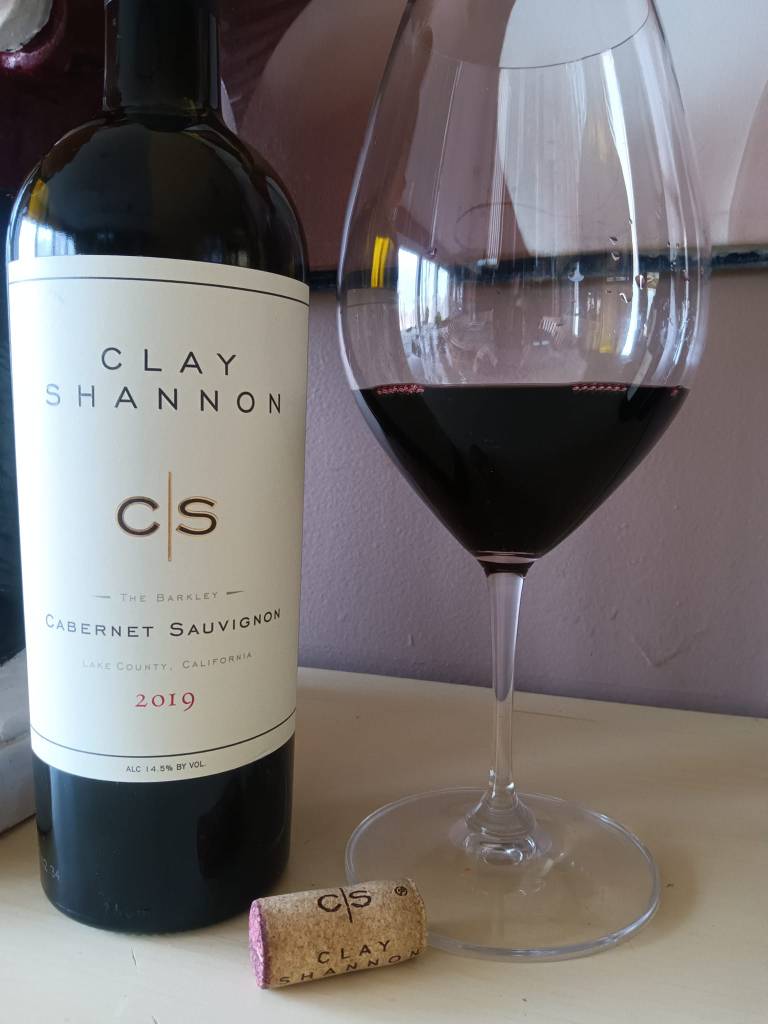
Without the cache of Napa, pricing for grapes per ton is about a third of what Napa Cabernet fetches. The upside to this is you get great Napa-style wines at a much-reduced price point. Lake County is high elevation, Estate Grown fruit, and is just adjacent to Napa, to the north.
Big bright fruit aromas pour from the glass with notes of cassis, dark cherries, black raspberries, and a lingering hint of mint.
The palate delivers blackberries, black currents, dark cherries, and cooking herbs with surprising boldness and generosity. A nice balance of Napa swagger and high-elevation elegance with a long finish that gives you time to decide when to pour yourself another glass.
Improvements from cellaring should extend to 2030.
Pairings suggestions: Lamb, Prime Rib, New York strips, Pork, Chicken with Tomato based sauces, and vegetable dishes including Pizza.
The driving force behind Rhys Estate is to make Pinots and Chardonnays that are unique and expressive of the chosen vineyard sites. All of the sites are selected for their distinctive soil and the growing climate spanning 6 different sites in the Santa Cruz Mountains region and 1 in Anderson Valley. Their Skyline Vineyard has the distinction of being the highest vineyard in California at an altitude of 2,360 ft.
All the grapes are vinified by blocks in small one-ton fermentation tanks and are crushed by feet instead of modern mechanical methods, utilizing natural yeasts for fermentation and French barrels for aging.
The result is a range of distinctive, unique wines that reflect their terroir and are an absolute delight to drink that stand up to cellaring with exceptional rewards.
Horseshoe Vineyard Chardonnay- 2012
Sourced from one of their Santa Crus Mountains Estates with an elevation of 1360′ to 1610′ planted on a base of sedimentary rock and volcanic ash intermingled with Limestone. Combine this with maritime influence- the Pacific Ocean to the west and the San Francisco Bay to the east and you have ideal growing conditions for Chardonnay.
The first thing to note is the lovely golden yellow color it’s developed- always a dead giveaway for an aged Chardonnay. The nose is still bright with layers of pear and apple and just a hint of citrus.
The palate is rich and creamy displaying excellent structure and balance. Apples, ripe pears, and citrus with a hint of creme-brulee/ caramel and oak on a long finish.
This is drinking so beautifully now I would have to say it’s close to its peak. If you are lucky enough to have a few bottles stored away I would be tempted to keep one until 2025, just to see how it develops further. If you’re intrigued and can find a bottle somewhere, expect to pay around $100 but it will be worth the experience. Hats off to a bottle of fine wine and its ability to cellar and impress after 10-plus years.
Bearwallow Vineyard Pinot Noir 2012
Sourced from their Anderson Valley Vineyard with an elevation of 300′ to 600′ planted on a layer of fractured shale, quartz, and sandstone and chosen for that very reason.
The nose is immediately impressive with layers of dark cherries, passionfruit, raspberries, coffee, and floral notes. A really pretty nose with a hint of spices and a promise of more to come.
The palate is smooth, inviting, and elegant with layers of dark fruits- dark cherries, raspberries, blackberries, and secondary notes of plum, violets, and spices. Impressive integration and balance with amazing depth and complexity.
If you do see this anywhere, buy it! You will not be disappointed- drinking beautifully now but I suspect this will be drinking even better over the next 5 years. Should retail for around $80 a bottle.
This is an impressive wine from the start, but it does need some time to open. I suggest 4 – 6 hours but then: spectacular. Big bold rich fruits hit the nose and the palate with elegance and finesse. This is a Bordeaux blend of 48% Cabernet Franc, 46% Cabernet Sauvignon and 6% Petit Verdot
When Tony Biagi, whom some of you know as Winemaker extraordinaire at Hourglass, wanted to lunch his dream winery he turned to longtime friend Kimberley Jones, to handle sales and marketing. Their partnership, I believe, has laid the groundwork for exceptional success in the future. Time will tell.
Lovely rich cherries, plums, spices, and an interesting note of mint/eucalyptus dominates the nose. The palate confirms what the nose promises, delivered with a full-bodied elegance one would expect from Oakville fruit and winemaker Tony Biagi at the helm. Layers of blackberries, blueberries, and red currents with secondary notes of tobacco, chocolate, and spices complete this seamless parcel of flavors with serious intention. Everything is where it should be with exceptional balance, complexity, and expressiveness. This ticks all the boxes, an absolute delight to drink.
Food pairings: choose your red meat dishes carefully, a Pot of Beef Bourguignon immediately came to mind. This is all Oakville but it has a French Bordeaux leaning.
This will cellar out 20 plus years but is drinking beautifully now with 4-6 hours decant time. Your patience will be rewarded, just needs a little planning on your part. If you want to drink this with dinner, decant it at noon and come back every hour, taste it, and rebottle when it’s to your liking. Then it’s ready to pour straight from the bottle or serve in a decanter if that’s your thing.
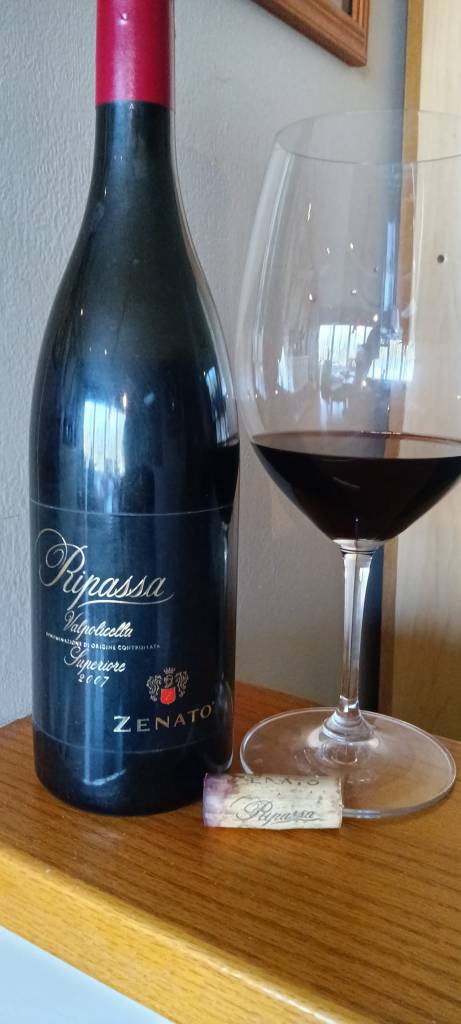
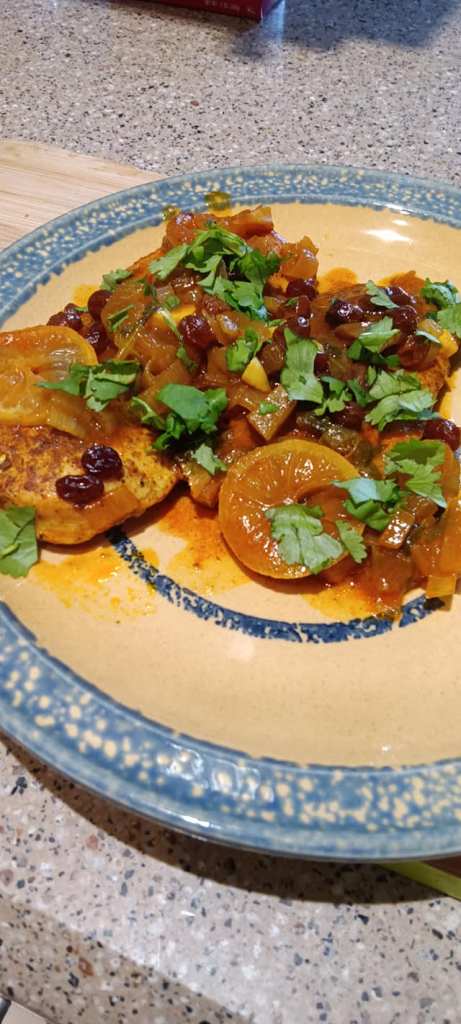
Ripassa and Ripasso’s are synonymous and are considered to be baby Amarone’s and about a third to half the price. Great news if you like the style but are budget focused. I’ve tried many different producers and many different vintages and when I found this in my cellar last week, I thought of the Moroccan Chicken recipe I have and thought I’d give it a try. The suggestion came from a MW friend who reached out to a Chef and MW friend of his in New York, for three vintages of Amarone I’ve been saving for a special occasion.
This is holding up so well given its 15-plus years old and sitting comfortably at the $25 point upon release. This is bigger and richer than I expected with all the hallmark notes of dark fruits, cherries, and raisins on the nose. The palate is velvety smooth delivering everything the nose promised with the addition of plum, powdered cocoa, and spices. Balance and structure are still evident with a long expressive finish. Drinking beautifully now and a clear testament to the wine’s cellaring potential. I still see a few years of drinking with this vintage. Scored a 92pt rating- WS, upon release and came in at #48 in their Top 100 wines in 2011.
I cooked this for the first time last weekend with a few variations: I don’t eat olives so I passed on those and I didn’t have dried apricots on hand so I substituted dried pineapples instead. It turned out exceptionally well but I will endeavor to have dried apricots on hand next time around.
I’m test-running this dish to perfect it so I can serve it later this summer with three aged vintages of Bertani Amarone which I think will be a closer, more refined pairing. My current photo is included.
January is a quiet month in the wine business so I’ve taken the opportunity to have some time off work, hence some ‘From the Cellar’ articles reflecting on the longevity/cellar ability of some wines.
WOOOW, this is holding up and drinking so well! If anyone has bottles in their cellar, I’d crack one open now, if you don’t and you’re lucky enough to find some, expect to pay around $40 or so. Still has another 5 plus years without hesitation but it’s delightful drinking now. Grapes were sourced from Coombsville AVA and barrel aged for 20 months in French Oak (25% new)
The nose is all dark fruits, with subtle notes of violets, cherries, and dark chocolate. The palate reflects what the nose promised with a velvety smooth mouthfeel with plenty of body and structure evident. The richness in the palate that was so evident in 2015 when I first tasted this wine is still very much present. Layers of dark cherries, plums, blackberries, and chocolate showcase the further aging potential, just a little more integrated and smoother on the palate. Impressive balance and a long finish.
I was fortunate enough this last week to taste the 2012 vintage of this wine and remembered back to tasting it in 2015, too young to appreciate all of the future potentials of this Bordeaux-inspired blend of 66% Carmenère, 19% Merlot, and 15% Cabernet but tasty never the less . Organically farmed I might add.
Brought to you by the Lapostelle family and sourced from vines planted in the 1920s- almost 100 years old. This is an in-house affair which means it’s all Single Estate grown fruit, bottled at the winery. 100% hand-picked and de-stemmed onsite at the winery with 5 weeks of skin contact before 24 months of barrel aging in French Oak. Expressive fruits on the nose with a potpourri of red, black, and blue fruits with a hint of black pepper. Still got it but with just a hint of aging revealing its age.
Fruit is still bright on the palate with blackberries, plums, red cherries, spices, and blueberries evident. This still has plenty of body and structure and if cellared correctly, this should go another 3 – 5 years without an issue. For those of you that don’t like aged wines, drink now, it’s delicious drinking. If you come across a bottle of this in a wine store, it’s worth buying. Should be priced around $125 or so.
Upon its initial release in 1998 (then the 1995 vintage) it was presented to the world as the “White Grange” making the front page of Australia’s national newspapers. A first to this day.
“Yattarna reflects Penfolds patience and continued commitment to its original goal, its very name being drawn from the local indigenous language, meaning ‘little by little, gradually’. Each vintage provides the opportunity to further raise the quality bar”.
Source: Penfolds Website.
Sourced from only the best grapes Tasmania 57%, Tumbarumba 32% and Adelaide Hills 11% have to offer, it has achieved the Penfolds winemaker’s ambitious goal of producing an ultra-fine cool climate Chardonnay that will impress even the most fastidious wine drinkers.
The nose has so much going on, so complex and incredibly inviting. Layers of various citrus, white peach, and gunflint dominate but secondary layers of tangerine peel, and cashews with a whole lot of promise of what’s to come.
The palate exhibits exceptional balance with everything in its place. I get the impression from the first sip that it’s all intentional, with layers of nectarine/tangerine, orange peel, lemon, white peach, gunflint, saline, and apricot with a hint of creaminess and a sensual, velvety mouthfeel without sacrificing acidity. There is a tension with this wine that adds an extra dimension coupled with minerality, exceptional integration and texture, and a very long finish making this a winner.
This wine scores consistently high ratings with the 2017 and 2018 receiving 99 pt and the 2019 and 2020 receiving 98 pt. reflecting its consistently high quality. Drinking well now but will most definitely improve over the next 10 – 15 years. Exceptional Chardonnay with immense potential. I would choose wisely when pairing this. Lobster, crab, and scallops would top the list but lighter chicken dishes would also work well.
I believe this style of Chardonnay stands head and shoulders above the rest. The Vasse Felix Heytesbury 2018 (98 pt) is the only other Australian Chardonnay that gives this a run for its money. Both admirably represent the ‘elegant, restrained Chardonnay with finesse’ category that showcases the new style and standard of Chardonnay coming out of Australia. Please excuse me for adding a wrong vintage photo- cannot locate my 2018 photo. Just for the record, they look identical.
Just got through reading an article with the above title from Wine Searcher and was surprised to find that there were some revelations and surprises I wasn’t expecting. Namely, three of the top four Pinots on their top 10 list were Australian.
Finally, the world is catching up to what is considered common knowledge in Australia. The only bad news is that Australian Pinots are difficult to get in the US- check Wine Searcher for retailers. Just for the record, here is the Wine Searcher Top 10:
The World’s Best Pinot Noir (excl. Burgundy) on Wine-Searcher:
Kelley Fox Wines Maresh Vineyard Star of Bethlehem Flower Block
94
$75
Ata Rangi Pinot Noir
93
$66
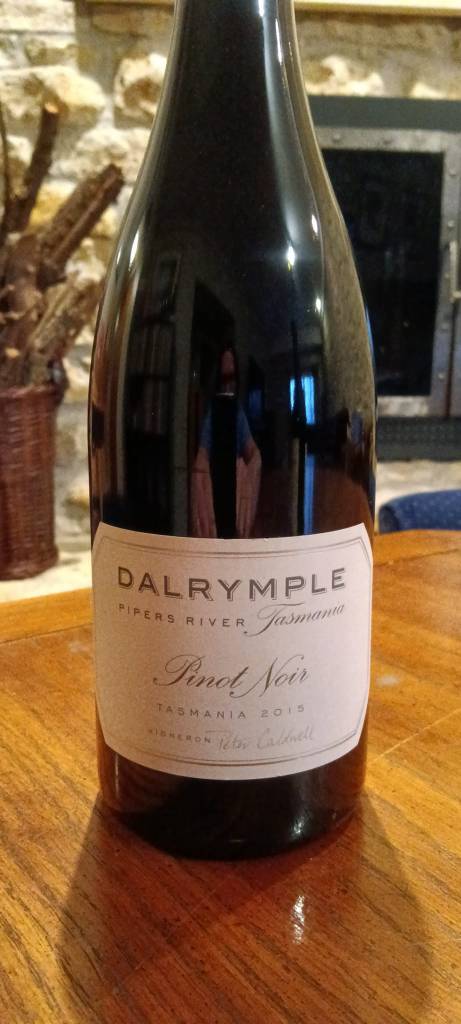
“Despite its deep history, the world is only just discovering Tasmanian Pinot Noir”– Source: Dalrymple Website.
Where to Look in Australia.
There are so many great cool climate regions in Australia that produce exceptional Pinots. Let’s not forget Antarctica is just south of Australia.
Victoria’s Port Phillip area encompassing Geelong, Macedon Ranges, Sunbury, Yarra Valley, and of course, Mornington Peninsula is widely considered the epicenter of Australian Pinot Noir. Adelaide Hills and the tiny amounts of exceptional Pinot that come out of Tasmania should also be given serious consideration.
The majority of Australian Pinots available in the US come from Victoria as a whole. Below is a short but distinguished list of what’s relatively available in the Midwest.
Dalrymple Winery- Tasmania.
The winery was established by Bertel and Anne Sundstrup in 1987, on sloping hills overlooking the Bass Strait producing 4 Single Site Pinots and, a Cuvee- only one available in the US – see photo. The property was purchased in 2007 by the Hill-Smith family to continue the vision and legacy led by Peter Caldwell.
“Pinot Noir has always been my passion – the most difficult grape to grow, the most difficult wine to make well. The most satisfying of victories.” Peter Caldwell – Vigneron. Source: Winery Website.
Footnote: The Hill-Smith Family also owns Jansz Winery which produces an N/V Sparkling Rose made from Pinot and Chardonnay which is an absolute delight to drink and share with friends.
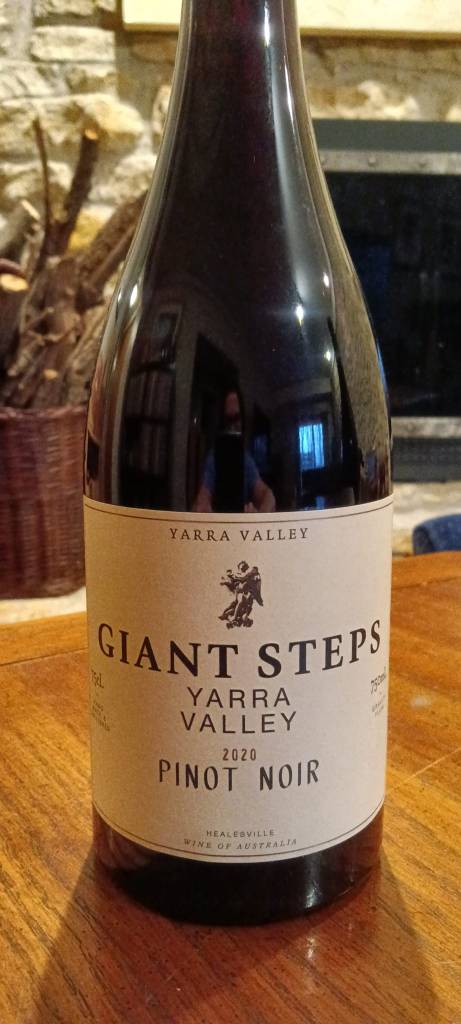
Giant Steps Yarra Valley Pinot Noir Cuvee.
Giant Steps Winery focuses on single vineyard Chardonnays and Pinot’s with 5 different sites nearby but all individual and different. Their Applejack Vineyard Pinot 2020 vintage was ranked #1 wine in Wine Enthusiast’s Top 100 list and their 2020 Yarra Pinot (a blend of all 5 vineyards) was ranked #18 in Wine Spectator’s Top 100 Wines.
The Cuvee is the only one available in the US at the moment and is reasonably priced but expect price increases moving into 2023, unfortunately.
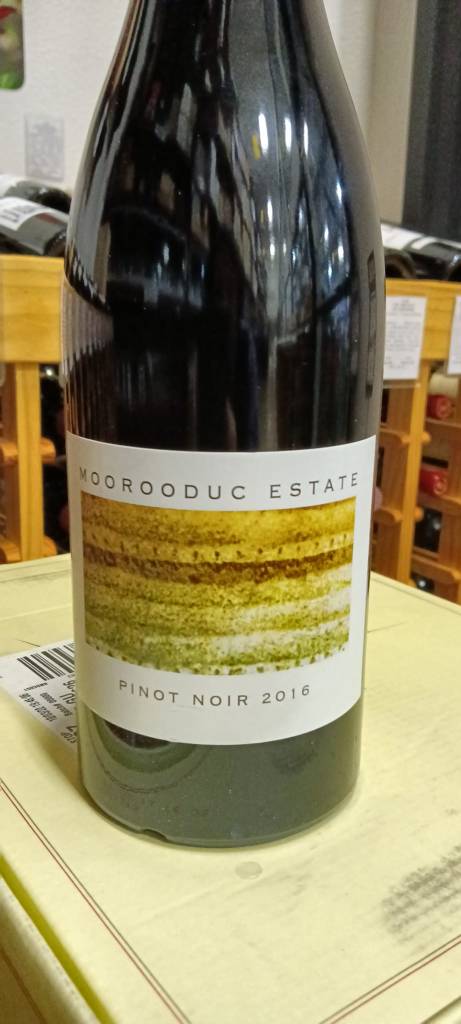
Moorooduc Estate- Mornington Peninsula, Victoria.
Established in 1982 by Richard and Jill McIntyre, Moorooduc Estate is a small, family-run winery business that has a reputation for complex and food-friendly wines.
Their philosophy is to make the best wines possible with the best grapes available, hands-on care with minimal intervention allowing the wine to develop and speak for itself. Their wine is produced in a brand-new facility using traditional Burgundian techniques and one sip and you’ll agree, all the care and attention are worth it.






 Vine to Table