The Cooley Ranch covers over 19,000 acres and is one of the largest single holdings in Sanoma dating back to the early 20th cent and is owned and run by the same family for five generations. It wasn’t until 2010, after seven years of site research and selection, in a joint venture with the Rodney Strong Vineyards that vines were planted. In the end 200 acres were carefully selected based on soil composition, aspect and elevation ranging from 500 to just over 2,000 feet producing three Cabernets and two Red Blends of elegance and distinction.
The 2017 Rowen Red Blend is one of those wines, comprising Cabernet, Malbec, Syrah and Viognier drawing influences from both Bordeaux and Cote du Rhone.
The nose is enticing with a swirling mix of floral and dark fruits- it has a lot going on. The palate is immediately impressive, rich and balanced with integrated layers of ripe blackberries, cassis, blueberries, plums, vanilla and spices with a hint of cooking herbs and mint rounding things out. All four grape varietals are evident in the mix. The Syrah and Viognier was co-fermented in the classic Northern Rhone tradition. Overall, this wine has immediate appeal and can be enjoyed with very little effort- eg decanting. But can be enjoyed over the next 10 plus years. There is a lushness and elegance that creates a lovely tension in the wine. Winemaker suggests pairing with sharp cheeses and charcuterie, grilled filet mignon, cocoa dusted chocolate torte.
These are some of the best wines from one of the prettiest spots in South Australia. Visit the website to see some awesome content.
“The Hickinbotham Vineyard sits in an oasis-like setting at the top of a long ridgeline that traces the northern end of the McLaren Vale wine region, just above the township of Clarendon. This is a revered pocket of McLaren Vale wine country and is home to some of the region’s oldest vines and most prized vineyards that are renowned for making elegantly powerful and long-living red wines”. Source: www.hickinbothamwines.com
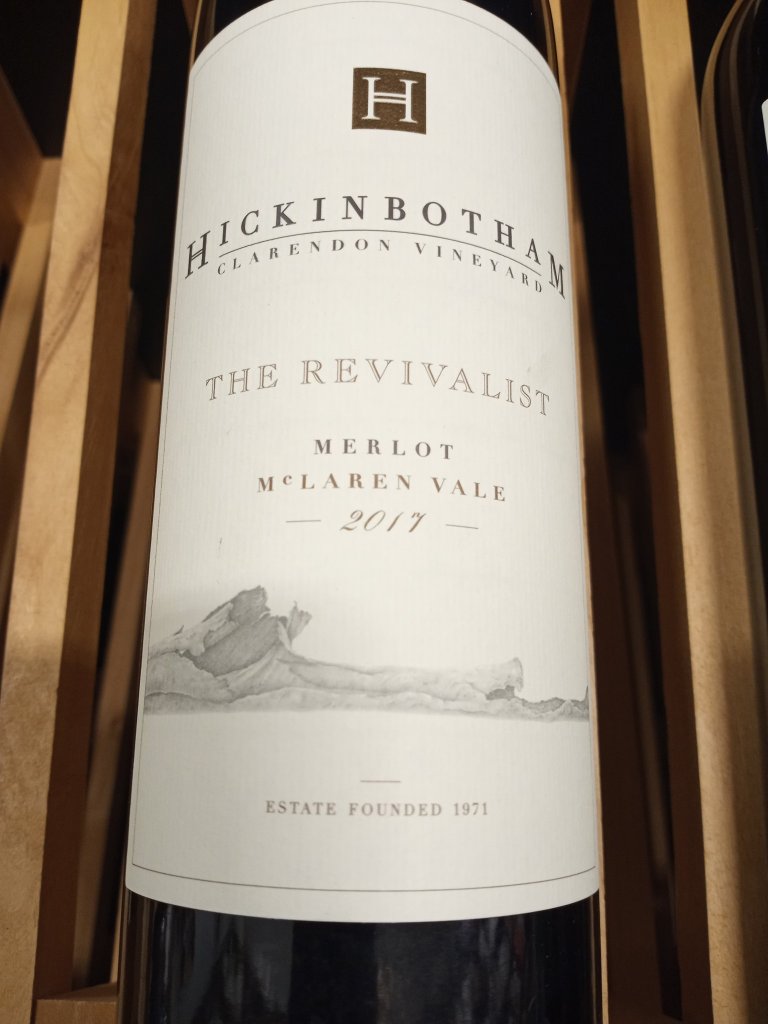
Hickinbotham The Revivalist Merlot 2017
This is what Merlot should be. From the alluring aromas of cherries, plums and cooking spices to the oh so friendly inviting palate of delicious cherries, plums and spices carrying over from the nose with secondary notes of blackberries and vanilla with just a hint of sweetness on the finish. Don’t be deceived, this is a red wine drinkers Merlot with impressive boldness and complexity and its own character and elegance to the last sip. If only all Merlots we’re this good people wouldn’t look down their noses at this varietal! Impressive wine and a delight to drink. Don’t pass this one by.
96pt rating- Ned Goodwine, Australian Wine Companion- James Halliday.
Hickinbotham Trueman Cabernet 2017
This Cabernet draws from the ancient soils this vineyard sits on, its altitude and subsequent drainage, fanned by the late afternoon sea breezes with just the right amount of sunshine and rain to produce a wine of exceptional depth, complexity and elegance. The enticing aromatic nose gives you the perfect excuse to take a sip where you will be greeted by seamless layers of red fruits, blueberries, blackberries, plums, spices and just a hint of dark bitter chocolate on the finish. The Cabernet produced here is unlike Cabernet from any of the other great regions of Australia such as Coonawarra and Margaret River, it is highly individualistic and as we say in Australia ‘definitely worth a go’ (translation: definitely worth drinking) An exceptional wine.
96pt rating- Ned Goodwine, Australian Wine Companion- James Halliday.
Hickinbotham Brooks Road Shiraz 2017
This is the very definition of Shiraz from McLaren Vale- bold and beautiful, subtle sweetness, loads of depth and complexity with deceptive elegance that will seduce you into another sip and thus falling in love with this wine. This is a single vineyard offering that is unlike a lot of Australian Shiraz’s you may have tasted, mainly due to a cooler climate producing a Shiraz of impressive quality seamlessly intertwining both dark and blue fruits with plums, dark chocolate, subtle spices and a savory note on a long finish. It is the complete package and an absolute delight to drink. Give it a couple hours decanting and your patience will be rewarded. Will cellar out to 2032 with ease. Can’t wait to drink this in 5 – 10 years.
95pt rating- Ned Goodwine, Australian Wine Companion- James Halliday.
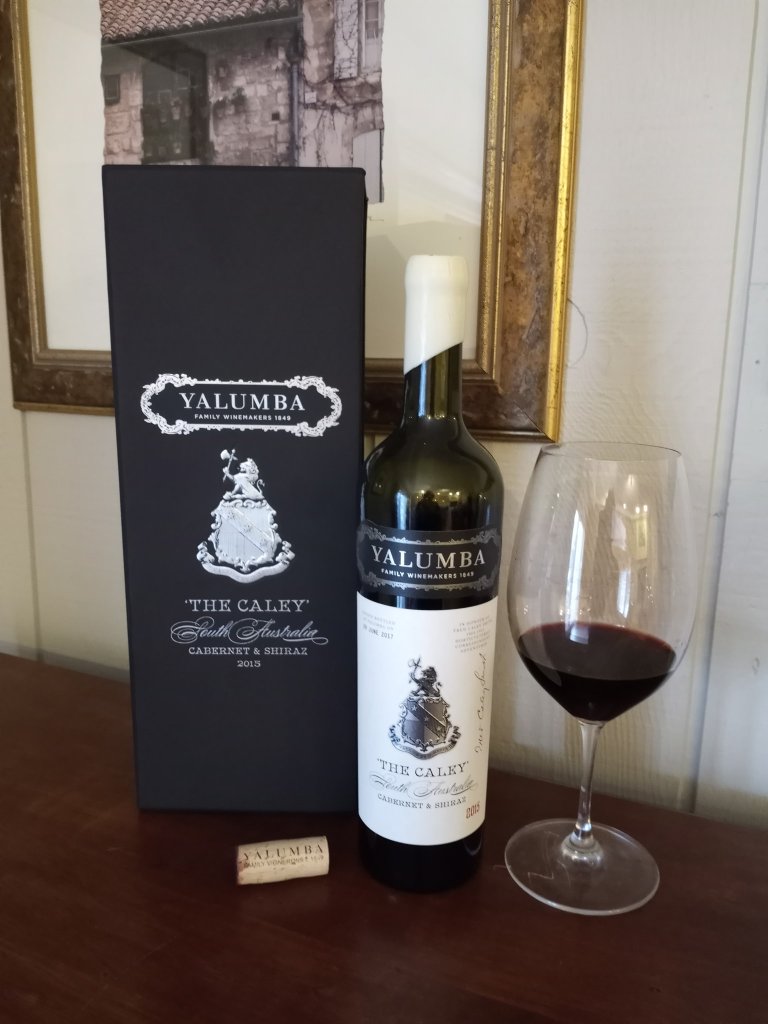
Let me start by saying that the Cabernet and Shiraz blend is quintessentially Australian. First appearing in the mid-19th Century and revived and constantly improved from the 1970’s onwards, this is only the fourth release and is so beautifully balanced- everything is in the right place, exactly where it should be. Exceptional elegance and finesse.
Blending these two great varietals together is an art, one which Yalumba winemaker Kevin Glastonbury relishes bringing together some of the finest Cabernet from Coonawarra (The Ming D block) and old vine Barossa Shiraz (the Burgemeister “Linke” block planted in 1901 at Light Pass and the Horseshoe Vineyard on the southern side of the Yalumba winery in Eden Valley planted by Helen Hill-Smith in 1971) to produce a wine that could arguably challenge Penfolds Grange’s standings on the worlds stage. An impressive blend of 74% Cabernet and 26% Shiraz that commands attention. It has all the polish, elegance and finesse that you would expect from a world class wine with exceptional depth and complexity and impressive length on the finish.
The nose is both enticing and seductive. The palate is rich and inviting dominated by blackberries, cherries and plums with secondary notes of blueberries, red berries, chocolate, spices and mint. Drinking beautifully at the moment but will cellar out to 2030 and beyond.
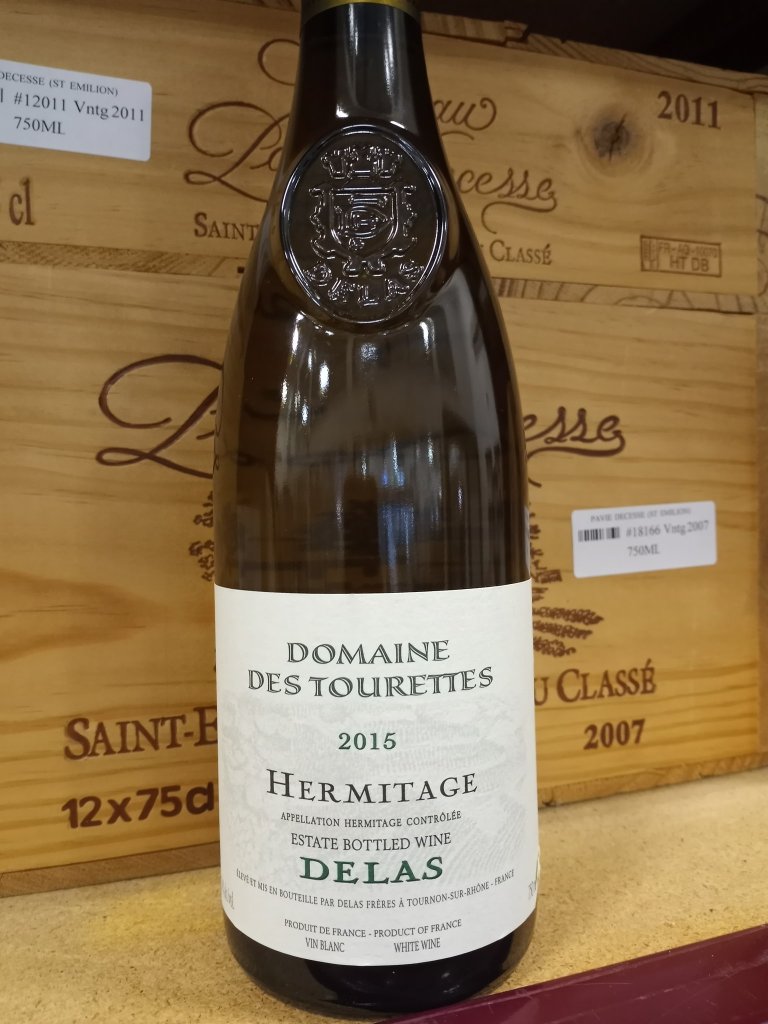
Let me start by saying this has always been one of my favorite French white wines and this vintage is most definitely no exception. This is one of those ‘insider’ wines that people would fight for if they only knew of its existence. There are plenty of others which I will reveal in the coming year when we are able to secure stock! Only 300 cases made in total and only a fraction of those made it to the US, let alone Indiana. We only secured 24 bottles.
There is a rich history dating back 160 years, in the heart of Northern Cote du Rhone sourced from 30 plus hectares on steep south facing slopes featuring granite with alluvial quaternary delta deposits and Pliocene marl soils. All this combines to produce some of the best wines France has to offer, rich elegant wines with complexity and all the finesse you would come to expect from a world class wine region.
This blend of 90% Marsanne and just a splash of Rousanne- 10% and is as close to complete as you’ll find anywhere.
The second you pour this wine into the glass, delightful aromas exuding rich ripe fruits and floral notes that seduce you into taking your first sip. A rich buttered texture cradles the combination of citrus, pear, peach and honeysuckle notes that blanket your palate. This is an extraordinary wine that will cellar for 20 plus years. Congratulations to Winemaker Jacques Granges again. Sensational wine.
Winery suggests pairing with white meats (chicken with morilles mushrooms, quail with truffles), fish (grilled Sea Bass with citrus fruit) and cheese.
Faust is owned by the Huneeus family, who also own Quintessa/Illumination, Flowers, Leviathan, and Brenton Lane Wineries so there a lot of history and pedigree making quality wine. Bottom line is, they know exactly what they’re doing. If you’re not familiar with Coombsville AVA it was established in 2011 and is not only the newest but the furthest most southern AVA in Napa Valley featuring volcanic soils with an alluvial covering with plenty of gravel and stones thrown in. It is also affected by the cool afternoon breezes coming off the nearby San Pablo Bay all coming together to produce wines of both quality and elegance.
A PURE EXPRESSION OF COOMBSVILLE- Leading the next chapter in Napa
Working in harmony with the land, we challenge ourselves every day to create wines that purely express the surrounding landscape of our Coombsville vineyard, the backbone to Faust and The Pact. Source: www.faustwines.com
Napa Cabernet 2018
If you’ve never enjoyed the experience of drinking a Coombsville Cabernet, allow me to introduce you. Faust make wines with elegance and finesse on several different price points but you would be hard pressed to find a Cab from this corner of Napa at this price that will come close to the 2018 release. The core of the Cab is Coombsville fruit with a little cooler hillside fruit blended into the mix giving this an unmistakable richness with impressive depth and complexity. Predominately Cabernet a little Merlot, Cabernet Franc and Petit Verdot is blended in- sorry, no percentages published.
The nose in inviting but it’s the palate of rich ripe blue and black berries with secondary notes of dark chocolate, baking spices and plum that make you a believer. Nice silky tannins frame everything, wonderful mouthfeel and a long finish. Impressive for a wine that is only three years old. Give it 5 – 10 years and be very pleasantly surprised. I paired this with a Sharp Australian Cheddar on Italian Herb Crackers and was awesome but meal pairings would range from red meat dishes on the grill, beef stews and bold Chicken dishes, turkey and game.
Rating: 94 pt- James Suckling.
‘The Pact’ Coombsville Cabernet 2016
Pour yourself a generous taste and swirl the glass allowing the wine to aerate and you will be greeted by rich dark fruits and incredible legs running down the bowl of the glass. This is only the start; one sip and you will quickly realize that this could just be the shining star of Coombsville. One sip and you will experience layers of black current, dark raspberries and plums coating your mouth with secondary notes of dark chocolate, blackberries and tobacco (not unlike Nth Barossa Shiraz). By the time you swallow your first sip you’ll come to appreciate the balance and finesse this wine has, delivered on a plush mouthfeel. A delight to drink. Will cellar out to 2030 without a problem.
Pair with your favorite red meat dishes or drink it with a friend.
I published this article a few years ago and have been asked several times in recent weeks to post it again …
When I first decided to touch on the topic of French Wines, I thought it was a great idea and I slowly came to realize I’ve lost my mind. It is such an infinitely complex topic hindered by French ‘rules’ and classifications with labels that tell you next to nothing … but here goes.
There is a signpost with some basic facts that should be considered. Firstly, of all it’s all based on regions as opposed to grape varietals- what that means is there is no Chardonnay’s- they are Chablis’s or Pinot Noirs- they are Burgundy Red’s because they are named after the town in which they are grown around or the region they are grown in. This category system is wrapped around a French concept called “terroir” which really means a recognition of the environment and its role on influencing the final flavor profile of the finished wine. A belief system predisposed to the notion that vineyards adjacent to each other are so different as to demand separate classifications. Just for the record there are of course noticeable differences between most vineyards. I guess the real question that I’ve heard asked: are there enough to justify a classification system?
The system actually dates back to 1855 and the original concept, some say was inspired by the British Monarchy who purchased vast quantities of Bordeaux wines, which they called Claret. In reality, it was the Gironde Chamber of Commerce who ordered an official classification inspired by Napoléon III and his desire to showcase the best of France at The Exposition Universelle de Paris.
This system identified 5 levels or ‘Growths’ covering 61 different Chateaux’s- this of course assists modern day wine brokers immensely.
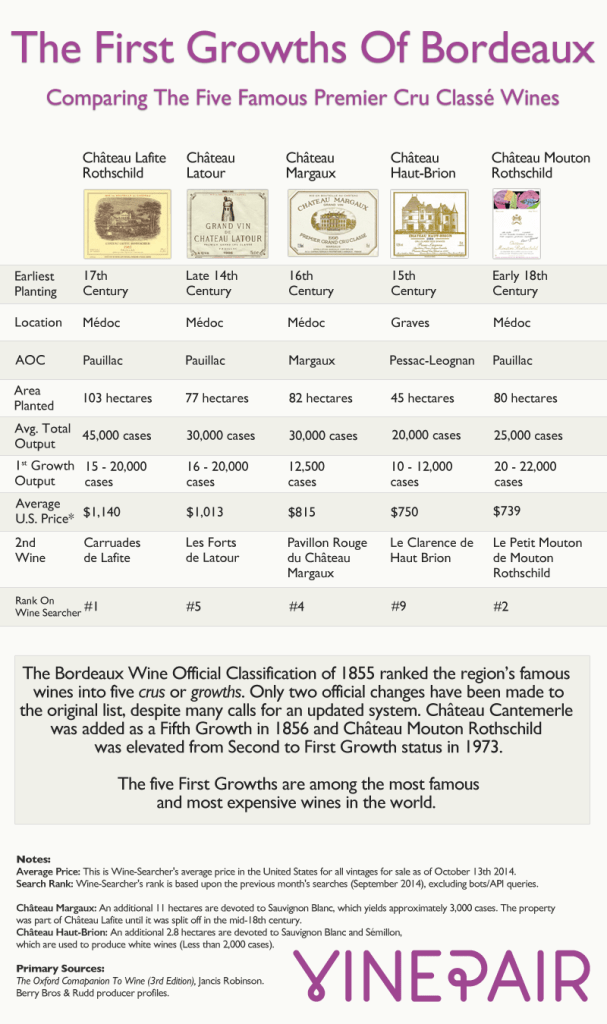
Moving right along, from a Bordeaux perspective the classification system was based around the concept of quality separating the best from the rest as we will see from the chart below …
The US President, Thomas Jefferson was also a wine lover and during his visit to Bordeaux in 1787 came up with his own ranking: “There are four vineyards of prime quality:
1. Chateau Margaux, belonging to the Marquis d’Argicourt, who produces around 150 barrels that were sold by contract to a merchant named Jernon.
2. La Tour Segur, (Chateau Latour) in Saint-Lambert, belonging to Mister de Miromesnil, who produces 125 barrels.
3. Haut-Brion, two-thirds of which belong to the Count de Fumel who sold the harvest to a merchant called Barton. The other third belongs to the Count of Toulouse; in all, the château produces 75 barrels.
4. Chateau de la Fite, (Chateau Lafite Rothschild) belonging to President Pichard of Bordeaux, which produces 175 barrels”. Source: www.thewinecellarinsider.com
What is a Claret?
The word claret is an anglicized version of the French term clairet – which is a dark rosé wine typical to Bordeaux. The term has evolved since its first use in Britain to refer to dry, dark red Bordeaux wines. It is associated with the upper class.
History dictates that change in inevitable and the classification system in not immune, at least in terms of inclusions. In 1973 Mouton Rothschild was elevated from Second Growth classification to First Growth. Technically there are two other ‘First Growth’ or Premiers Crus if you include white wines from the commune of Sauternes and Barsac.
In 2012, the St Emilion Classification was expanded to include Chateau Angelus and Chateau Pavie.
I have included below a ‘top 5’ of the remaining Growth listings. For a full listing as well as Whites go to Source: www.wikipedia.com There are just too many to include here.
Second Growth’s Include-
Third Growth’s Include-
Château Rauzan-Ségla, Margaux.
Château Kirwan, Cantenac-Margaux.
Château Rauzan-Gassies, Margaux.
Château d’Issan, Cantenac-Margaux.
Château Léoville-Las Cases, St.-Julien.
Lagrange, Château Lagrange, St.-Julien.
Château Léoville-Poyferré, St.-Julien.
Château Langoa-Barton, St.-Julien.
Château Léoville-Barton, St.-Julien.
Château Giscours, Labarde-Margaux.
Fourth Growth’s Include-
Fifth Growth’s Include-
Château Saint-Pierre, St.-Julien
Château Pontet-Canet, Pauillac.
Château Talbot, St.-Julien.
Château Batailley, Pauillac.
Château Branaire-Ducru, St.-Julien.
Château Haut-Batailley, Pauillac.
Château Duhart-Milon, Pauillac.
Château Grand-Puy-Lacoste, Pauillac.
Château Pouget, Cantenac-Margaux
Château Grand-Puy-Ducasse, Pauillac
Whites- First Growth’s Include-
Château d’Yquem, Sauternes- Superior First Growth (Premier Cru Supérieur).
Latour Château La Tour Blanche, Bommes (Sauternes).
Château Lafaurie-Peyraguey, Bommes (Sauternes).
Château Clos Haut-Peyraguey, Bommes (Sauternes).
Château de Rayne-Vigneau, Bommes (Sauternes).
2021 UPDATE:
Up until recently the following grapes have been the only approved varieties allowed to be grown in Bordeaux: Cabernet Sauvignon, Cabernet Franc, Merlot, Malbec, Carmenere, Petit Verdot, and the whites being Semillon, Sauvignon Blanc, Sauvignon Gris, Muscadelle, Colombard, Ugni Blanc, Merlot Blanc, and Mauzac.
In recognition of climate change and pro actively looking to the future for ‘suitable’ varietals that will grow in warmer conditions, the following grape have recently been approved for plantings in Bordeaux: Arinarnoa, Castets, Marselan, and Touriga Nacional—and two whites—Alvarinho and Liliorila.
Regarding the reds, Arinarnoa is cross between Tannat and Cabernet Sauvignon, Castets is consideres by many as a “long-forgotten Bordeaux grape.” Marselan is a cross between Cabernet Sauvignon and Grenache and Touriga Nacional is a late-ripening Portuguese grape.
Regarding the whites, Alvarinho is Portuguese and more commonly known as Albarino and Liliorila is a cross between Chardonnay and Baroque originating from France.
I first visited Langhorne Creek in 1986, and despite being establish in the 1850’s as a wine region, there wasn’t much there. The wines I did taste over lunch at the local pub were impressive, to say the least, hinting at the potential that lay beyond the stone walls of the pub in the not-too-distant future.
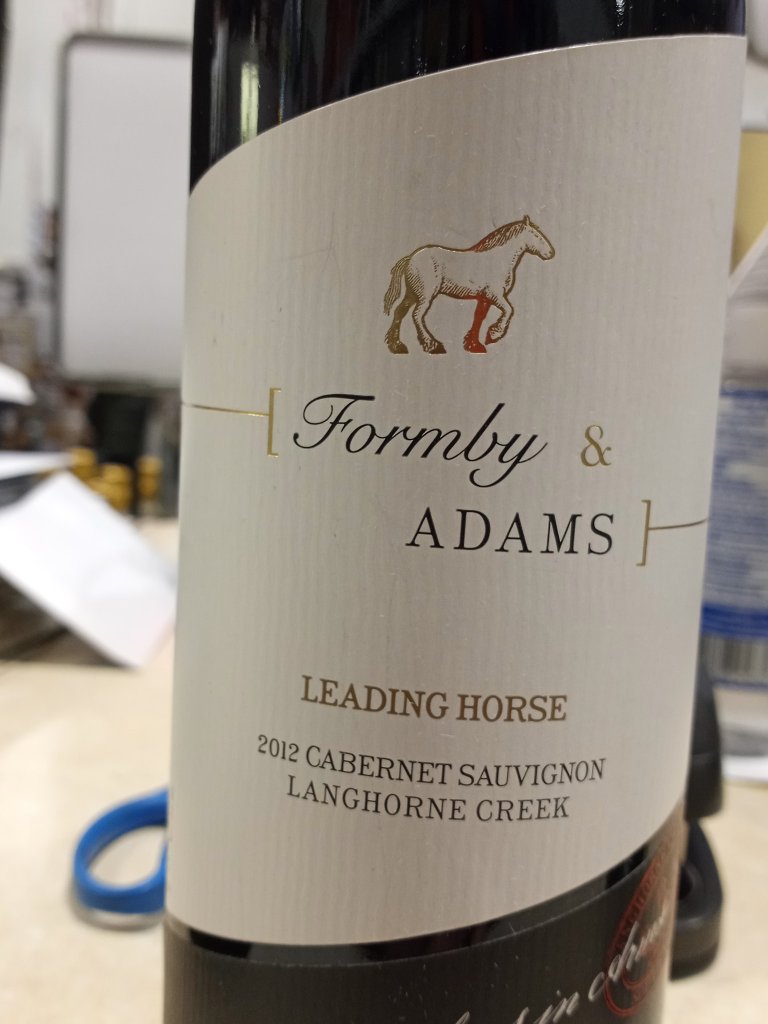
Brothers in Arms ‘Formby & Adams’ Leading Horse Cabernet 2012
The fact that this wine has 8 years bottle aging already and a 94pt rating should be enough to convince you to snap this little beauty up, but for those of you that wants some details …
Enticing nose dominated by black currents and spices.
The mouthfeel is rich and inviting with impressive layers of black currents, black berries, chocolate, spices with an interesting savory note. Oddly intimate in the way it convinces you to take another sip with enough elegance and character to please without losing its Langhorne Creek / Australian character. It’s a winner and with change from $20 you cannot go wrong! This is a great example of why Langhorne Creek is quickly gaining a reputation of being a world-class wine region.
After 18 months of barrel aging, it is bottled without filtration so decanting is needed for those that don’t like sediment. Almost impossible to buy, I have it on good authority some will be arriving in Indianapolis this month.
Highlighting the diversity and quality of Cab’s from Washington state, Paso Robles and Napa.
Substance Cs Cabernet 2018 – Washington.
Produced by one of Washington’s most awarded wine makers, Charles Smith who looks more like he should be on the cover of an Eagles album that heading a successful winery. Six years ago, he launched the Substance brand with the single goal of making the best value-priced Cabernet in America and he is well on the way to achieving that goal. If you’re not familiar with this Cabernet this is an excellent introduction.
After being enticed by the aromas of dark fruits to take my first sip this is a really impressive wine: full bodied with wonderful structure, totally approachable, polished tannins with a smooth inviting mouthfeel. Blackberries, Cassis and blueberries dominate with dark cherries with just a hint of tobacco and spices to round things out. After a third sip I had to remind myself this is an under $20 bottle of wine.
Will cellar out to 2027 without a concern. Pair with red meats on the grill, beef stews, Italian red meat Pasta dishes or a cheese platter and friends.
The fruit for this elegant wine is sourced from on Adelaida Springs Ranch, at an elevation of 1,700 feet and only 12 miles from the Pacific Coast. It is almost all Cabernet 94% with just 6% of Petit Verdot added, then barrel aged for 20 months before bottling unfiltered and unfined allowing a deeper richer more flavorful wine to emerge from the barrels.
This is a big bold lush Cabernet with Paso stamped all over it. Before you even pick up the glass you can smell the aromas of ripe dark fruits, sweet raspberries and boysenberry pouring out the glass convince you this is going to be good. One sip and the bar has been raised again with luscious mouthfuls of blackberries, black raspberries and mulberries with secondary notes of blueberries and licorice. An absolute delight to drink and value driven at under $50. Will cellar out to 2030 without a problem. Pair this with your favorite red meat dishes or drink it on its own- wonderful.
94 Pt: Wine Enthusiast
Spring Mountain Cabernet 2016
Originally three separate vineyards established in 1873, the Draper Vineyards (La Perla) consisting of 435 acres was the first site of Cabernet plantings on Spring Mountain. Interesting side note: part of the La Perla estate incorporates the first vineyard planted by Fredrick and Jacob Beringer in 1882. All that being said, there is some serious winemaking history behind this winery not to mention numerous accolades.
I’ve been fortunate enough to taste several vintages of this wine since moving to the States and I have to say the 2016 (great vintage) is an absolute delight to drink, I have a soft spot for this wine, it has never disappointed me and the 2016 is no exception. Considered to be one of the best vintages of the decade, riveling the 2012 vintage this is extraordinary opportunity to grab yourself an exceptional Cabernet made from Mountain fruit (restrained and elegant) from an excellent vintage by a great winery.
The nose is a gold edged invitation to enjoy multiply layers of dark fruits before venturing to take your first sip. Blackberries and just a smattering of black cherries, black current with bay leaf and spices tying this wonderful nose off.
The palate exhibits silky smooth mouthfeel, ripe blackberries, black current, dark cherries, graphite and sweet tobacco on an exceptionally long finish. Beautiful balance with elegance and grace to the last drop. If you’re not familiar with Spring Mountain, this is the perfect introduction. At the very least, an exceptional opportunity to acquire a wonderful bottle of wine, or more, for future memories.
Should cellar out to 2030 without a problem with only improvement to spare.
“The pinnacle wine for Terlato Vineyards, Episode stands shoulder to shoulder with the very best Bordeaux Blends in the world. Episode is crafted in limited quantities, a mere 17 barrels in 2007, heralded as the best vintage of the decade. The color is deep ruby. On the nose are blackberry and vanilla with hints of anise seed”.
This is a ‘Bordeaux blend’ of 65% Cabernet Sauvignon, 25% Merlot, 6% Petit Verdot, and 4% Cabernet Franc and was selected from Terlato’s extensive holdings of over 600 acres in Napa Valley, 1.5 acres in Rutherford was chosen to produce about 400 cases of this exceptional wine each year.
After one sip it’s no surprise that this is Napa, however it is very much Bordeaux is style and feel but with the approachability and depth of fruit you would expect from Napa. The nose is all dark fruits, red cherries and yes, a hint of anise seed evident (similar to licorice)- unusual for Napa and a delightful nuance. The palate whispers restrained elegance with layers blackberries and black currents dominating gently wrapped in cocoa, blueberries, red cherries, spices and subtle oak on a long lingering finish. Still has several years but it’s drinking really well now.
Pairing: Tenderloin of Lamb with sautéed mushrooms.






 Vine to Table