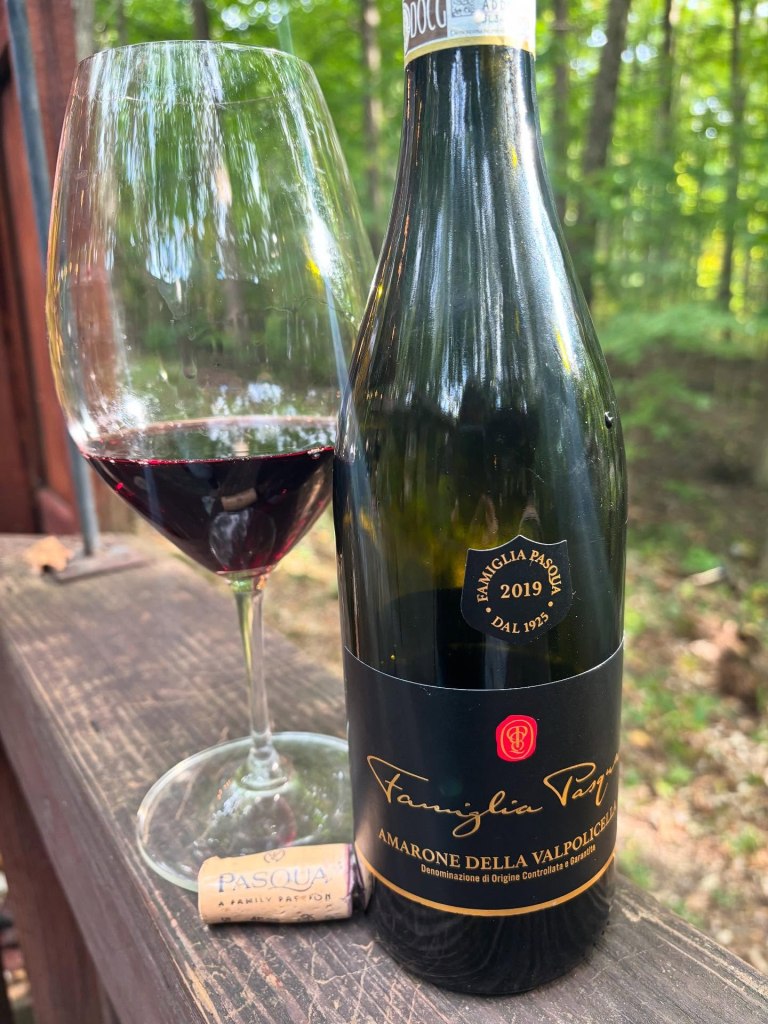
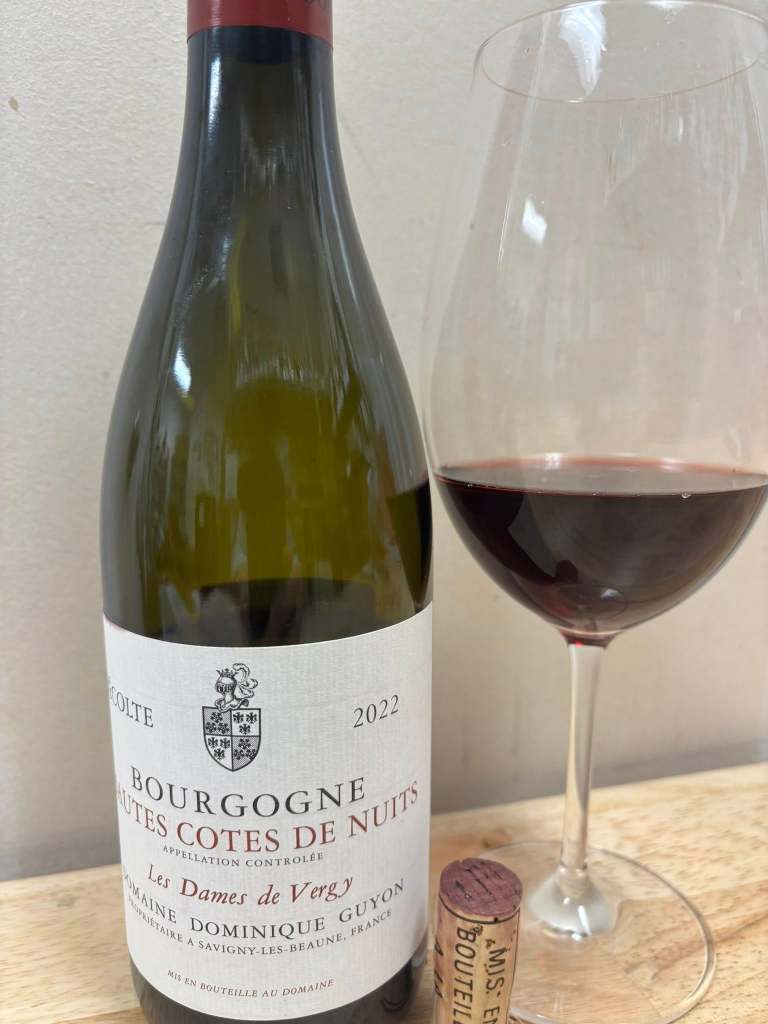
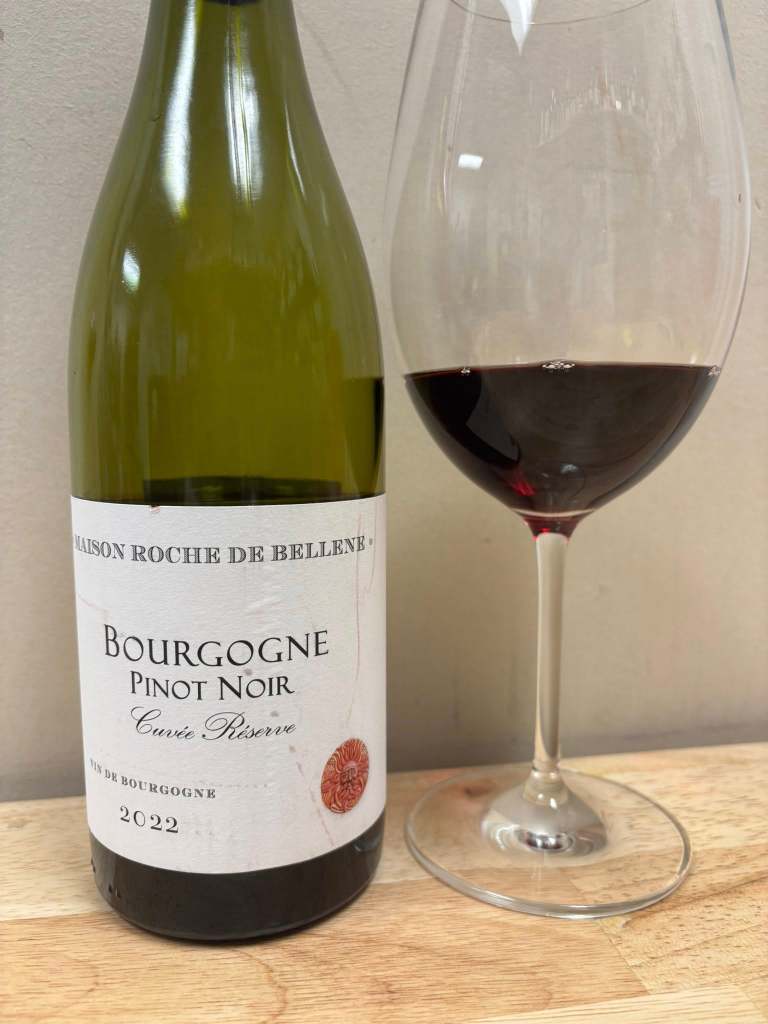
Two Burgundies I tasted this week- delicious, and won’t break the bank.

Domaine Dominique Guyon ‘Les Dames de Vergy’ 2022
Dominique founded his Domaine in 1980 with approximately 55 acres in Hautes Côtes. It is separate from the well-known family Estate Domaine Antonin Guyon, his grandfather founded, and which he also manages. The Les Dames de Vergy vineyard lies just outside of Nuits-Saint-Georges, which goes a long way to explaining why this authentic Pinot is priced well below its more famous neighbors.
Hauts Cotes de Nuits + Pinot Noir + around $30 = an equation impossible to pass up.

Beautiful aromatic perfume on the nose, wildflowers, dark cherries, strawberries, and rose petals.
The palate is elegantly smooth with fine-grained tannins and acidity evident. Layers of dark cherries, raspberries, and cranberries with secondary notes of red currant, plum, and spices convince you this was the wine to buy.

Maison Roche De Bellene Cuvée Réserve 2022
Burgundy on a budget, that pleases.
Founded in 2009, Maison Roche de Bellene is the négociant label of Nicolas Potel, a well-known and highly regarded winemaker in Burgundy, and the architect behind Domaine de Bellene. His focus is on old vines- 40 years and older, working only with growers who are certified organic, or practicing sustainable viticulture practices.
The grapes from this wine were sourced from 35- to 80-year-old vines in the Côte Chalonnaise, Côte de Beaune, and Côte de Nuits.

Appealing, expressive nose showcasing aromas of dark cherries, plum, forest floor, and raspberries.
The palate is nicely structured with impressive balance and acidity in check. Lovely soft mouthfeel that both invites and entices. Interwoven layers of dark cherries, black raspberries, plums, spices, and mushrooms.


Pairings for both should include French Beef Stews, Veal, Turkey, Pork, and grilled Salmon.
Both wines will cellar out to 2035 with confidence.


Note: Both wines can be ordered from Cork n Cracker and Tasteful Times- my new gig.

Alta Mora Etna Bianco 2020 – excellent release from volcanic soil.

The vineyards for this impressive wine are perched on the southern side of the largest volcano in Europe- Mount Etna, planted on black soils at an altitude of 600 – 750 meters.

Diego and Alberto Cusumano hold just over 500 hectares of Estate Vineyards, producing 3 million bottles annually- not bad for a vineyard established in 1972, and did not gain mainstream recognition until the early 2,000’s.

This is 100% Carricante, a native Sicilian varietal, and is bold, dry with both medium body and acidity and a surprising freshness.

Delightful aromas of a potpourri of citrus, minerals, flint, and pear.

The palate is rich and balanced with elegance and restraint prominent. Intertwined layers of lemons, limes, grapefruit, orange peel, with secondary notes of apple, pear, honey and peach, balanced with a flinty stone note on a lengthy finish. This is Etna in a glass, and worth tasting at least once, or more.

This is drinking so well now but will cellar out to 2028 with confidence.

Pairings should include white fish, lemon butter scallops, grilled calamari, Risotto Primavera, baked or grilled Chicken wings with spices and a lemon marinade and Margherita Pizza. 

Earned a 92 pt rating from Falstaff Wine and Food Magazine.

What are you opening for International Pinot Day?

Dalrymple Vineyards Pinot Noir 2015 – Piper River, Tasmania.

Let me say from the start that this is an amazing wine, deeply complex, elegant, exquisite layers of fruit, showing exceptional balance and acidity with celebrated appeal.

I cannot think of a better wine to celebrate International Pinot Day than to open a bottle of 2015- with 10 years of aging under its belt. Not just aging but evolving into what it was meant to be.

A brief history of Pinot in Tasmania- first planted by a Scottish opium farmer in 1813, kicked along by experience and knowledge by a Frenchman, Jean Miguet, establishing La Provence in 1956, and Italian, Claudio Alcorso establishing Moorilla Estate in 1958. In 1974, Andrew Pirie put Tasmania on the Pinot world map, establishing Pipers Brook Vineyard.

Dalrymple Vineyards was established by Bertel and Anne Sundstrup in 1987, on sloping hills that overlook Bass Strait and the rugged coast line. Think north eastern Tasmania.

Peter Caldwell – Vigneron remembers one of his first ‘aha’ moments during his first vintage in Bordeaux. The experience showed him ‘just how great wine can be when it’s not pushed or forced.’ He believes in the right varietal, grown in the right place, and made the right way.  He brings exceptional experience, knowledge, and restraint to making wine.  

Seductive aromas of cherries, strawberries, forest floor, and oak draw you in without realizing the spell this has caste on you.

The mouthfeel is delicate, exquisite, soft, and inviting, yet rich and just a hint of power and structure. All the flavors on the nose are evident complimented by raspberries, plum, earth, mushroom, and just a trace of vanilla and spices. It ticks all the boxes and leaves you smiling. Elegance and finesse balanced by bold defined layers leave you with a sense that you have just experienced something fine, something magical.

Cellar time: at least another 5 years, or more, with confidence.

Food pairing recommended by the winery include Duck, Fungi, Chicken- coq au vin, Salmon, Venison medallions or a rich Osso Bucco.

Langmeil Three Gardens Grenache, Shiraz, Mataro 2022- Iconic Barossa Producer.

Barossa was established as a small trading village in 1842, the same year Langmeil Winery was founded, making it the oldest winery in the region.

The Lindner family, owners of the iconic Langmeil Winery, has been a part of Barossa culture for six generations, with an unwavering commitment to producing high-quality wines. Their name is spoken in reverence in the valley.

The Three Gardens name came from their approach to the land, referring to their vineyards as gardens. The bottle lists this as a blend of 50% Grenache, 25% Shiraz, and 25% Mataro. The winery lists it as 44% Grenache, 34% Shiraz, 19% Mataro, 1% Carignan, 1% Counoise, and 1% Cinsault. Whichever it is, this classic Rhône-style blend is delicious to drink and incredible value at under $25.

Vine ages range from 50 – 100 years, planted in coarse sand over red clay and ironstone. Aging occurred in 11% new French oak and 89% seasoned American oak for 17 months

There is a fresh, mint-like quality about the nose that cradles aromas of dark cherries and raspberries, with just a hint of blackberries, mocha, and spices.

Soft and approachable on the palate without being fruity or jammy, this displays depth, complexity, and appeal beyond its price point. There is a bright, juicy appeal to this wine wrapped in layers of ripe red fruits, blackberries, mocha, plums, vanilla, with compelling notes of sweet spices and white pepper. It makes for a complete and enjoyable package.

Food Pairings should include beef, lamb, game, and tomato-dominated dishes. Chicken Cacciatore and Pepperoni Pizza should be considered.

Cellar time: to 2032 with confidence.

Bertani Valpolicella Ripasso 2020- in a word, delicious.

Bertani, a name synonymous with Amarone’s brings you this Ripasso Valpolicella. A Ripasso is considered a ‘baby Amarone’ given its juice is passed over the skins of Amarone grapes, adding richness with increased depth and complexity while still retaining the freshness and vibrancy, so characteristic of Valpolicella. This is an excellent example.

This is a blend of 80% Corvina Veronese, 15% Rondinella, and 5% Merlot with the vines grown soil dominated by white limestone (calcium carbonate) and red limestone soils (Iron and Manganese) with an average age of 15–20-year-old vines.

Andrea Lonardi, their winemaker oversees every step of the process with first fermentation in steel tanks with a second fermentation allowing the juice to pass over Recioto wine skins, before nine months of aging in French oak barrels and three months of bottle aging before its released.

The nose exudes aromas of ripe red fruits- cherries, plums, red currents, dried herbs and just a hint of dark chocolate.

The palate is the star of the event with a rich, plush mouthfeel, with intertwined layers of dark cherries, raspberries, red currents, plums, dried herbs, and spices, with traces of dark chocolate. This is framed by fine grain, polished tannins, bright acidity and just a hint of sweetness. There is a restrained elegance underpinning everything that makes this a wine to enjoy, especially over the next 10 years, out to 2035, if your patient enough.  

Food pairings should include Salmon, Pork chops from the grill, and spicy Italian Chicken sausages from the grill, Mushroom Risotto, Pasta and meatballs/meat sauce, Chicken Cacciatore, and Herb Roasted Turkey. This is a very food versatile wine so experiment.

Newton Cabernet 2017 – RIP

Peter Newton was one of the cofounders of Stirling Vineyards in 1964 before starting Newton Vineyard with his wife, Su Hua in 1977 on approximately 1 square mile on Spring Mountain. The winery grew into 560 acres with stunning mountain top views and immaculate English Gardens that surrounded the pagoda-inspired winery. Most of the 560-acre property was hidden by a rugged forest.

Peter passed away in 2008 and the winery was purchased by the French luxury goods conglomerate LVMH with the family retaining a 10% shareholding. Tragedy struck in 2020 when the Glass Fire eradicated the Estate from the face of the earth. Earlier this year LVMH announced it would not be rebuilding the winery. This marks the end of an era.

2017 was an excellent vintage producing rich, full bodied Cabernets with great fruit structure and high quality … for those that picked early, before the fires, and most did. Sadly, this also marks one of the last vintages ever released.

This wine is all about balance, elegance, structure, and depth of fruit and possesses immediate appeal from the first sip. Classically styled Napa from mountain fruit.

Enchanting aromas of dark fruits almost overwhelm the senses- blackberries, black currents, dark chocolate, and cedar with a hint of earthiness to round things out.

The mouthfeel is rich, opulent, and velvety smooth with an abundance of elegance, balance, depth, and complexity. All this is wrapped in ripe blackberries, dark plums, dark chocolate, black currents, and vanilla, with secondary notes of truffles, and earthy notes with just a suggestion of dark cherries. Tannins are fine grained but evident.

This will cellar out to 2035 with a problem. This will go the distance.

Pairings should include your favorite choice cut of red meat, cooked your favorite way. If your vegetarian, my favorite with bold reds is Felafels, Baba Ghanoush, and fresh Pita Bread.  

Have you ever tasted a Lagrein wine from Italy?

Alois Lageder Conus 2016 Riserva 

Some background …

Lagrein is native to the valleys of Southern Tyrol, in northern Italy and the first mention of the ‘rott’ or red Lagrein dates back to 1526 and most likely originates in the Val Lagarina in Trentino in Northern Italy, as the name suggests. DNA testing reveals it is related to Marzemino, Syrah, Dureza, and Pinot Noir.

Despite flying under the radar, it is grown in Australia, which has become its second paternal home, growing from zero to 40 producers since the year 2000. It is also grown in Oregon and California, where it is sometimes blended with Syrah.

Alois Lageder grows it in gravely sandy soil with a high concentration of Dolomitic limestone in a little-known section of the Magrè talus cone producing this fresh, fruity well-rounded profile of their wine. The name Conus comes from the Latin word for cone.

About the wine …

Subtle hint of aging on the nose intermingled with aromas of plum, dark cherries, licorice, and spices.

The palate is velvety smooth with bitter sweet cherries, red plums, ripe blackberries, and cranberries, with traces of dark chocolate covered licorice, spices, and herbs to round things out. Tannins and acidity still very much in play leading me to believe this will cellar out to 2032 with confidence. Nice body and structure whilst remaining light on its feet. Great balance and expressiveness with impressive length on the finish.

I revisited this 24 hours later, in the bottle with the cork in, no air pulled out and it has softened to reveal its true nature, leading me to believe this needs 3 – 4 hours in a decanter to get it to this point.

When pairing, think ‘what grows together, goes together’ The region has been influenced by both Austria and Germany but manage to maintain its ‘cucina povera’ (poor cuisine) based largely on polenta, corn, and sauerkraut. All that being said, consider South Tyrolean Bretzels, ricotta dumplings on a bed of leeks with a traditional Schiacciatina from Merano, and juniper deer or lamb loin in a potato crust.  

What did you drink to celebrate International Shiraz Day?

Penfolds St Henri Shiraz 2018- one of the best I have tasted!

There are few things I look forward to more than a release of the new vintage of St Henri- one of my all-time favorite wines and most definitely my favorite Penfolds wine. I have been fortunate to have tasted 20 plus vintages and it’s like sitting down with an old friend you have not seen for a while- it’s always a pleasure.

Like most Penfolds wines, this is a multi-regional blend, of 100% Shiraz, sourced from Barossa, McLaren Vale, Port Lincoln, Robe, Padthaway, Clare Valley and Adelaide Hills grapes drawing characteristics from every vineyard and region. The boldness of Barossa, the elegance of McLaren Vale and Clare Valley and a hint of individual quirkiness from each of the other regions. 

Released for the first time by Penfolds in the early 1950s (first commercial vintage 1957), it gained a new lease of life in the 1990s as its quality and distinctive style became better understood. Source: www.penfolds.com

A wine so totally individual and unaffected by trends, it is unashamedly confident in its character. This is a big, bold wine with a ton of character while being elegant and restrained with incredible balance. I initially decanted this for 5 hours, and it was amazing, revealing its further potential as it unwound. I then left it for a further 24 hours with just the cork in, no air removed at all, for further aeration, with spectacular results.

The nose is most definitely seductive and complex, with ripe blackberries, pencil shavings, and plums, along with a smattering of red and blue fruits and earthy notes in a supporting role.

The palate has a creamy, smooth mouthfeel, graceful, and immediate appeal. Layers of rich, ripe blackberries, raspberries, plums, and dark cherries dominate, with dark chocolate, sweet spices, tobacco, subtle black pepper, and leather rounding things out. As you would expect, the finish is very long.

Pair with something special, a red meat dish with roasted vegetables and Italian herbs.  

This is drinking well now, with some serious decant time but cellaring out will bring immense rewards- 35 years and beyond.

Elderton Command Single Vineyard Shiraz 2001

Make no mistake, this is a remarkable Shiraz.

Not unlike many Bordeaux Chateaux, this has changed hands several times over the past 130 years.

The original vines were planted in 1894 by early German settlers, the Scholz family, then in 1916, Samuel Elderton Tolley purchased the vineyards and named it Elderton. He built a sprawling homestead, grew grapes, and sold them to his family winery. The Winery did well until the early 1970’s suffering from a vine pulling program and became derelict.

Around 1975, Lorraine and Neil Ashmead were offered the house for sale, and he offered to throw in the 72 acres of old vines for nothing. Tireless work with meticulous precision and the classic old vines were resurrected to their former glory, with the first wine under the Elderton label being released in 1982. Fourteen years later, in 1996, they won Best Shiraz in the World at the London International Wine and Spirit Competition, establishing themselves as a force to be reckoned with in the valley. 

The 2001 is the 16th release of the single-vineyard Command Shiraz, spending 3 years in French and American oak and a year in bottle aging.   

The aromas from the glass are an intoxicating, seductive Perfume, very complex, with blackberries, vanilla, and chocolate taking center stage.

The palate is remarkably smooth, with exceptional balance, and broad shoulders cradle elegance and finesse. Rich, seamless layers of vanilla, blackberries, plums, oak, cherries, with hints of dark chocolate, spices, and coffee. So much depth and complexity. Everything is exactly where it should be, and the 15% Alc. is not at all noticeable.

The body and structure are impeccable, so I can see this cellaring out to 2030 to 2035. It is drinking so well now, though. I still have two more bottles in the cellar, so look for an update in years to come.

Wine Spectator rated this 96 Pt in 2005.

I have said this before, but just make sure whatever you pair with this is worthy. Red meat for sure.

Nielson Pinot Noir 2022

The winery was named in tribute to Uriel J. Nielson, who planted the first commercial vineyard in 1964, in Santa Barbara County. Against the grain and a ton of advice, this region was considered far too cold to grow grapes. His forward thinking planted the seeds for an excellent wine AVA perfectly suited for both Pinot Noir and Chardonnay. There are now over 100 vineyards and thousands of acres of vines planted and is critically recognized for its quality, uniqueness, and location-driven wines.

Their winemaker Anne Clifford is somewhat of a local, growing up in Thousand Oaks, about two hours south of Santa Maria. Few people have their parent’s support to follow their dream; she had their full support and encouragement to attend U.C. Davis to study winemaking.

She also travels to New Zealand in the off-season to make, you guessed it, Pinot Noir.

This is a blend of 60% Monterey County and 40% Santa Barbara County fruit. These vineyard sites gain the benefit of coastal influence in the form of morning fog and cooler afternoon breezes that keep the fruit protected and cool as they ripen.

Alluring aromas of dark cherries, pomegranate, and tea draw you in.

The palate has depth and complexity wrapped in a silky-smooth mouthfeel that feels balanced and natural. Enticing layers of dark cherries, cranberries, black tea, cola, pomegranate, and spices on a lengthy finish. Acidity is prominent but not overwhelming. An hour in a decant or a few more years in the cellar will settle that. Matt finish tannins and bright fruit round things out.  

Cellar out to 2030 with confidence.

Pairings should include Salmon, Chicken, Pork, and Duck.