I wrote a monthly newsletter for 6 years and my dilemma was always how long should the story be and how much information. The same question arose when I was convinced to start this blog. All of that being said, I will post both longer articles and shorter ones and welcome comments. The focus will be on all things wine but occasionally, I will include semi related topics. I want this to be a broad discussion forum on wine, written in English, albeit an Australian version, and not ‘winese’ and with a sense of humor. In others words, let’s not take ourselves too seriously. I look forward to this journey!
I also have a few friends in the wine business who have an urge to write thoughts down on occasion so I may feature them from time to time.
There is something magical about swirling a glass of wine, allowing the aroma’s to give you an impression of what your about to taste or better yet issue an invitation to indulge in a wonderful experience that you will never forget … and to that end I might suggest we are collectors of experiences, and memories, rather than just bottles of wine.
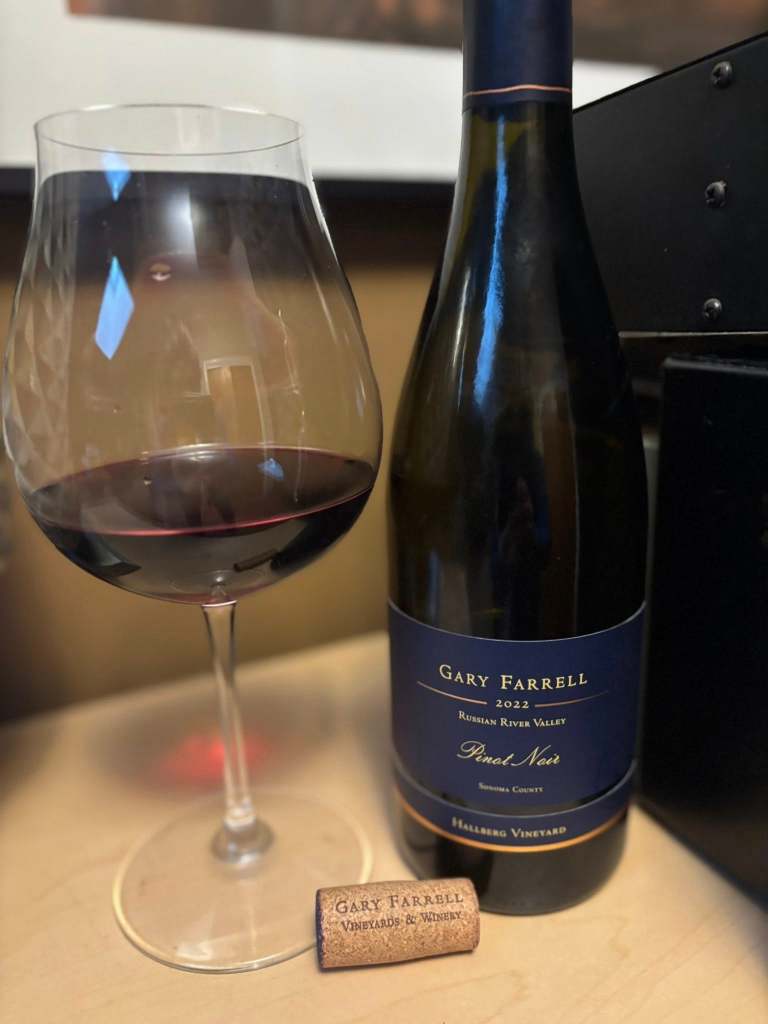
This is sourced from their Hallberg Vineyard, a vineyard stretching 100 acres in size, nestled in the Green Valley sub-appellation, and named after the previous owners.
For those technically minded, it is made up of clones 777 and 667, sourced from three different blocks located on the east and west sides of the Hallberg Ranch
A silky smooth mouthfeel welcomes you to layers of dark cherries, raspberries, cranberries, and plums with secondary notes of spicy orange tea, oak, cola, and cloves. Persistent acidity makes its presence known- a few more years in the cellar should tame this. Fine-grained tannins, great structure, and impressive balance sit comfortably in the background, supporting the interwoven layers of fruit and enhancing your drinking pleasure.
This has a nice future ahead of it. Your patience will be rewarded if you let this sit, undisturbed, for the next 6 – 8 years. This will be enough time to tame the acidity.
Food pairings should include Duck breast with cherry or pomegranate glaze, Herb‑roasted pork tenderloin with fennel, Cedar‑plank salmon, and Roast chicken with thyme and lemon. Vegetarian options include Wild mushroom risotto, Mushroom and gruyère tart, Truffle pasta (lightly sauced), and Lentils with roasted root vegetables.
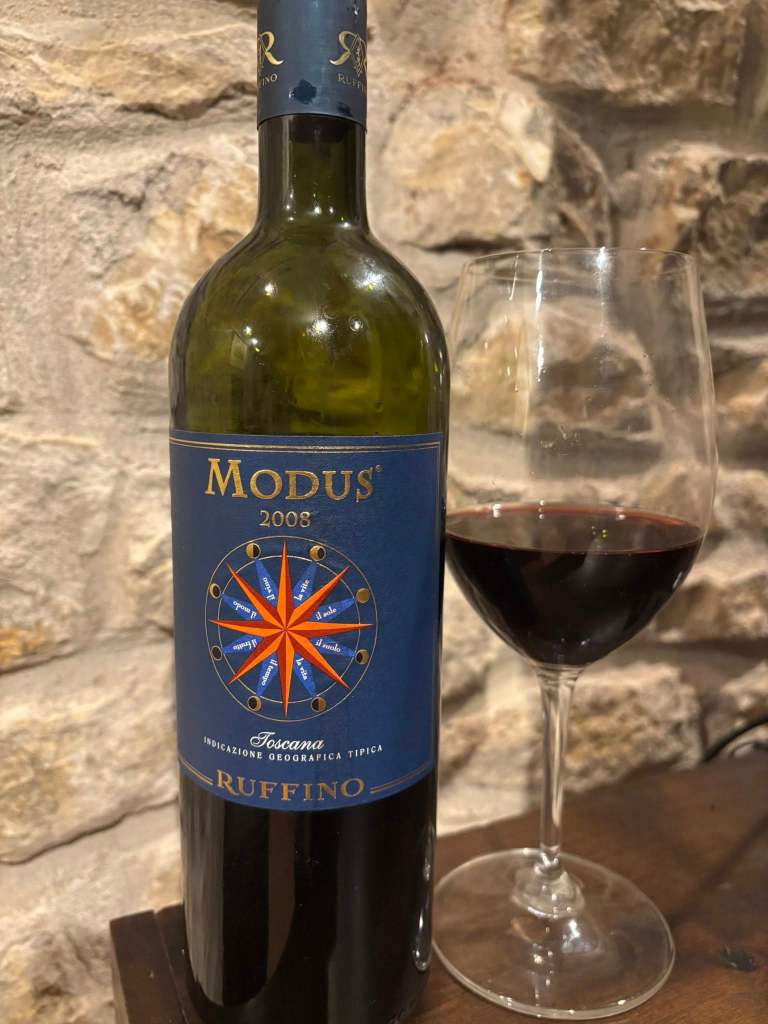
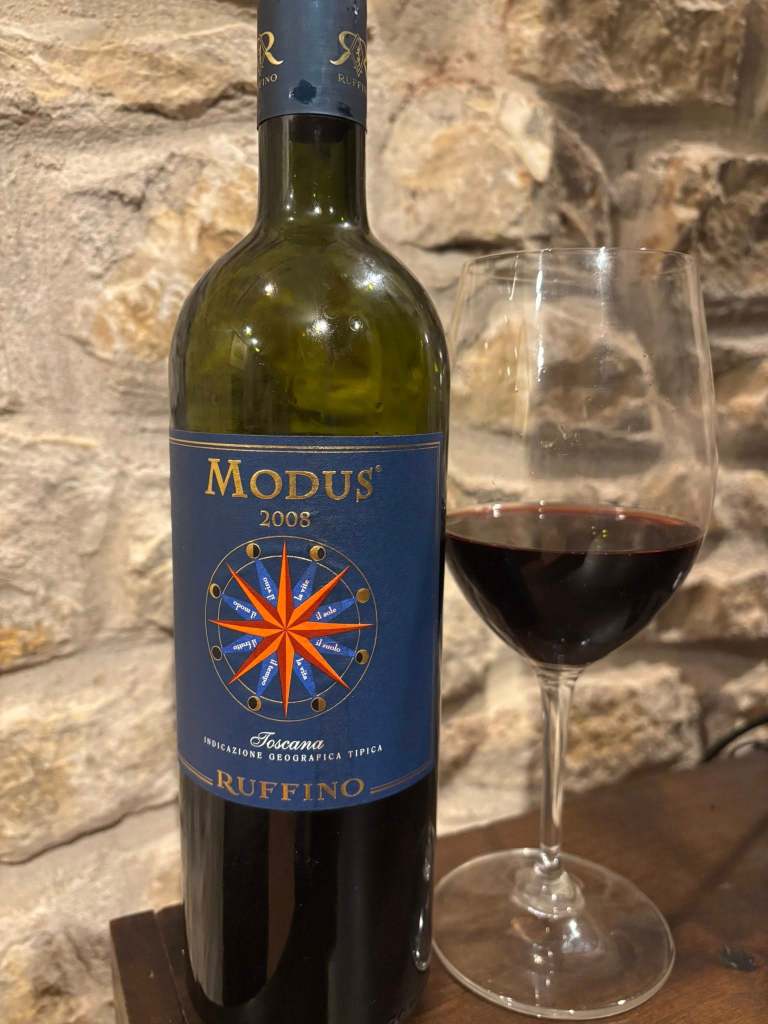
This Tuscany gem is a blend of Sangiovese (50%), Cabernet Sauvignon (25%), and Merlot (25%). The drinking window for this is 10–15 years. Again, let’s open it and see if it’s still holding together. This is 18 years old.
This was Ruffino’s ‘Super Tuscan’ offering with a reputation for being refined, polished tannins, elegant, with loads of depth and complexity, with impressive integration.
The nose shows some age but is not past its prime. Delightful aromas of blackberries, plums, and dark cherries dominate with a promise of more to come.
The palate is velvety soft with well-integrated, gentle layers of blackberries, dark cherries, plums, leather, tobacco, and gamey, an almost meaty note, with traces of dark chocolate, spices, and olives to round things out.
This may not be drinking at its absolute peak, but it’s exceptionally close. This has been stored well since I purchased it, a necessary condition to buying a 2008 if you happen to see it.
Food pairings should include Osso buco, Bistecca alla Fiorentina, Braised short ribs, Mushroom risotto, Chicken Cacciatore, and aged Pecorino, or any other aged Italian hard cheese.
The short answer is yes, research tells us that 1 – 2 glasses a day is the right amount to outlive your non-drinking friends.
The 5 Blue Zones include: Nicoya in Costa Rica, Sardinia, Ikaria in Greece, Okinawa in Japan, and Loma Linda in California. There are many commonalities but the two that, I believe, stand out is (except for Loma Linda- Adventist) they all drink wine- 1 – 2 glasses a day, and they all consume a nourishing soup, which pretty much resembles Italian Minestrone Soup- loads of vegetables and beans. This healthy, hearty soup is so easy to make at home, and you have to buy the wine.
Blue Zones have the highest number of people over 100 years old, who also happen to be lively and active. So if you like Minestrone soup and want to live to 100, read on.
Classic Minestrone Soup Recipe
Ingredients (serves 4–6)
• 2 tbsp olive oil
• 1 medium onion, diced
• 2 carrots, diced
• 2 celery stalks, diced
• 3 cloves garlic, minced
• 1 medium zucchini, diced
• 1 cup green beans, chopped
• 1 can (14 oz) diced tomatoes
• 1 can (15 oz) cannellini or kidney beans, drained and rinsed
• 6 cups vegetable or chicken broth
• 1 cup small pasta (ditalini, elbow, or small shells)
• 1 cup chopped kale or spinach
• 1 tsp dried oregano
• 1 tsp dried basil
• Salt and black pepper to taste
• Optional: Parmesan rind (adds incredible depth)
• To serve: grated Parmesan, olive oil, fresh basil
Instructions
1. Build the flavor base: Heat the olive oil in a large pot over medium heat. Add onion, carrots, and celery. Cook 6–8 minutes until softened and fragrant.
2. Add garlic and vegetables- stir in and cook another 3–4 minutes.
3. Add tomatoes, beans, and broth: Pour in the diced tomatoes, beans, and broth. Add oregano, basil, salt, and pepper.
If you have a Parmesan rind, drop it in now.
Bring to a gentle boil.
4. Simmer: Reduce the heat and simmer for 20 minutes, until the vegetables are tender.
5. Add pasta: Stir in the pasta and cook until al dente, usually 8–10 minutes.
6. Finish with greens: Add kale or spinach and cook 2–3 minutes until wilted.
Remove Parmesan rind if used.
7. Serve: in bowls and top off with
• A drizzle of olive oil
• Freshly grated Parmesan
• A few basil leaves
Here are a couple of suggestions to make it your own.
• For a richer broth: add a spoonful of tomato paste with the garlic.
• For a heartier version: add diced potatoes or pancetta at the beginning.
• For a lighter spring version: swap zucchini for peas and add fresh herbs at the end.
• Gluten-free: use GF pasta or add cooked rice instead.
A researcher has discovered that residents of Earth’s remarkable ‘Blue Zones’ may often follow a simple rule for extended lifespans – and it’s great news for those who like a tipple. Costa Rica, Greece, and Japan house three of the six unique regions where locals are supposedly 10 times more likely to live to 100 years old than Americans.
While strategies like calorie restriction, plant-based eating, and emphasizing family bonds are common in these regions, the mention of wine might catch you off guard. Surprisingly, it’s noted that ‘consistent’ alcohol consumption is particularly prevalent in Blue Zones, with some residents drinking one or two glasses daily.
“People in all Blue Zones (except Adventists) drink alcohol moderately and regularly,” Blue Zones explorer Dan Buettner previously wrote, according to a past Mirror report. “Moderate drinkers outlive non-drinkers. The trick is to drink 1-2 glasses per day (preferably Sardinian Cannonau wine), with friends and/or with food. And no, you can’t save up all week and have 14 drinks on Saturday.”
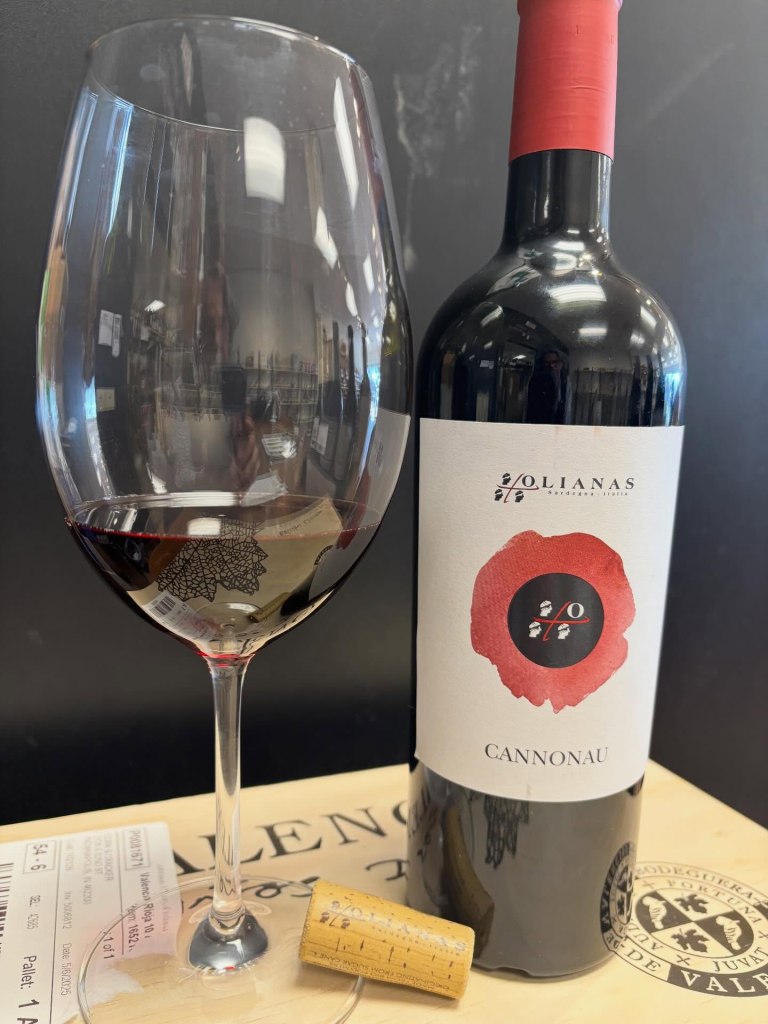
Now, for the wine, I would suggest adding Olianas Cannonau di Sardegna 2023 (organic), which you can pick up for under $20.
This delightful Sardinian wine is known as Grenache everywhere else in the world.
The winery was established in the early 2000’s and is considered the benchmark for Sardinian Wineries. It is located in Sarcidano, in the heart of southern Sardinia and adjacent to the UNESCO‑listed Su Nuraxi archaeological site- wine has a deeply rooted connection to the island’s ancient culture and the landscape.
Olianas is known for its BioIntegrale method—a holistic approach that goes beyond organic and biodynamic farming- described as “a philosophy of life”, utilizing horse-drawn ploughs, no chemicals, and strict protection of the biodiversity.
They say that if you listen closely, you can hear tales from the distant past. Tales of a pristine paradise that cradles the European outpost of biodynamics and organic farming, and tales of families sharing laughter, food, music, and wine in the late afternoon, as the sun sets on the vineyards and fields.
Olianas Cannonau 2022
Once opened, and poured into a glass, delightful aromas of dark raspberries, dark cherries and dark chocolate, with just a hint of earth and spices.
The mouthfeel is well-balanced and smooth with immediate appeal. Soft, rounded tanninsand approachable acidity frame layers of black raspberries, black cherries, black currants, dark chocolate, tobacco, red plums, and a potpourri of spices and earthy notes.
I can see this cellaring out to 2032 with confidence.
Food pairings should include Herb‑Roasted Pork Tenderloin with rosemary, thyme, and garlic, and Sardinian‑Style Roast Lamb with myrtle, juniper, or rosemary. Vegetarian options should include Mushroom Pasta with Herbs, and Eggplant Parmigiana with plenty of tomato, basil, melted cheese, and roasted eggplant.
This Tuscany gem is a blend of Sangiovese 50%, Cabernet Sauvignon 25%, and Merlot 25% Drinking window on this was 10 – 15 years. Again, let’s open it and see if it’s still holding together. This is 18 years old.
This was Ruffino’s ‘Super Tuscan’ offering with a reputation for being refined, polished tannins, elegant, with loads of depth and complexity, with impressive integration.
The nose shows some age but is not past its prime. Delightful aromas of blackberries, plums, and dark cherries dominate with a promise of more to come.
The palate is velvety soft with well-integrated, gentle layers of blackberries, dark cherries, plums, leather, tobacco, and gamey, an almost meaty note, with traces of dark chocolate, spices, and olives to round things out.
This may not be drinking at its absolute peak, but it’s exceptionally close. This has been stored well since I purchased it, a necessary condition to buying a 2008 if you happen to see it.
Food pairings should include Osso buco, Bistecca alla Fiorentina, Braised short ribs, Mushroom risotto, Chicken Cacciatore, and aged Pecorino, or any other aged Italian hard cheese.
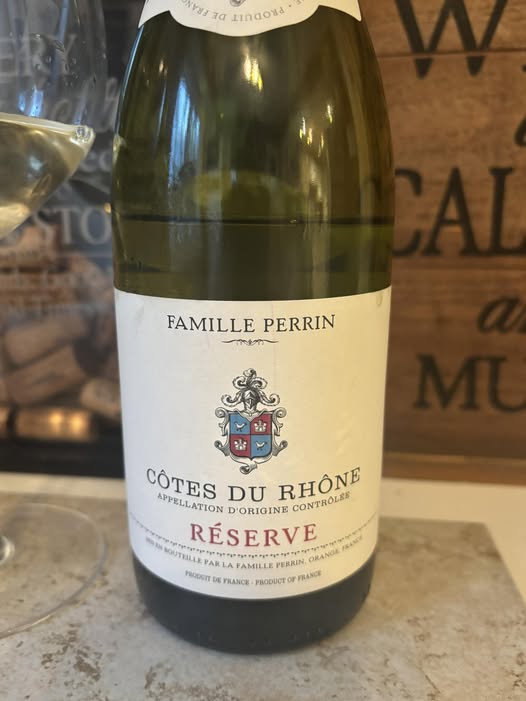
First of all, let me say this: The Famille Perrin makes wines that are a pleasure to drink, great to serve to friends, without fear or embarrassment, and are super budget-friendly.
This is what Monday, Tuesday, Wednesday night wines are all about- MTW Wines.
This is their Côte du Rhône Reserve Blanc and is a blend of Grenache Blanc, Marsanne, Roussanne, and Viognier. Four of my favorite white grapes from France (except for Chablis, of course).
The grapes are sourced from specifically selected vineyards located in the Cairanne, and Jonquières Communes. These vineyards are planted on limestone-derived alluvium, which is ideally suited to white varietals, including those featured in this wine.
It is a lovely pale straw color with a very aromatic nose, featuring notes of wildflowers, honeyed fragrances wrapped in citrus, pear, and a hint of peach.
The palate is lively and welcoming, walking alongside rich fruits and an unexpected creaminess. Interwoven layers of pear, citrus, peach, crisp apple, tangerine, white apricot, and the ever-present honey all combine to put a smile on your face. Nice depth, complexity, and balance that keeps the acidity mouthwatering, and the minerality contributes to the overall texture and pleasing mouthfeel.
If you like spicy food, this is the wine for you; it will also pair well with all types of seafood, especially from the grill, or with friends and hors d’oeuvres.
This was made to drink young, so enjoy its youthful energy, don’t worry about cellaring it, there is another vintage around the corner.
There is a lot of interesting history about the Vineyard, but I’ll leave that for the 2009 Vintage review.
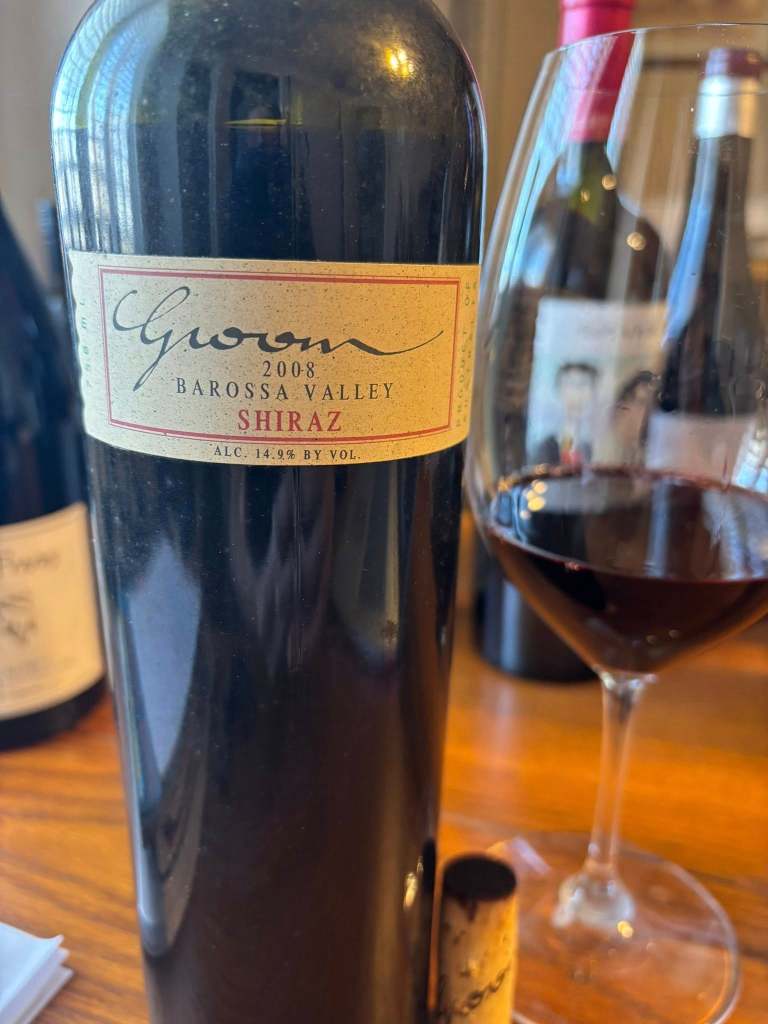
When I found this in the cellar this morning and decided to open it, I was a little concerned that I’d left it too long. Nothing could be further from the truth.
Very subtle signs of aging on the nose, lively aromas of blackberries, dark cherries, and ripe raspberries dominate.
One sip and its bold structure, broad shoulders, and generous palate are still very much present. Exceptional balance, and wonderful restraint and finesse- seamless layers of rich ripe fruits are evident- loads of blackberries, dark plums, dark cherries, and raspberries dominate, with secondary notes of dark chocolate, brambles, leather, and herbs round things out. Silky smooth mouthfeel that coats your mouth from start to finish. A delight to drink.
I’m very happy this is drinking beautifully and not past its peak. It walks a fine line between elegance and boldness, and the 14.9% alc has been kept in place by exceptional balance- a sign of excellence in winemaking and impressive integration through aging.
If you have any 2008, drink soon. I would hate to see you miss out on such a treat, as it’s drinking now. I have one bottle left of the 2009- I’ll pull that and taste it before summer.
This cries out for red meat, but don’t ignore roast chicken with herbs, grilled herb-crusted pork chops, pepperoni pizza, and Indian Goat dishes.
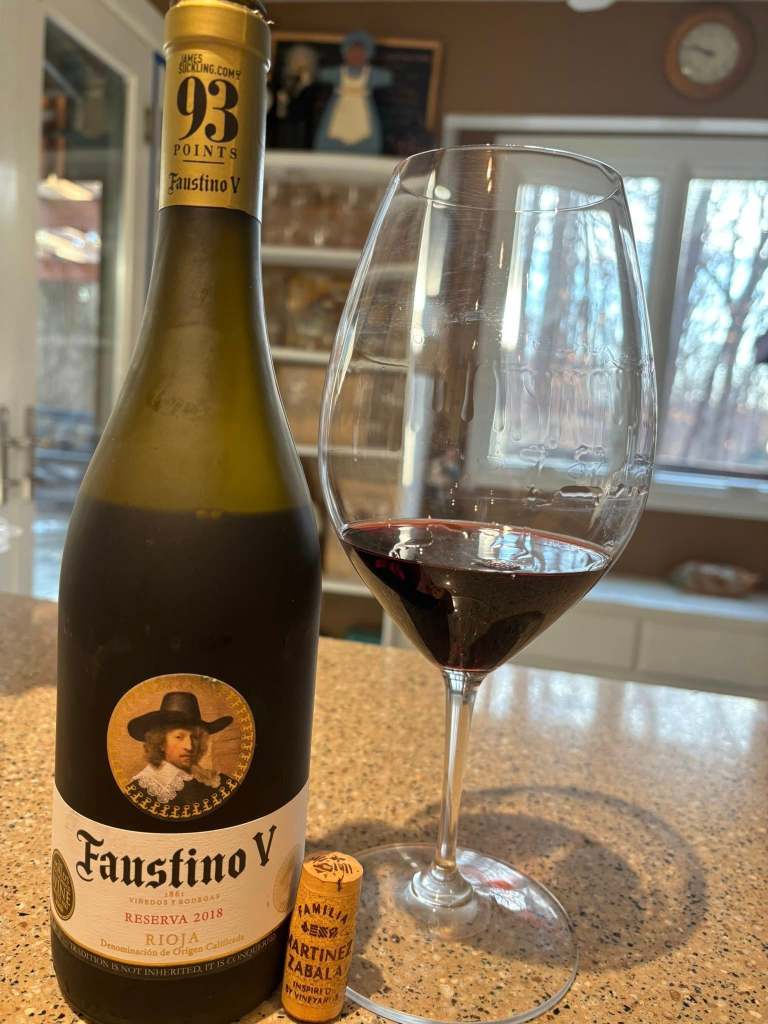
Forgive the photo, it’s way too cold to go outside, and I love taking photos outside. My work desk will have to suffice for the moment. I’m live in the Mid-west and we got somewhere around 14 inches of snow yesterday, and only 3F today. The sun is shining today, and it’s absolutely beautiful.
Bodegas Faustino was one of the first families of Rioja, and was established by the Martinez family in 1861. Today, it is managed by the 6th-generation daughters.
The wine gained worldwide attention in the 1960’s, representing the marriage of Rembrandt art and an iconic bottle design, which facilitates decades of ageing potential.
It is a blend of 92% Tempranillo and 8% Mazuelo, which spends 24 months in American oak, twice the required time by the DOC, then a year in the bottle before release.
The vineyards are located in the Oyón area of Rioja Alavesa, at an altitude of almost 1,500 feet, on predominantly calcareous marl, with some coarse-grained sandstone – ideal conditions for these varietals.
Absolutely intoxicating aromas of oak/vanilla, ripe blackberries, and sweet tobacco. Impressive to say the least.
The mouthfeel is lush, velvety, and inviting, showcasing layers of blackberries, dark cherries, vanilla, and plum, with secondary notes of black currant, leather, chocolate, and spices. All this is framed in satisfying acidity, sweet, fine-grain tannins, and impressive balance. There is a nice weight from start to a lengthy finish, and a wonderful texture.
Cellar time has a nice future, at least a decade, out to 2035.
Food pairings should include an array of red meat dishes, baked ham, roasted turkey, or chicken. Add mushrooms to any of your chosen dishes for improved pairings.
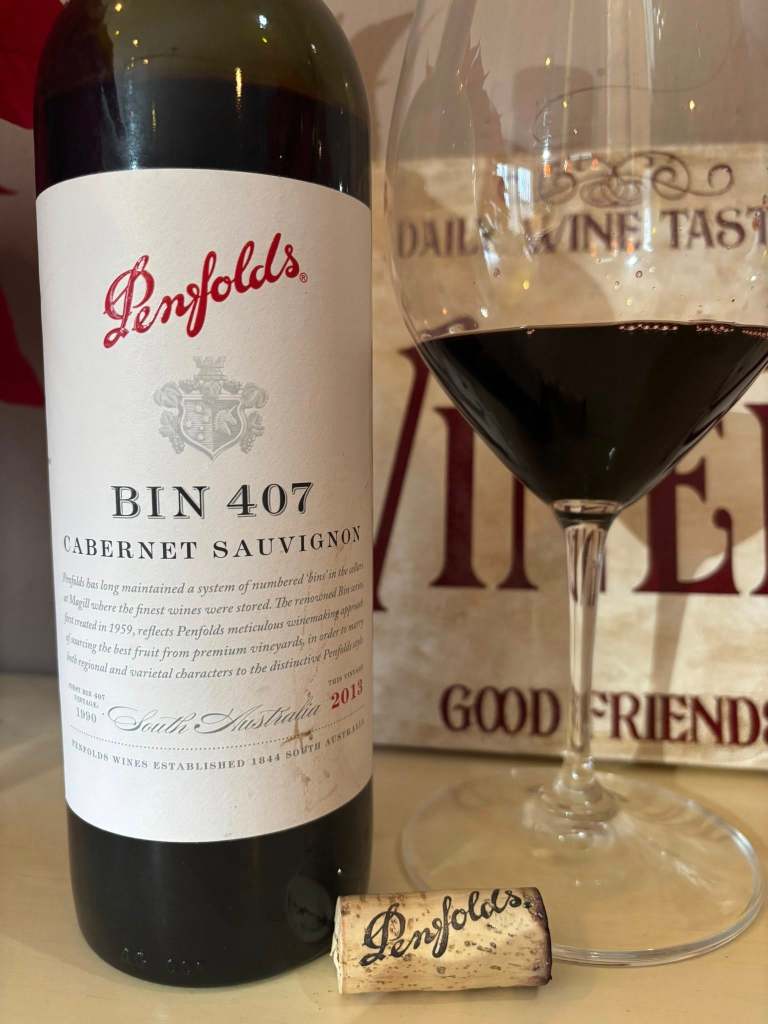
I recently reviewed a bottle of 2008, and it was holding up beautifully, so I decided to pull a 2013 and see how it had evolved.
I always approach a Bin 407 (and all Penfolds) with intense anticipation, especially if it has some age under its belt. The 2013 vintage is no exception, being a great vintage in South Australia.
The 407 has always stood in the shadows of the 707, but it is a worthy inclusion to any cellar, assuming you like quality Australian Cabernet, of course. This, like most of the Penfolds wines, is a multi-vineyard, multi-regional blend. I’ve been a fan of Penfolds and the 407 Cabernet for several decades, which never disappoints. This is cut from the same cloth as the 707, but at about a quarter of the cost- excellent drinking, excellent value.
The 2013 Bin 407 fruit is sourced from McLaren Vale, Padthaway, Coonawarra, Wrattonbully and the Barossa Valley, with maturation taking place in a combination of French oak (26% new) and American oak hogsheads (12% new, 35% 1 y.o. and 27% seasoned) for a period of 12 months.
Beautiful aromatics present black currant and cassis, which dominate, with traces of sweet tobacco, licorice, and oak/vanilla nuances. Unmistakably Cabernet.
The palate is velvet smooth, loaded with layers of blackberries, black currants, cassis, and plum, with secondary notes of sweet tobacco, leather, dark chocolate, olives, licorice, and spices. Impeccable balance with everything in its place. Fine-grain tannins and agreeable acidity are in perfect harmony; there are no jagged edges with this wine.
This wine possesses a discreet, elegant quality about it, and has no doubt benefited from 13 years of aging. The tight assertiveness of the palate needs another 5 – 10 years to fully integrate, or a few hours of decant time in the meantime.
I believe this has another 8 – 10 years before reaching its peak drinking window.
Food pairings should include red meat in your favorite recipe.
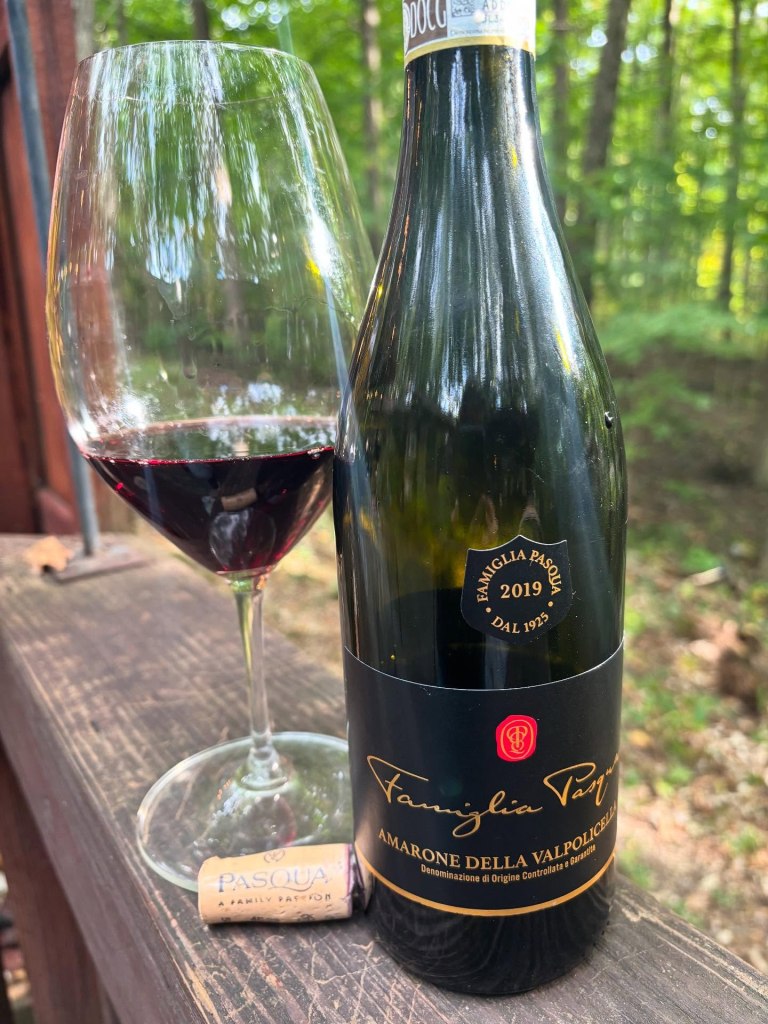
Innovation is at the core of their philosophy, as well as focusing on sustainable practices with an eye on the future. In 2024, they received the Innovator of the Year award for 2023 by Wine Enthusiast magazine. They are widely recognized as an Ambassador for Veneto wines. They are known for their various expressions of Amarone and labels representative of the winery, located on the east side of Lake Garda, up to the Soave region. They are also strong supporters of the arts in different disciplines.
Seductive aromas of blackberries, plums, black currants, and leather draw you into a world of grapes nurtured and loved, carefully selected, aged for a precise time, and turned into something so delightful, it’s almost criminal. The palate reflects the enticing aromas, complemented by layers of turned earth, sweet tobacco, dark cherries, vanilla, oak, and dried herbs—a complex proposition indeed, but one that needs to be experienced to be fully understood and appreciated. Impressive depth and complexity, coupled with elegance and finesse, are combined with fine-grained tannins and a velvety smooth
mouthfeel, create a crescendo of flavors and experiences that you will want to repeat again and again.
Food pairings should include Barbecue Ribs, Smoked Brisket, Roasted Pork Loin, Lamb Shank, Braised Beef, Steak from the grill, and for those that don’t eat meat- A rich risotto made with wild mushrooms or truffles.
This will cellar out to 2035 without a problem, and I suspect longer.
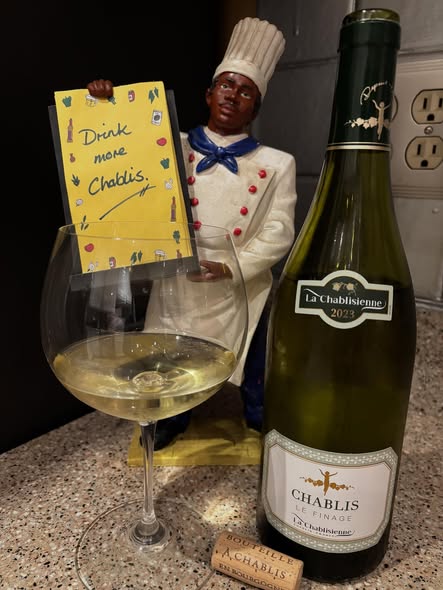
The grapes for this wine are sourced from four appellations- Grand Cru, 1er Cru, Chablis, and Petit Chablis, spanning 200 winegrowers’ families- collectively known as La Chablisienne, and established in 1923. The name Finage is a French term meaning “to represent the whole region.” This all goes to say that it is an accurate representation of Chablis and this historic AOC as a whole. The soils are predominantly composed of clay and limestone from the Kimmeridgian period- about 155 million years ago.
This is essential drinking if you love Chablis at a price that won’t break the bank.
Supple aromas of citrus, minerality, wet stone, and apple work together to entice you to taste. Unmistakably Chablis.
The palate is crisp and clean with a pristine mouthfeel. Layers of citrus- lemon, limes, and a hint of pink grapefruit complement green apples, honey, pear, and peach with appealing minerality and texture, excellent balance, and that characteristic restraint and elegance you expect from Chablis.
Despite looking out the window at fall-like conditions, one sip of this and I was transported back to warmth and summer.
Food pairings should include oysters, white fish, sushi, scallops, and shellfish- pan-fried, baked, or grilled. Chicken Piccata would also work well, and if you’re seeking a vegetarian option, Spanakopita with a squeeze of lime and a Greek Salad would be my choice.
 Vine to Table