History of Wine Making.
Portugal’s early wine history is dominated by outside influences, either by invading the country or by Trade Agreements, as the case with the British: The Phoenicians in the 10th century BC, the Greeks in the 7th century BC, the Romans in the 3rd Century BC and the Tartessians around 2000 BC. All these ‘guests’ brought rootstock from the East and knowledge of winemaking further advancing the industry in its early stages.
In 1386, the Portuguese signed the Treaty of Windsor with the British promoting strong diplomatic ties and making it much easier to access the lucrative British market to sell their Ports and Wines. The British also used this agreement as a bargaining chip against the French on several occasions whenever war arose between the two countries.
Just to give you an idea of just how big the British market was, in 1728 over 3 million gallons were sold to Britain before the counterfeit Port scandal hit prompting the creation of the Douro Wine Company to regulate the Port wine trade.
By 1799, the rebound had occurred with 11.6 million US gallons being imported by the English, firmly establishing Port as the “Englishman’s drink”.
Throw in Waning British demand, Phylloxera, Napoleonic Wars, a French Invasion, Brazil’s Deceleration of Independence, and Political Instability and the Wine industry suffered further over the next 150 years.
The future again looks bright with Democracy, admission into the EU, and a new and improved DOC-style Appellation System, a rise in popularity was ushered in.
It has been a roller coaster ride but the future never looked brighter.
The Unsung Hero of the Portuguese Wine Business.
Allow me to introduce you to Antónia Adelaide Ferreira, arguably, the most influential person, but still unknown. Born into a family of wine producers and Port traders in 1811, and forced into an arranged marriage with her cousin at the age of 23. As fate would have it, her husband passed away 10 years later, leaving Antónia to take over and run the family business.
Her vision and entrepreneurship enabled her to become the largest landowner in the Douro Valley and one of the wealthiest people of that time. In 1853, Antónia inherited further wealth, which brought her clearly into the sights of the local aristocracy and made her then, 11-year-old daughter, the most eligible bride in all of Portugal.
The Duke of Saldanha, the President of Portugal, converted a union between their two families through marriage to his son Assunção. Antónia’s refusal motivated a kidnap attempt which ultimately influenced her decision to move to London.
After returning to her homeland some years later, the oidium plague ravaged the Douro Valley, affording an opportunity to sell her Wines and Ports at a higher price, due to the shortage and buy up land and vineyards from the more unfortunate.
She also survived a ship sinking, that took the life of Baron Forrester, one of Douro’s strongest supporters. It is said that her skirt formed a balloon allowing her to float until help arrived.
The arrival of Phylloxera afforded her yet another opportunity for growth, eventually importing, selling, and distributing Phylloxera-resistant rootstock from America.
Their land holding expanded further when, in 1877, when her husband, Silva Torres purchased 300 hectares for her in the remote region of Mt Meão, undertaking a massive project, lasting 8 years, of reshaping the Mountain, diverting waterways, building a railway as well as a home, wine cellars, and several other buildings. Unfortunately, Antónia died in March 1896, 10 years after the completion of this project. Time has proven this to be an excellent decision, the region is now known as Douro Superior.
Wine Classifications
Classification started back in 1756 when the Marquis of Pombal delimited the Douro Valley region as the only true producer of Port. Putting that aside, there are some 55 wine regions, with 39 holding the classification as Denominação de Origen Contolada (DOC/ DOP). Add in about 200 different grape varietals with most wines being a blend of any or all of the varietals being used and labeled by region following regional regulations. ‘Single varietal’ wines must be at least 85% of the varietal indicated, this is a little higher than the 75% requirement in the US and other parts of the world.
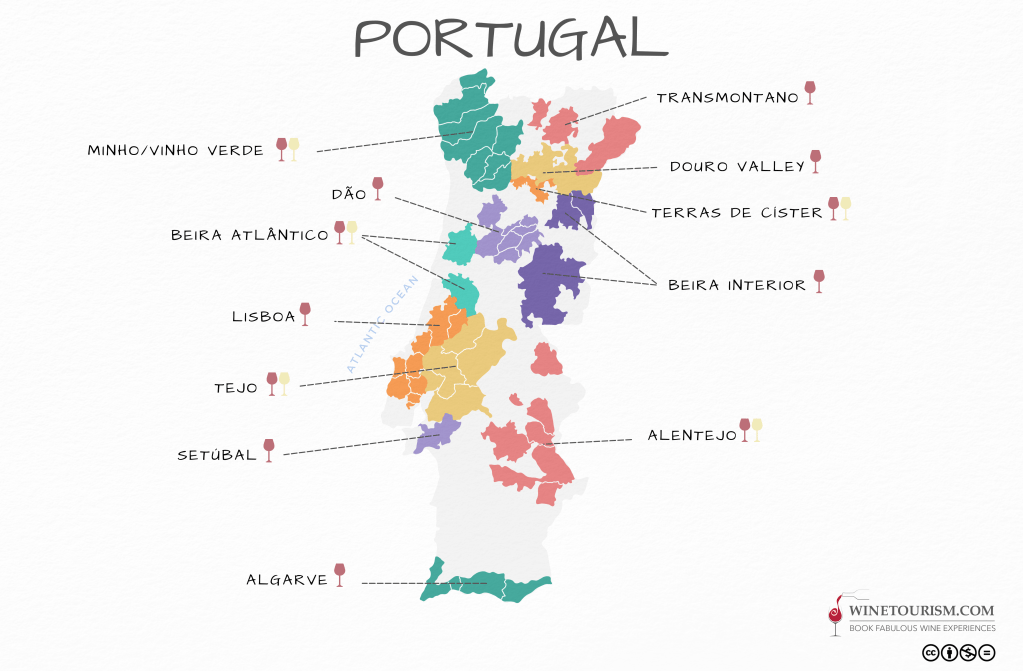
Wine Regions.
There are 55 wine regions but the 8 major wine regions in Portugal are, from north to south:
1. Minho: situated in the northwest corner of Portugal and is home to Portugal’s most famous white wine: Vinho Verde (literally “green wine”) which can be a blend of as many as 25 different varietals. This slightly effervescent crisp white should be drunk young and is made for summer drinking.
2. Douro: This is Portugal’s oldest wine region and the home of port, a sweet wine fortified with ‘neutral spirits’ … usually clear brandy. Excellent red wines are also produced in this region, usually from the same grapes including Tinta Roriz (Tempranillo), Touriga Nacional, Tinta Barroca, Tinto Cão, and Touriga Franca
3. Bairrada: The name comes from the Portuguese word for “clay” reflecting the dominant soil type. The most popular grape in the region is Baga, which must constitute at least 50% of any red wine from this region. The majority of the country’s sparkling wine comes from this region made from Bical and the Malvasia Fina varietals.
4. Dão: Located just south of the Douro, producing predominately red blends from Touriga Nacional, Tinta Roriz, Alfrocheiro Preto, Jaén, and Bastardo. Encruzado, a white varietal with aging potential is also grown.
5. Setúbal: The city of Setúbal is located on the northern bank of the Sado River about 30 miles from the capital Lisbon, and is known for nature preserves, beautiful beaches, fishing, and of course aromatic fortified dessert wines made primarily from Moscatel de Setúbal and Moscatel Roxo. Similar to Orange wines, there incorporate the practice of extended skin contact leaving the wines with rich concentrated flavors with a raisin character, intense floral aromas, and a burnt orange color.
6. Alentejo: This is the largest region covering about a third of the country situated in the southeast sharing a border with Spain. It is known for its numerous castles and mountain villages, olives, and of course, both white and red wines.
White wines include Verdelho, Diagalves, Manteúdo, Perrum, Rabo de Ovelha, and Fernão Pires with white blends being based around the Antão Vaz variety.
Red wines are made predominately from local varietals such as Aragonez (Tempranillo), Alicante Bouschet, Touriga Nacional, Alfrocheiro, Castelão, Trincadeira, Moreto, Tinta Grossa, and Tinta Caiada. A little Cabernet and Syrah are also grown, predominately for blending.
7. Algarve: Located along the Atlantic coast, and includes the four sub-regions of Lagos, Portimão, Lagoa, and Tavira. It is known for its rugged coastline, and beautiful beaches and is a very popular wine tourism region. The local vineyards produce high-quality white, red, and rosé wines as well as fortified wine all carrying the I.G.P label. Just a side note, the I.G.P classification was developed for those producers wanting to make wine from grapes not sanctioned under the stricter D.O.C classification. A similar situation in the Province with the ‘breakaway appellation’ of Méditérranée.
8. (Island of) Madeira: You guessed it, the home to the fortified white wine, Madeira. The island is located off the coast of North Africa about 600 miles southwest of Portugal and is also known for its Verdelho.
Here are some wine suggestions you might want to chase up …
It may surprise you to know that Portugal produces not just Port, but some great wines as well, and some budget-friendly wines. Here are a few examples to entice you into exploring further.

Portal Da Calcada Vinha Verde Reserva 2020.
Please allow me to introduce you to your new summer wine, or patio pounder as they have come to be known …
The nose is a delightful mix of pears, green apples, and lemons/limes with just a touch of honey blossom. All of this is crafted by nature to entice you to take a sip. The palate has a slight effervescence, typical of Vinho Verde introducing you to a combination of green apple, citrus- lemon and lime, pear, and orange peel, with hints of passionfruit, banana, and honey.
Great balance and acidity, crisp and refreshing. Nice long finish.
This is definitely going to be a crowd-pleaser this summer!
I would pair this with seafood, salads, and chicken from the grill, especially with citrus marinade, lemon pepper, fresh herbs, and asparagus. I could also see this pairing well with Falafel with a squeeze of lemon, Baba Ghanoush, and Pita Bread- if you live in Indianapolis, try Al Basha restaurant at 11321 Village Square Lane, Fishers, off Allisonville Rd.
Azevedo Winery
When discussing Vinho Verde, an interesting note is the Azevedo Winery. Known for its white wines of excellent quality. Situated in a 15th-century Manor and Tower in the region of Minho in the North West corner of Portugal. It is also known for developing a yeast strain QA23 which is now the most used white wine & cider yeast on the planet.

Silk and Spice 2020.
It would be fair to say this is the most popular red wine to come out of Portugal and has consistently gained 90+ ratings over the last 10-plus vintage. A testament to its consistency and broad appeal. The label (an old map) pays homage to the Portuguese sailors and their spirit of adventure, that traveled the globe, and in the process, opened the Silk and Spice trade routes between Asia and Europe. This is a wine to be discovered.
The 2020 vintage is a Blend of 40% Touriga Nacional, 20% Baga, 20% Alicante Bouchet, and 20% Syrah.
Enticing aromas of ripe plums, dark fruits, and orange zest draw you in to take a sip. The palate is full, fleshy ripe fruits, and appealing. Layers of plums, cassis, blackberries, and black tea, with secondary notes of more black fruits, oak, and spices. There is just a hint of sweetness and a long finish that seals the deal.
This is made to drink in its youth, and given its consistency, there is no need to cellar.
Pairings should include red meat straight from the grill, meat pasta dishes or traditional dishes like the Vale do Bomfim wine recommendations below.
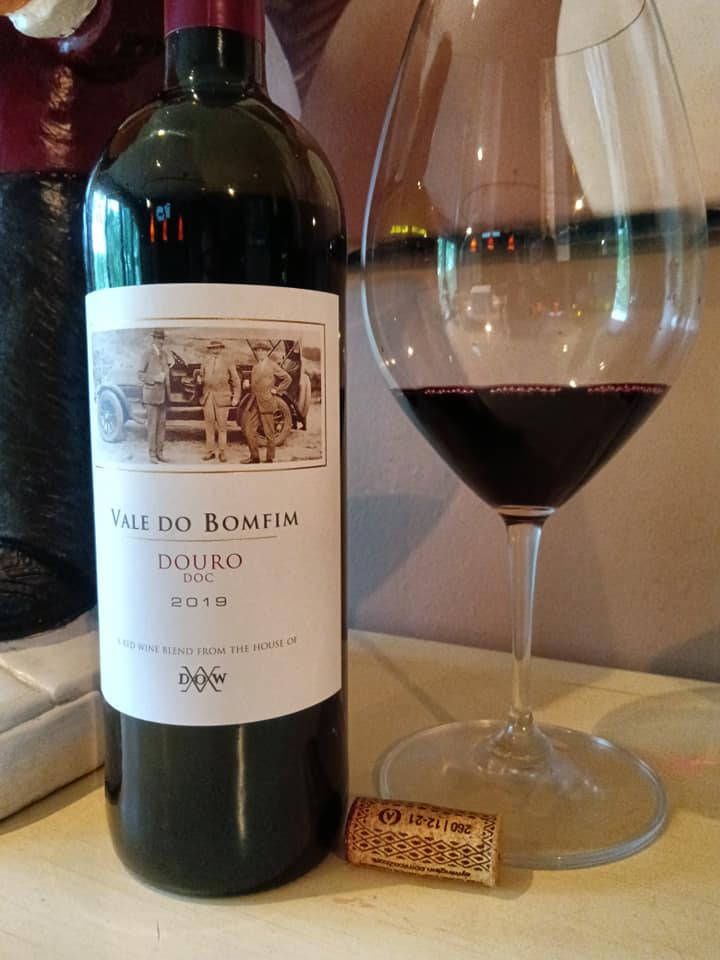
Vale Do Bomfim 2019.
This wine comes from the House of Dow Port and comprises 50% Field Blend and 30% Tourigas Franca and 20% Tourigas Nacional sourced from vineyards around Bomfim in the Cima Corgo and Senhora da Ribeira (upriver).
The nose is dominated by red fruits, with some dark fruits, floral, and pine. The palate is layers of red cherries, red currants, and pomegranates with a hint of blueberries and spices. Soft mouthfeel, with nice balance and structure, and a satisfying finish.
Will cellar out another 5 years, to 2028.
Pairings should include Francesinha- a meat dish made with ham, steak, or sausage with cheese and crusty bread, but light enough to pair with chicken piri-piri and Bolinhos de bacalhau- a deep-fried patty made from potatoes and salt-dried cod. If you look further afield, meat from the grill, meat Lasagna and Pepperoni Pizza.

Cabeco do Mocho 2014. From Algarve region- 7
This is a blend of 60% Touriga-Nacional, 20% Jaen, 10% Alfrocheiro, and 10% Tinta Roriz sourced from the region of Algarve in the south of Portugal.
The nose hints at the red cherries, vanilla, and dark fruits that are to come with pleasant old-world charm. The palate is fine layers of red fruits with cherries dominating, with secondary notes of vanilla, oak, and black currants. Nice approachable mouthfeel, structure, and finish.
Drinking beautifully now but I suspect this has a few more years yet. A testament to the balance and longevity of this wine.

Quinta das Camelias DAO 2012
This is made from 100% Touriga-Nacional with 10-plus years of cellar aging on it.
The nose is enticing and all dark plum and blackberries with a hint of violets, and raisins, revealing some age on the bottle.
The palate is smooth, rich, and inviting that coats your mouth from top to bottom and front to back with dark ripe plums, blackberry jam, and raisins. Great structure and balance with a long finish. Ridiculous value makes this a must.
Cellar time: drink now to 2025
Pair with grilled ribs, Francesinha- a meat dish made with ham, steak, or sausage with cheese and crusty bread, chicken piri-piri, and grilled octopus.

Almotriga Douro 2015. From Douro region- 2
This is a blend of Touriga Nacional, Tinta Roriz, Tinta Barroca, and Touriga Franca sourced from Douro, which is the oldest wine-making region in Portugal.
The nose is all red fruits with a hint of vanilla and spices. The palate is inviting with a smooth mouthfeel that delivers layers of red cherries, red currants, dark wild berries, vanilla, and spices. Nice long finish with great balance and depth.
Pair with Francesinha- a meat dish made with ham, steak, or sausage with cheese and crusty bread, but light enough to pair with chicken piri-piri and Bolinhos de bacalhau- a deep-fried patty made from potatoes and salt-dried cod.
Drinking well now but will cellar out until 2026.
Wine Food Pairings
I’m always a great believer in pairing ‘local foods’ with ‘local wines.’ Here is a website that has some amazing food suggestions and a few that are definitely not for the faint-hearted. That’s why we have free choice, right? Check this site out for more food pairing ideas: http://www.portugalist.com/portuguese-food/
 Vine to Table